
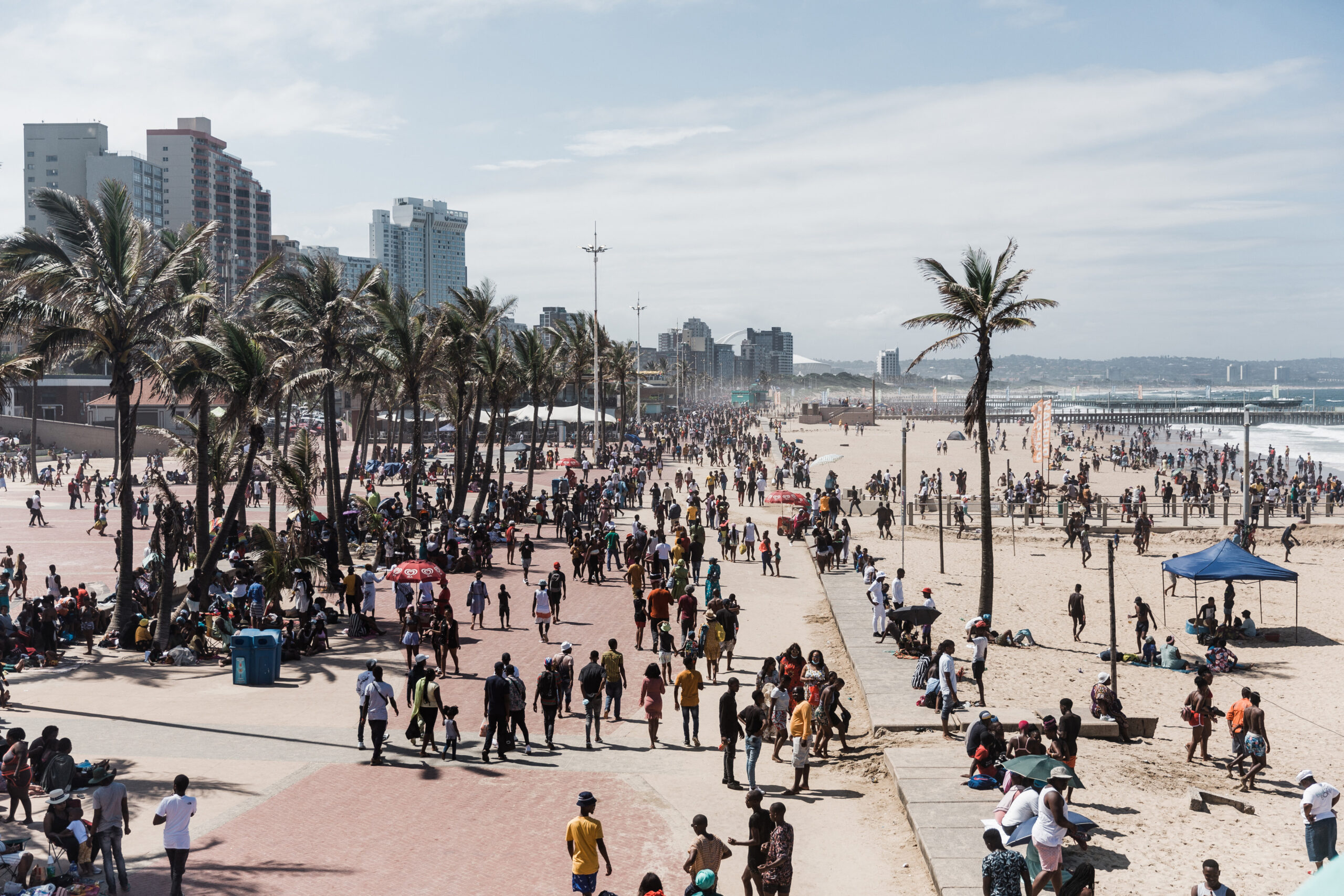
Few would argue that recent years have been kind to Durban, the largest city in South Africa’s KwaZulu-Natal province. It was Durban and its environs that bore the brunt of riots sparked by the imprisonment of disgraced former president Jacob Zuma in July 2021. Several hundred people were killed as parts of the city and suburbs descended into anarchy. Economic damage reached as high as 70bn rand ($4.3bn).
This was followed in 2022 by devastating floods that killed over 400 people. The inundations damaged already fragile water infrastructure, leading to worsening E. coli outbreaks at Durban’s beaches that undermined the city’s tourism appeal.
To make matters worse, some of the pillars of Durban’s economy have been badly shaken as a result of neglect and poor governance. While the Port of Durban is the largest in sub-Saharan Africa, it has suffered severe logistical problems in recent years. In 2023, backlogs at the port forced some 79 ships to loiter at sea, leading to major disruption to supply chains and significant financial costs for shipping companies.
Against this bleak backdrop and wider urban decline in South Africa, Durban is attempting a bold reinvention, with plans to bring massive investment into a waterfront development project.
A new waterfront
“We have been taking inspiration from the Dubai waterfront, from Cape Town waterfront, from other waterfront developments that do exist around the world,” says Russell Curtis, CEO of investment promotion agency Invest Durban. The Durban Point Waterfront Company is a joint venture between the eThekwini municipality that includes the city and developer ROC Point. It envisages a mix of residential, retail, offices and leisure units at the site, alongside medical facilities and academic institutions.
Curtis, who spoke with African Business at the Africa Debate hosted by Invest Africa in London in June, adds that the Durban project has already been on the drawing board for many years – in fact, it even predates Cape Town’s V&A Waterfront, a mixed residential, commercial and hospitality district that dates back to the late 1980s and is credited with attracting millions of visitors to the city.
He says Durban Point can enjoy similar success as a “live-work-play environment of mixed-use development,” emphasising that the site will offer “utterly unique 360-degree views, because of the architecture of the land that was given to us by the Almighty”.
After years of delays, Curtis reports that construction is ready to begin by the end of 2026. Planning for the first major development at the site, a 55-storey tower, is already well under way, he says, noting that a total of 14 parcels of land are available, with 125,000 square metres to be developed.
Construction mafia: dead or alive?
Yet Durban’s difficult recent history will inevitably complicate the task of attracting investors in the waterfront project, as well as other schemes to revitalise the city.
Curtis insists that the site benefits from a “very robust private security system,” adding that bulk infrastructure including roads, water and electricity connections are already in place.
Yet a risk that will be particularly alarming for real estate investors is the emergence of “construction mafias” over the past decade. These criminal syndicates have been linked to numerous reports of extortion, in which developers are forced to hand over hefty “protection fees”.
Curtis is adamant that these mafias will no longer pose a threat. “I can put hand on heart,” he tells African Business, “and say that is a thing of the past. The occurrence of any construction mafia behaviour is absolutely zero.” He argues that the “power games” that he says sparked the construction mafia crisis have been largely resolved, while engagement with communities has ensured that local people will resist actors seeking to “cause nonsense”.
Others are not so sure the problem is truly in the rear-view mirror.
Marisa Lourenço, strategic risk adviser, says authorities have indeed intensified efforts against extortion, but cautions that the problem is not fully resolved. “Government has established specialised initiatives, secured hundreds of arrests, and signed cooperation agreements with industry stakeholders. However, extortion networks remain active in KwaZulu-Natal province and continue to disrupt projects,” she says.
“Parliamentary oversight visits in early 2026 still identified construction mafias and extortion as significant obstacles to project delivery, while researchers and industry groups continue to describe the phenomenon as a serious threat to investment and infrastructure development.”
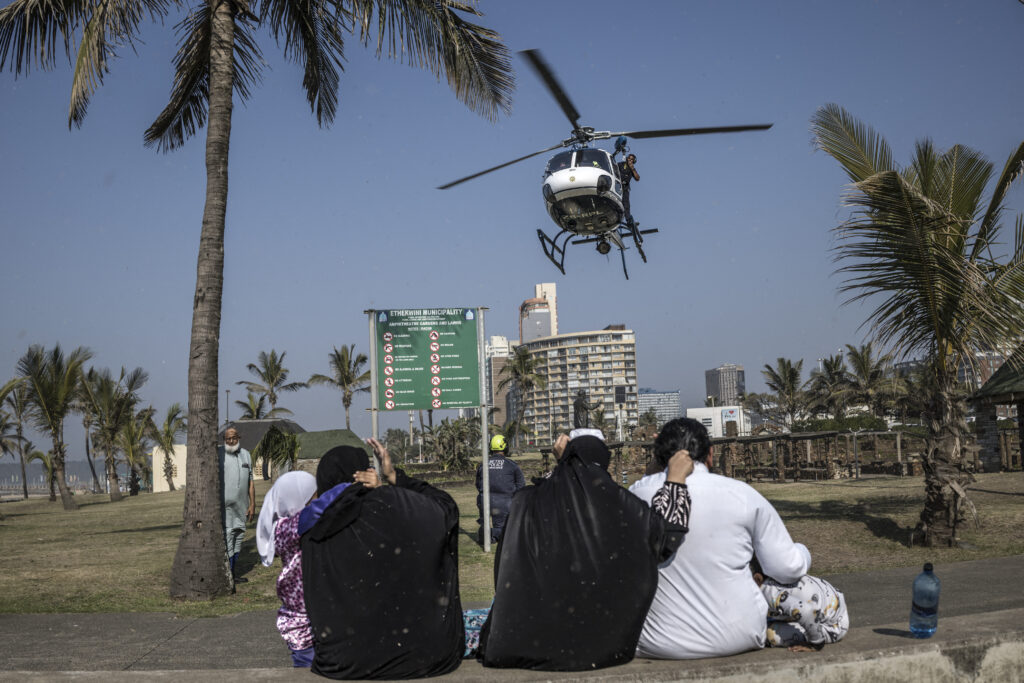
Lourenço adds that investors in the project will need to remain wary of broader security issues in the city. “The principal risks are less related to the Point Waterfront precinct itself and more to Durban’s broader operating environment. These include organised crime, theft, extortion, infrastructure disruption, and project delays linked to criminal interference in the construction sector.”
“While the Point Waterfront has benefited from substantial private investment and security measures, investors remain exposed to wider municipal challenges such as electricity interruptions, port congestion, deteriorating public infrastructure, and uneven law enforcement capacity.”
Signs of improvement
It might be too early to suggest that Durban has definitively turned a corner, but there have been concrete signs of improvement.
The World Bank’s Container Port Performance Index lists Durban as the world’s most improved port in 2025. After a disastrous showing the previous year, in which the maritime gateway was ranked as the least efficient in the world, Durban rose up the rankings thanks to improved infrastructure and better employee incentives offered by state-owned port operator Transnet.
One of the investors that is prepared to take a chance on Durban is Nottingham Road Asset Management, a locally based private equity firm looking to invest into infrastructure projects.
“There’s not a lack of opportunities,” says Graeme Tennant, the firm’s CEO.
He notes that there are numerous infrastructure projects linked to the city’s port expansion. In particular, Tennant says rail projects leading to the port can help to remove trucks from local roads. He also points to opportunities to invest in solar power projects.
And Tennant highlights a more unusual investment opportunity in the city: death. “End of life is a very interesting industry,” he says. “That’s addressing the shortage of graveyard space that we’ve got in the country, which sounds a curious thing for an investment opportunity, but the economics behind the actual end of life industry and catering for that is significant, and there’s some very interesting opportunities in that space.”
He says that his confidence in the city comes in part from the presence of a “dynamic team” in the municipal government. He also points out that South African pension funds can achieve significantly greater economic benefits for their own pensioners by allocating capital to local infrastructure, as opposed to the conventional strategy of investing in overseas stock markets.
Yet Tennant acknowledges that security may continue to present a headache. “It is a risk. We can’t say that it doesn’t exist or there isn’t risk in that area, but it’s risk that has to be managed,” he says. “I think it comes down to each project on an individual basis, where we obviously need to assess the risks, and then decide: is it something that we can manage, or is it so hard that it’s no longer an attractive investment option?”