
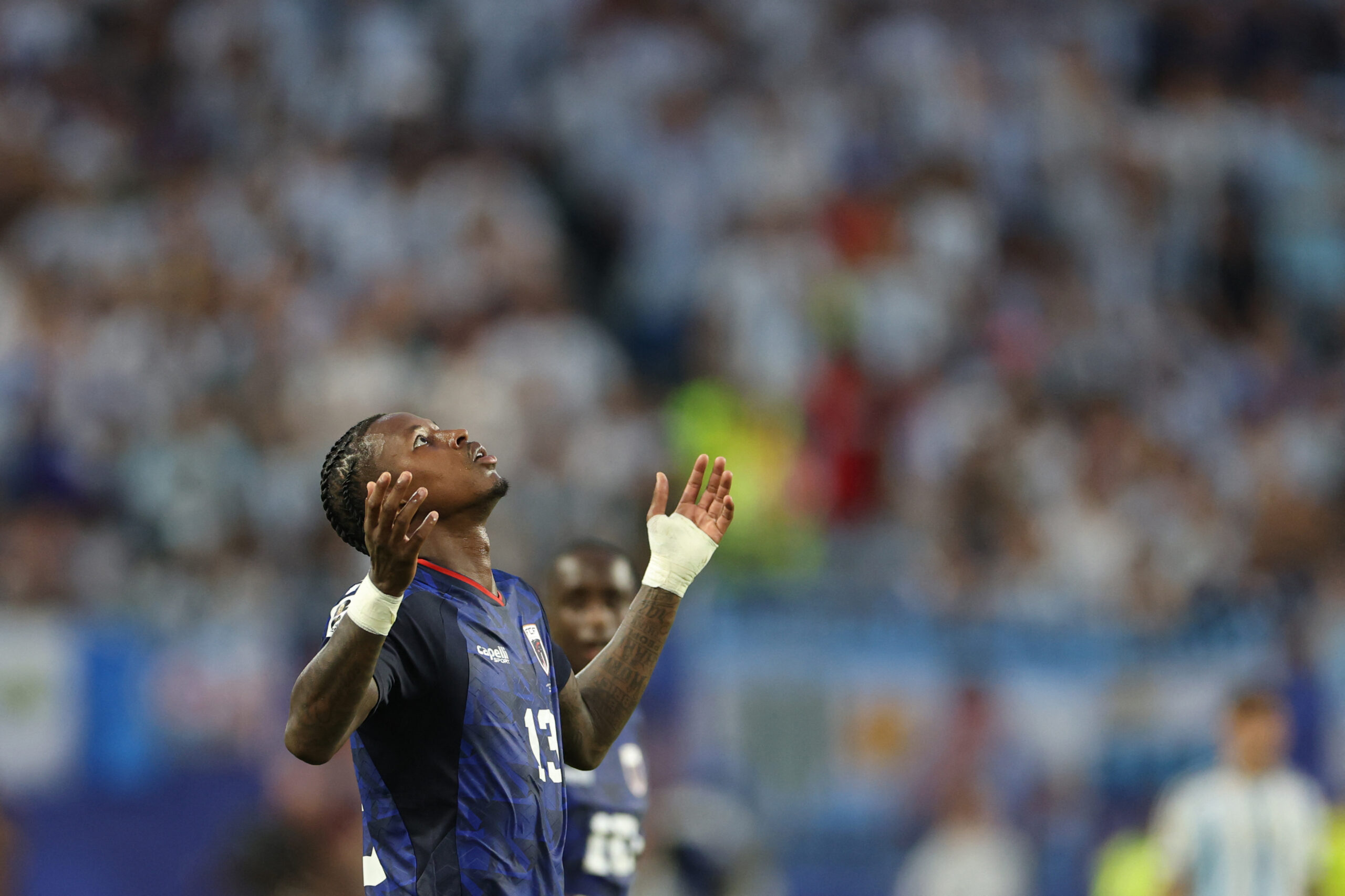
After the violent controversy and bitter aftermath of the African Cup of Nations final between Senegal and Morocco on 28 January – arguably modern African football’s lowest point– the continent’s fans were desperate for a pick-me-up. Just months on from the overturning of Senegal’s win over Morocco following the team’s exit from the field of play for around 15 minutes after a disputed penalty award, the FIFA World Cup in the US, Mexico and Canada offered the ideal platform for Africa to reclaim its reputation for joyful, expressive football and colourful fandom.
With ten African nations having qualified for the tournament – more than ever before, under the new 48-team format – hopes were high that the continent’s stars would make an impact – and they did not disappoint.
Battling all the way
Over an enthralling month, nine out of ten African nations progressed from the group stage. Morocco drew with Brazil and knocked out the Netherlands on penalties in a storming run to the quarter-finals. DR Congo drew with Portugal and gave England an almighty scare in the knockouts.
After a shaky start, South Africa progressed from the group stage for the first time ever, following a battling victory against South Korea. Côte d’Ivoire, Senegal and Algeria all performed creditably to qualify from their groups.
But nobody astonished more than Cape Verde and their heroic goalkeeper Vozinha.
The Blue Sharks shocked the world with a battling 0-0 draw with eventual champions Spain. To prove that wasn’t a fluke, they went unbeaten against Saudi Arabia and Uruguay.
The team, anchored by their now world-famous 40-year old shot-stopper, then thrilled the world with arguably the game of the tournament – an exhilarating 3-2 extra-time defeat to reigning champions (and ultimately, defeated finalists) Argentina.
Of course there were some failures. Tunisia crashed out in the group stage having sacked their manager after the first game, a chastening 5-1 battering at the hands of Sweden. Further heavy defeats to Japan and the Netherlands, in which together they conceded 7 goals for 1 scored, proved that the troubles went well beyond the manager.
Senegal, 2-0 up against Belgium, should really have seen out their round-of-32 game before slumping to a 3-2 extra-time defeat. Ghana, having ground out an impressive group stage draw against England, lacked any cutting edge as they exited against Colombia to little fanfare. Morocco’s quarter final to France – on paper one of the most promising ties – petered out in a limp 2-0 defeat to Les Bleus.
Perhaps most agonisingly of all, Egypt led eventual finalists Argentina 2-0 with barely fifteen minutes to go, before collapsing to a bitter 3-2 defeat following an astonishing Lionel Messi-inspired comeback and some controversial refereeing calls.
On to the next World Cup
There were also disappointments off the pitch. The craven behaviour of FIFA and its President Gianni Infantino in this tournament has not endeared itself to African fans – hosts USA were allowed to get away with banning respected Somali referee Omar Artan and fans from multiple African nations on the flimsiest of pretexts.
But with calls to expand the World Cup to 64 teams next time around – an argument bolstered by the Blue Sharks’ performance – and more chances than ever to qualify from the group stage, Africa is well placed to build on this year’s showing.
African federations, like their global counterparts, are also likely to benefit from Infantino’s hyper-commercialisation of the tournament and its resulting record $15bn revenue pot.
The key now will be setting the stage for a future African finalist by turning encouraging group and round-of-32 performances into regular quarter- and semi-final berths.
Where better than to achieve that at the 2030 World Cup in Spain, Portugal and Morocco?