
South African engineering group Murray & Roberts has collapsed and had its last valuable business acquired by a group of investors, after a drawn-out financial saga that could raise broader questions about the country’s declining industrial base. Murray & Roberts traces its history back to 1902 and, in the century that followed grew to become a symbol of South Africa’s engineering prowess.
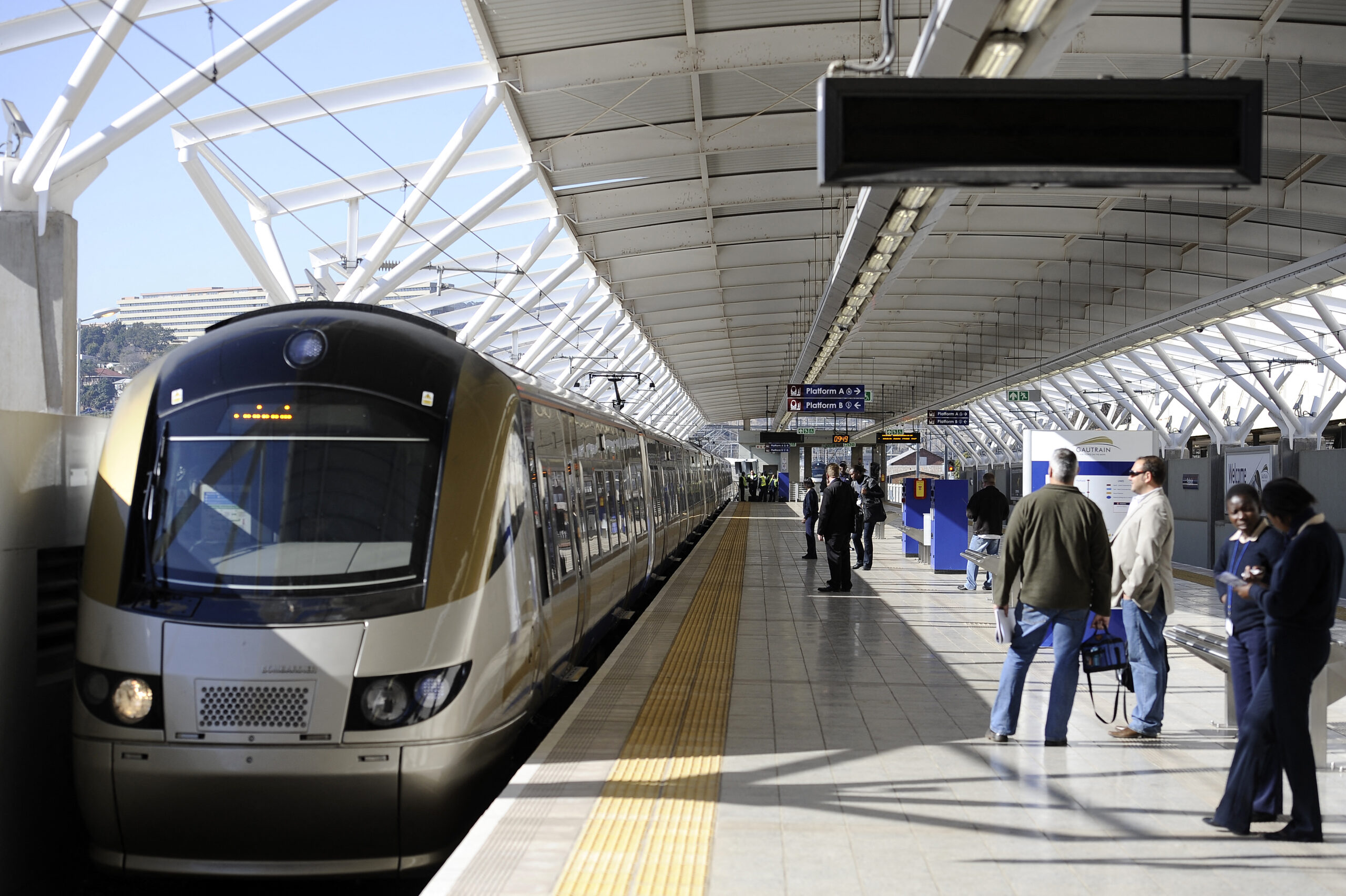
The company’s legacy is tied to some of South Africa’s biggest infrastructure projects: Murray & Roberts was part of the consortium that delivered the Gautrain (pictured), a project to establish the country’s first rapid rail network that cost 25bn rand (approximately $3.5bn at the time). It built the Cape Town Stadium for the 2010 World Cup.
Murray & Roberts was also the main contractor for the Carlton Centre in Johannesburg – the tallest building in Africa until 2019 – and delivered high-profile projects internationally. The company was involved in the construction of Dubai International Airport, for example, and was one of the world’s leading underground mining contractors with operations across Africa, Australia and North and South America.
Diversification diversion
The organisation has been in trouble for some time, however, with some analysts suggesting that many of its financial issues were rooted in the international strategy it pursued in the early 2000s. Murray & Roberts started to diversify into a variety of different industries and regions, acquiring businesses and assets across mining, oil and gas, transport and power.
Most notably it acquired a 29.3% stake in Australian engineering group Clough in November 2004 for 380m rand (then roughly $61m) before taking its stake to 46.1% the following year and then completely acquiring the company in 2013. The idea was to secure exposure to Australia’s then-booming resources sector and, in particular, to the country’s fast-growing liquefied natural gas (LNG) industry.
The Clough acquisition quickly saw Murray & Roberts become bogged down in low-margin energy and infrastructure projects, with delays and cost overruns putting significant pressure on the company’s balance sheet. This contributed to the company’s growing debts – which stood at around 1.4bn rand ($85m) by early 2023 – especially after an attempt to sell Clough failed in 2022.
Power vacuum
At the same time, Murray & Roberts started to face further cash flow pressures in its domestic market, too. In particular, the company was involved in two flagship energy projects in South Africa: the Kusile and Medupi coal-fired power stations commissioned by Eskom, the country’s state-owned utility.
Eskom itself then nearly collapsed after years of state capture which saw billions of rand laundered out of the utility. This, combined with prolonged neglect and underinvestment in its infrastructure, forced the utility to implement load-shedding to prevent a complete breakdown of the grid. Even following government-led debt relief measures and reforms, Eskom’s total debt stands at approximately 360bn rand (approximately $20bn).
Eskom’s situation had severe ramifications for Murray & Roberts as the utility failed to pay on time for the Medupi and Kusile power projects, putting further pressure on cash flow. By the time that Covid-19 hit – and saw construction and mining sites closed down and business grind to a halt globally – Murray & Roberts’ finances were precarious.
Liquidation proceedings finally started in 2025, and the company delisted from the Johannesburg Stock Exchange in January this year. In June a consortium of investors led by Differential Capital acquired Murray & Roberts’ mining interests for 1.27bn rand ($77m) in a bid to retain some of the company’s value.
Following the acquisition Josh Cunliffe, a partner at Metis Strategic Advisors who assisted in Murray & Roberts’ business rescue plan, said that “from the outset, our focus has been on preserving viable businesses, protecting jobs, and maximising value for creditors.”
Deindustrialisation fears as manufacturing takes hit
Murray & Roberts joins a growing number of other previously formidable South African industrial giants which have collapsed in recent years. Tongaat Hulett, one of South Africa’s largest agro-industrial groups, entered business rescue in 2022 after battling a series of financial crises. In 2019, construction giant Group Five went into liquidation.
While it has not yet collapsed, ArcelorMittal South Africa, the successor to state steel company Iscor, has wound down parts of its operation given weak demand, cheap steel imports from China and high electricity costs.
The failure of major construction and engineering firms such as Murray & Roberts has been one driver of South Africa’s deindustrialisation as they previously acted as significant consumers of manufactured goods such as steel, cement and heavy machinery.
Their downfalls have shone a light on what economists have branded South Africa’s “premature deindustrialisation” – a decline in manufacturing before reaching the level of industrial output seen in advanced economies or the level of GDP per capita that would normally presage a shift towards a more service-based economy.
The proportion of the South African economy bound up in manufacturing has declined significantly in the last four decades. While it accounted for roughly 25% of South Africa’s GDP in the 1980s, it now stands at 12%. This has been reflected in job losses in the sector: manufacturing employment has fallen from around 1.4m in 2005 to just over 1m in 2021 – a reduction of almost 30%.
A South African government paper notes that Gauteng province, traditionally South Africa’s industrial heartland, “experienced deindustrialisation between 2014 and 2024, with formal manufacturing employment declining by 9.2% despite continued policy prioritisation of the sector”.
Andrés Fortunato of the Harvard Growth Lab has noted that after 2008 “South Africa’s manufacturing sector suffered a structural break in its economic trajectory,” and “since then, manufacturing employment has never recovered the levels it had before the global financial crisis.” However, he also notes that the slowdown went “beyond the global norm”.
Fortunato argues that South Africa’s electricity crisis has been an especially damaging factor contributing to deindustrialisation. The share of manufacturing firms identifying electricity as their biggest obstacle rose from 19% in 2007 to 62% in 2020, according to the World Bank, with power outages causing production losses and forcing companies to rely increasingly on expensive backup generators.
According to the National Energy Regulator of South Africa (NERSA), the manufacturing sector bore 41% of the total economic cost of load-shedding across the entire economy, while in 2022 alone, load-shedding is estimated to have cost the industry R47.3bn ($2.9bn) in lost gross value added.
These issues, coming at the same time as South Africa has faced external challenges such as cheap competition from Asia and a more fragmented global trading environment, have made the country’s industrial production increasingly uncompetitive. Emphasising this loss of competitiveness, Fortunato highlights that “exports decreased by more than the global demand [that is, South Africa lost global market share] across several manufacturing industries.”
Brian Bruce, a former CEO of Murray & Roberts, has said that its demise is “bad for South African construction and engineering, and our place on the world stage”. Given its iconic status in the South African economy, the collapse of Murray & Roberts has understandably been met with sadness in the country.
However, as South Africa’s manufacturing sector continues to decline through both self-inflicted and external hits, it seems the company’s demise could be indicative of broader ills facing South Africa’s economy.