Africa sent a record ten nations to the 48-team 2026 FIFA World Cup, double the five it was allotted in the previous 32-team format, and nine went on to qualify for the knockout stage
More African teams means more African players, more African storylines, more African faces in front of the cameras, and of course, more reasons for both global and homegrown brands to take advantage of that visibility.
Africa’s performance on the international stage – most notably Morocco’s historic run to the 2022 World Cup semi-finals as well as their current position of 6th on the FIFA world rankings at the time of writing – had already reshaped how marketers perceive African football. Rather than reinforcing familiar underdog narratives, they have demonstrated that African teams can compete with the world’s elite.
The World Cup turns local footballing talent into marketable continental and global assets, an angle long noticed and utilised by leading African and African-focused brands such as MTN, TotalEnergies, Guinness and Unilever.
Personal branding
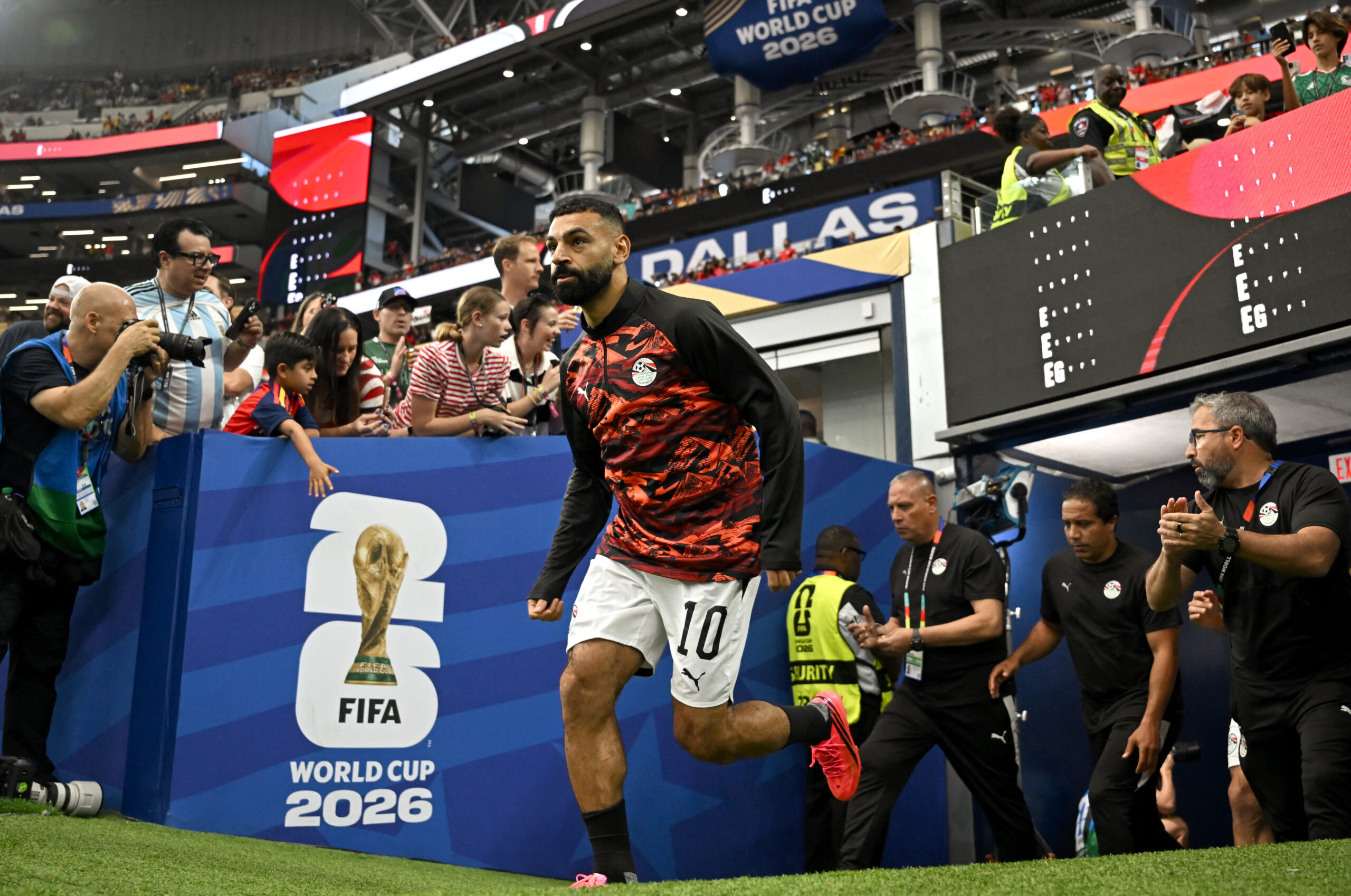
Global star and Egyptian talisman, Mohamed Salah, serves as the best example of an African player running this dual-track endorsement strategy, where he is leveraged by local and regional brands for cultural resonance, and global brands for category credibility simultaneously.
His deal with Adidas, reportedly valued between $5-8m a year, puts him at the forefront of global brand outreach. He has received four signature edition boots over the course of his time with Adidas which all coincided with special career moments and milestones, such as his 2024-25 season as the Premier League’s top scorer or his most recent showing in the African Cup of Nations.
In anticipation of the 2026 World Cup, Adidas launched their “You Got This” campaign across Egypt in June 2026, recasting Salah as a “modern-day Egyptian King,” a cinematic film tracing his journey from a boy travelling hours daily to train, to achieving global stardom, before ending with him atop a pyramid built from footballs as the Anfield “Egyptian King” terrace chant plays. Adidas’ regional GM Bilal Fares stated that Salah “represents far more than football” in Egypt, embodying “faith, determination and resilience.”
Meanwhile on the domestic end of his portfolio of endorsements, Vodafone Egypt has served as one of Salah’s longest-running and most consistent partners, with him serving as a brand ambassador since late 2017, in a deal reportedly worth $3-4m per year. The company even ran a “Mo Salah World” pricing plan, offering customers free voice minutes every time he scored. The deal has since expanded into the world of philanthropy via Vodafone Foundation & UNHCR’s Instant Network Schools programme for refugee education, which Salah fronts as ambassador.
Brand explosions
An Upfluence analysis of the top 20 World Cup squads on Instagram found that Senegal’s national teams official page stood at an engagement rate of 7.6%, well above several major European squads. The analysis flagged African squads broadly as “structurally underactivated”, with high engagement and low brand-tag volume, meaning relatively few sponsors are currently capitalising on this audience efficiency. Senegal winger Ismaïla Sarr’s campaign with Turkish Airline SunExpress was described in the report as “one of the least saturated brand activation spaces in the entire dataset”.
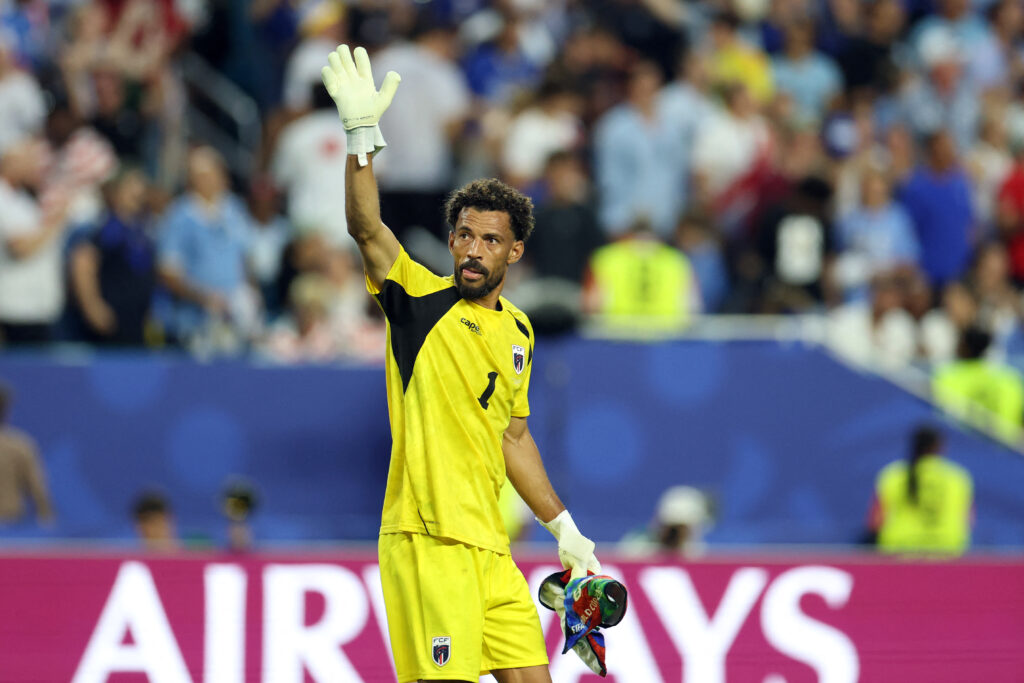
In what Forbes called “a masterclass in online audience building”, Cape Verde goalkeeper and unexpected World Cup hero, Josimar José Évora Dias, better known by the moniker “Vozinha”, went from roughly 50,000 followers to over 15 million in just a few weeks after the tournament kicked off. His follower growth rate peaked in excess of an astonishing 20,000%, the largest percentage gain of any World Cup player this past June.
This growth boom has been attributed to Brazilian broadcaster, CazéTV, who told its audience in the middle of broadcasting Cape Verde’s game against Spain, to stop what they were doing and follow Vozinha’s social media pages after the 40 year old World Cup debutant prevented Lamine Yamal and his compatriots from scoring a single goal in one of the most surprising results of the tournament.
His earnings per sponsored Instagram post reportedly rose to over $130k, and at the peak of this wave of followers, his audience on the platform was larger than that of NBA star Luka Dončić and MLB star Shohei Ohtani. Another relatively unknown player that saw their following boom after a standout performance in this tournament included Morocco’s Ayyoub Bouaddi, who gained 237,935 followers (+221.9%) after a single match.
Betting on underserved and underrepresented markets has already shown a correlation with a greatly enhanced return on endorsement. This is especially true for smaller brands who must be shrewd in maximising their strategic opportunities, given the smaller budgets and lack of cachet they must contend with.
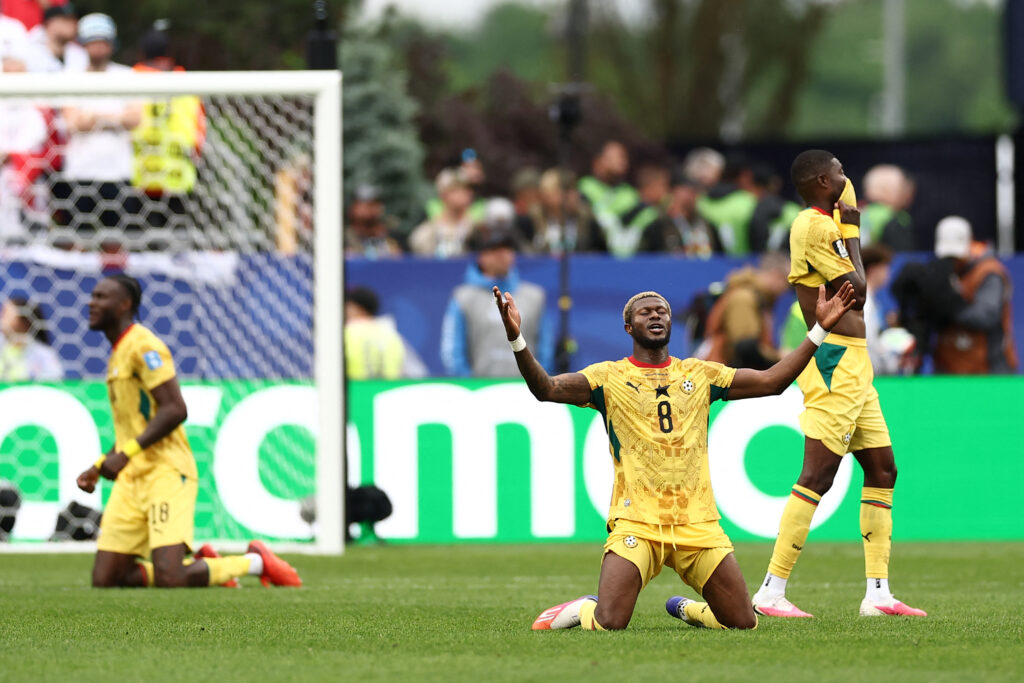
Elite Sport goalkeeping gloves, who sponsor nine goalkeepers in the tournament including Vozinha and Yassine Bounou and Ahmed Reda Tagnaouti of Morocco, have had a stand-out return on their product placement, endorsing both the feel-good story of the tournament as well as two of only the African goalkeepers to make it into the quarter finals. Fledgling Brazilian goalkeeping brand, Luvas Raptor, adopted the same strategy, focusing on keepers from nations such as Uzbekistan, Jordan, Iran, Iraq and Ghana, where goalkeeper Benjamin Asare has proved to be a marquee signing for the brand.
After Asare’s standout showing at the tournament, he has also earned himself domestic sponsorships from Ghana-based companies Polytank and Twellium Industrial Company, who have made him the face of Verna-brand Sports Water.
While compatriot Mohamed Kudus was absent from this World Cup due to injury, his signing to Skechers as an “elite athlete”, heading their Skechers Razor boot was a decision that follows the same logic, alongside his diverse portfolio of domestic-facing endorsements spanning everything from food & beverage with Kivo brands to smartphones with Hong Kong based company, TECNO mobile.
World Cup tie-ups
In 2023, Unilever penned a five-year deal with FIFA to secure the company as Official Care Sponsor for the Federation and its events, covering men’s, women’s and esports competitions including the 2026 FIFA World Cup, extending to and concluding with the 2027 Women’s World Cup in Brazil. Since the sponsorship deal is with Unilever as a company, this has given them the exclusive platform to market over 35 of their brands worldwide, including Dove, Rexona/Degree/Sure, Axe/Lynx, Pepsodent, Closeup and more – covering brand activations across over 120 international markets.
In Africa, Rexona has explicitly positioned itself to the market, emphasising their “heat-activated technology” as a performance aid for the climate, featuring Brazilian superstar Vinicius Jr on special “World Cup Edition” cans, and endorsing teams and influencers with standout stories in key markets such inclusing Ghana’s Benjamin Asare and even famous DRC supporter, Michel “Lumumba Vea” Mboladinga.
African countries in key markets without a participating team have also received attention in the marketing push. Unilever Nigeria also ran a Rexona campaign featuring a promotion rewarding loyal customers who had purchased at least three cans of the deodorant with a chance to win World Cup tickets to Vancouver. Winners were awarded their tickets at a special ceremony held at Prince Ebeano Supermarket in Ikeja, Lagos a week before the tournament.
Rather than treating Africa as a single market, the campaign demonstrates how global sponsors are increasingly localising World Cup activations to individual countries, consumer behaviours and cultural touchpoints.
The business of team kits
Of the 48 teams at the tournament, official FIFA equipment sponsor Adidas outfits 14, Nike 12, and PUMA 11. PUMA’s 11 nation lineup is its largest kit portfolio since 2006, and five of its 11 partner federations are African: Ghana, Senegal, Côte d’Ivoire, Morocco and Egypt, more African nations than any other kit manufacturer clothes.
Focusing on the African market is a strategy the brand has implemented for the past 20 years, with nations such as Ghana and Côte d’Ivoire being sponsored by the brand since at least 2006 alongside legendary African players such as Samuel Eto’o and Asamoah Gyan.
PUMA makes use of its African concentration as a key market differentiator against rivals Adidas and Nike, who historically approach the continent through a small number of marquee contracts.
In fact, as far as national teams in Africa go, Adidas sponsors just two, South Africa and Algeria, and the brand is set to lose their contract with the Algerian federation to PUMA as soon as the 2026 World Cup is over. Meanwhile, the only African nation sponsored by Nike since 2020 has been Nigeria, which failed to qualify for this edition of the tournament, limiting their contribution to Nike’s X2 campaign that saw each sponsored national team collaborate with a homegrown force in the world of art and/or fashion.
While these brands have shifted their focus in Africa to player specific endorsements, PUMA has gone in the other direction, focusing on supplying whole national teams in long term investments designed to build trust and visibility. For the price of a lifetime deal with a top talent, PUMA can instead supply an entire national federation with much needed equipment which can serve everyone from senior players to young stars in the youth system and grassroots levels. This strategy builds brand familiarity in the junior levels especially after 20 years of continued equipment sponsorship, meaning the PUMA logo becomes more and more recognisable in the cities and rural areas of these football loving countries.
Another passive benefit can be seen in the fact that most African players are unlikely to have formally signed sponsorship contracts of their own, meaning that the national team’s equipment sponsorship will include provision of boots and protective gear for these players, making them de facto endorsees of the product by association without PUMA having to pay them to use their products on the world stage.
PUMA’s collaboration with American designer Salehe Bembury, president of sneakers and men’s footwear at Versace, has yielded goalkeeper kits and travel wear for each team, includes cultural references and motifs for each nation, such as a half-toned Kente print for Ghana and a modernised tie-dye pattern reminiscent of the raffia dyeing techniques of the Dida tribe for Côte d’Ivoire.
The collection debuted at a brand activation event in New York, with Ghanaian musician and model, Black Sherif, in attendance, reinforcing PUMA’s push to integrate itself into African youth culture.
Alongside their collaborative collection with Bembury, PUMA released the rest of their jersey offerings for the 2026 World Cup with a community-first block party at Domino Square in Brooklyn. Rather than a traditional on-stage reveal or a closed-doors media event, the brand took the kits directly to the diaspora communities they were designed to represent.
In the weeks leading up to the main event, PUMA embedded activations across New York’s own immigrant neighbourhoods, showing up, as DE-YAN creative director May Ghadanfar put it, “where the game already exists.”
In Astoria, Queens, home to a significant Egyptian and Moroccan community, the brand partnered with a local Moroccan shop during Ramadan, distributing dates and traditional sweets for people to break their fast with. In the Bronx, a Ghana-focused activation brought jollof rice from a local restaurant alongside a surprise appearance from Black Sherif.
All of that momentum converged at Domino Square, where 11 customised trucks, each designed around the national identity of one of PUMA’s partner federations, formed an open-air village around a graffiti-emblazoned pitch. The event functioned less like a product launch and more like a football festival. A 4-on-4 tournament hosted by NYC Footy ran throughout the day, won by Senegal, with two-time African Player of the Year El Hadji Diouf watching on from the stands.
Ghanaian legend Asamoah Gyan, who was present as ambassador for the Black Stars, was effusive about the new kits. He told FourFourTwo: “Our gold shirt represents our minerals. Ghana has the best gold in the world. We’re also the largest cocoa exporter in Africa, and we’ve got the cowrie shells on the shirt too. Everything about it represents the culture we have. I’m jealous of not having worn the gold shirt when I was playing.”
Opportunity knocks as World Cup heads to Africa
GeoPoll’s 2026 Africa Football Survey found that a staggering 91-96% of respondents across Kenya, Ghana, Nigeria, Mozambique and South Africa actively follow football, this remarkably high engagement baseline is reflective of a customer base which is widely utilised and leveraged in markets across the continent but seldom targeted in earnest in a global context.
The ripple effect of the World Cup on African consumer demand is palpable. E-commerce platforms like Jumia and Temu are well-positioned to benefit from increased demand for TVs and projectors, while food and beverage providers and grocery stores also see a spike in sales due to an increased demand for quick and convenient meals and refreshments. Cross-border payments and travel-fintech activity has also spiked, with travel site Wakanow reporting unprecedented transaction volumes tied to World Cup travel.
The data tells a clear story. African audiences are engaged, loyal, and largely uncluttered by the kind of sponsorship saturation that has eroded returns in European markets. The brands realised this early: PUMA building federation relationships over two decades, Elite Sport backing a 40-year-old Cape Verdean goalkeeper before anyone knew his name, or Rexona activating Lumumba Vea and Benjamin Asare, are already earning significant ROI..
With Morocco set to co-host the 2030 World Cup alongside Spain and Portugal, Africa’s window as both a footballing and commercial force is not closing. Brands still treating the continent as an afterthought are leaving value untapped, and may pay more for a seat at the table if they delay.