
El Niño is here. The US National Oceanic and Atmospheric Administration (NOAA) officially declared on 11 June that an El Niño event had begun, after monitoring confirmed that ocean temperatures in equatorial areas of the Pacific Ocean had remained more than 0.5 °C above average for several months.
An El Niño event occurs when trade winds in the Pacific reverse direction, causing warmer water to flow into central and eastern areas of the world’s largest ocean. More warm water then evaporates in the eastern Pacific, which falls as intense rainfall, which in turn triggers disruption to weather patterns globally.
While El Niño is a natural phenomenon that typically comes about every 2 to 7 years, this year’s event is expected to be among the strongest ever. This is partly because climate change means baseline sea surface temperatures are higher than ever, creating a double-whammy effect.
NOAA predicts a 62% chance that water temperatures in the equatorial Pacific will rise more than 2 °C above average, the threshold for a “very strong” El Niño. Much higher localised temperature discrepancies have already been detected in some parts of the region. This matters for Africa because the “Godzilla” El Niño looks set to trigger an unprecedented global wave of extreme weather.
“El Niño conditions will pour fuel on the fire of a warming world,” UN secretary-general António Guterres said in a 2 June video message responding to a World Meteorological Organization (WMO) update.
“Godzilla El Niño” was first coined by NASA Jet Propulsion Laboratory climate scientist Bill Patzert in 2015 to refer to a particularly severe El Niño.
For Africa, the expected climate onslaught could exacerbate existing vulnerabilites.
Parts of the continent are already struggling in the aftermath of prolonged droughts, while rising fuel and fertiliser costs due to the war in the Middle East mean the food security situation is fragile for much of Africa’s population.
Food shortages
“I am very concerned,” says Claus Reiner, regional climate and environmental specialist for East and Southern Africa at the International Fund for Agricultural Development (IFAD).
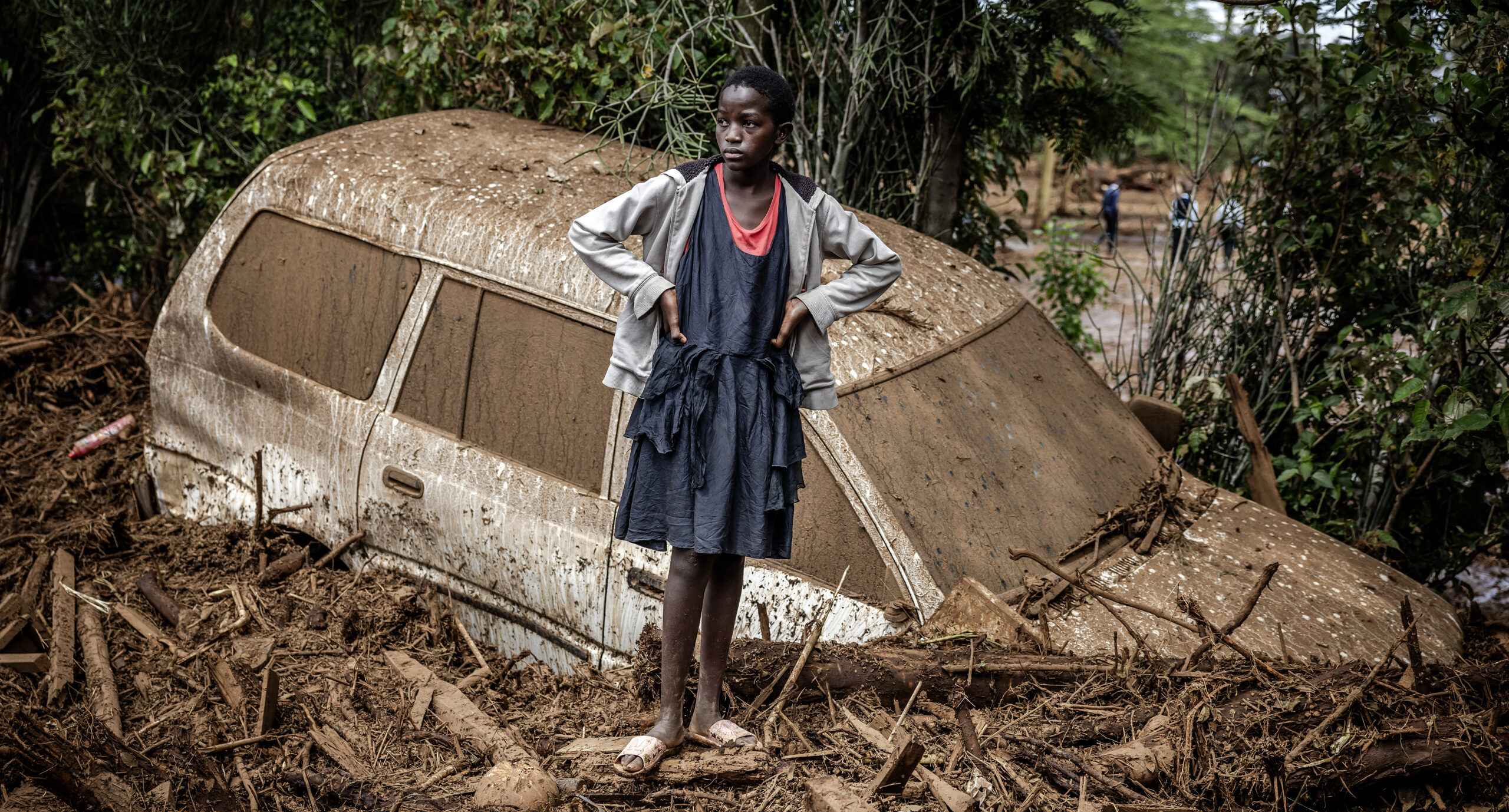
He points to expectations that drought conditions will soon arrive across the Sahel region, extending into parts of the Horn of Africa, as well as into the southern part of the continent. However, the impacts of El Niño will be far from uniform. For example, higher than usual rainfall is expected in Somalia and in coastal regions of Kenya and northern Tanzania.
Both droughts and floods may cause “severe” exacerbation of food insecurity, says Rainer, who notes that some of the worst affected areas are also grappling with the effects of conflict. “In the worst case, drought can mean a complete loss of the harvest including the seeds for the next season, especially if non-adapted varieties, for example of maize, are grown.”
Climate models suggest Africa has just a few months to prepare for the short-term impacts.
In Somalia, for example, the UN’s Food and Agriculture Organization is warning that flood risks will be elevated from October to December. Previous El Niño events have triggered major flooding in the country.
During the most recent El Niño, in 2023 and 2024, flooding is estimated to have displaced 1.2m people and caused at least 118 deaths.
In a statement the FAO’s lead meteorologist for the region, Bethwell Mutai, emphasised the need for urgency. “Preparedness should begin now, not when the rains start.”
Bracing for impact
Parts of Africa have barely recovered from the 2023 to 2024 El Niño cycle. In southern Africa, the worst drought in a century pushed more than 8m people into food insecurity.
That El Niño was considered a “strong” event. It was not as strong as the “Godzilla” El Niño now on the horizon.
The FAO is predicting a more than 50% chance that this year’s El Niño will bring another drought in Namibia and Botswana, along with parts of Angola, South Africa, Madagascar, Mozambique and South Africa.
In South Africa, agricultural commodities – a vital source of export revenue – could come under pressure. Higher temperatures may shift the country’s wine producers into an earlier and shorter harvest window, while grape and citrus production is likely to suffer as irrigation systems struggle to cope.
Electricity production in southern Africa is also likely to be affected by drought, especially in countries such as Zambia that are heavily dependent on hydropower. The Kariba Dam has been plagued by operational difficulties in recent years, due to a combination of poor maintenance and lower rainfall. If another major drought causes its reservoir levels to plummet, the decline in electricity output will have major knock-on effects across the economy, including in power hungry industries such as mining.
Prepare for El Niño now
With an even stronger El Niño now on the horizon, development organisations are ramping up efforts to ensure a response is in place.
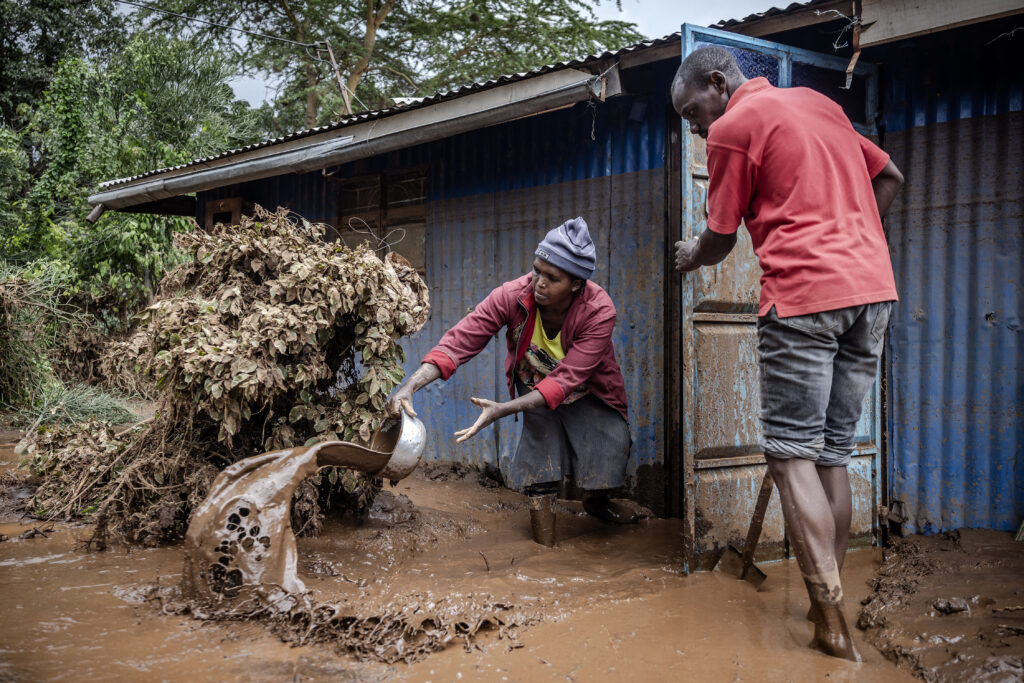
Betty Ojeny, water, sanitation and hygiene governance adviser for Oxfam in Africa, warns that Africa can expect “massive destruction of properties,” including water and sanitation facilities. This, in turn, will worsen outbreaks of diseases such as cholera, she says, while flooding will lead to large-scale population displacement.
The ability of aid organisations to respond has not been helped by the cutbacks to donor funding, including the shutdown of the US Agency for International Development (USAID) and reduced European aid budgets. Ojeny notes that this is already leading to major humanitarian impacts: aid agencies in displaced persons camps, for example, have been forced to reduce food rations in some cases.
“With the coming of El Niño, I think the situation is likely to worsen, because the capacity remains very, very much reduced, but the needs increase.”
Oxfam is now working with other aid groups to coordinate preparations and develop contingency plans for El Niño, Ojeny tells African Business.
She adds that Oxfam is preparing to activate its “crisis modifier” funding mechanisms – meaning that it can shift its donor-funded programmes away from longer-term projects towards crisis preparation and response. Ojeny is hopeful that an anticipatory action appeal will result in funding becoming available ahead of what is expected to be the most severe phase of El Niño in late 2026. This is vital, she says, “so that we get some of this funding in good time, and don’t wait to respond when El Niño has started… What we need to do is to get to work.”
But despite the efforts to strengthen humanitarian preparations, the reality is that basic infrastructure is fragile or, in some cases, entirely absent in parts of the continent.
‘Too much water or no water’
“Climate crisis preparedness remains far too weak to match the scale and magnitude of its impacts,” says Ayan Harare, Somalia’s national climate finance coordinator.
“The problem in Somalia is too much water or no water, and that can only get fixed through water management systems,” she says, noting the need for investment in flood prevention infrastructure, alongside reservoirs, dams, water harvesting systems and improved sewerage.
Yet finding money to pay for these vital adaptation measures is easier said than done.
The reality is that no-one expects this year’s El Niño to be the last or the largest.
“The next shock is not a question of if, but when,” says IFAD’s Claus Reiner. “We see it with El Niño today. That is why we must invest early in resilience, supporting small-scale farmers at the first mile of food production. Prevention is not only more effective, it is far more cost-efficient than responding after a crisis has taken hold.”
But Harare laments the very slow progress in providing finance to help developing countries adapt to the impacts of climate. “There’s nothing moving when it comes to adaptation finance, and unless we put that in place, it’s just going to get worse and worse.”
On paper, the wealthy countries that bear primary responsibility for the climate crisis have committed to supporting the developing countries whose historic emissions are negligible. A goal of scaling climate finance to $100bn a year was first unveiled in 2009, while the COP29 summit in Baku in 2024 wrapped up with a vague goal to triple financial resources for adaptation and mitigation.
Where is the adaptation finance?
Yet the adaptation finance actually available to a country like Somalia is “a drop in the ocean,” Harare says. Adaptation finance and climate finance in general is “very hard to access for vulnerable countries that are actually hit hardest by the climate crisis,” she adds.
“You might go through two, three, four disasters while you are waiting for one project.”
“Adaptation needs real finance on the ground, and a lens of long-term investment, because preventing a crisis is significantly cheaper than dealing with its aftermath,” says Harare. “Addressing this global crisis also requires a coordinated global response and significantly greater investment in preparedness and adaptation.
For Africa, what matters now is to make the most of what time is left to prepare before the full force of El Niño arrives.