The African Union Development Agency (AUDA-NEPAD) has launched its first continental programme dedicated to Africa’s island economies, bringing together seven island nations under a five-year framework aimed at tackling climate change, strengthening trade and transport links, and creating new economic opportunities.
The Programme for African Developing Island Economies will include Cabo Verde, the Comoros, Guinea-Bissau, Madagascar, Mauritius, São Tomé and Príncipe, and Seychelles, and will run from 2026 to 2031.
The programme is designed to address challenges that mainland African countries do not always face. While the island states have ocean resources, they also have small domestic markets, limited transport connections, and economies that are highly vulnerable to climate change.
The initiative is built around six priority areas: blue economy and ocean stewardship, climate resilience and adaptation, sustainable energy and water, connectivity and AfCFTA integration, youth employment and skills, and digital transformation. It also encourages investment in industrialisation, digital infrastructure, artificial intelligence, and the knowledge economy to help diversify island economies beyond traditional industries.
Island states’ unique challenges
Climate change remains one of the biggest threats facing the seven nations. Rising sea levels, stronger storms, and coastal erosion are putting pressure on homes, ports, and roads, while warming oceans are affecting marine ecosystems. Many of these countries depend on tourism and fisheries, meaning environmental changes can affect jobs, incomes, and food security.
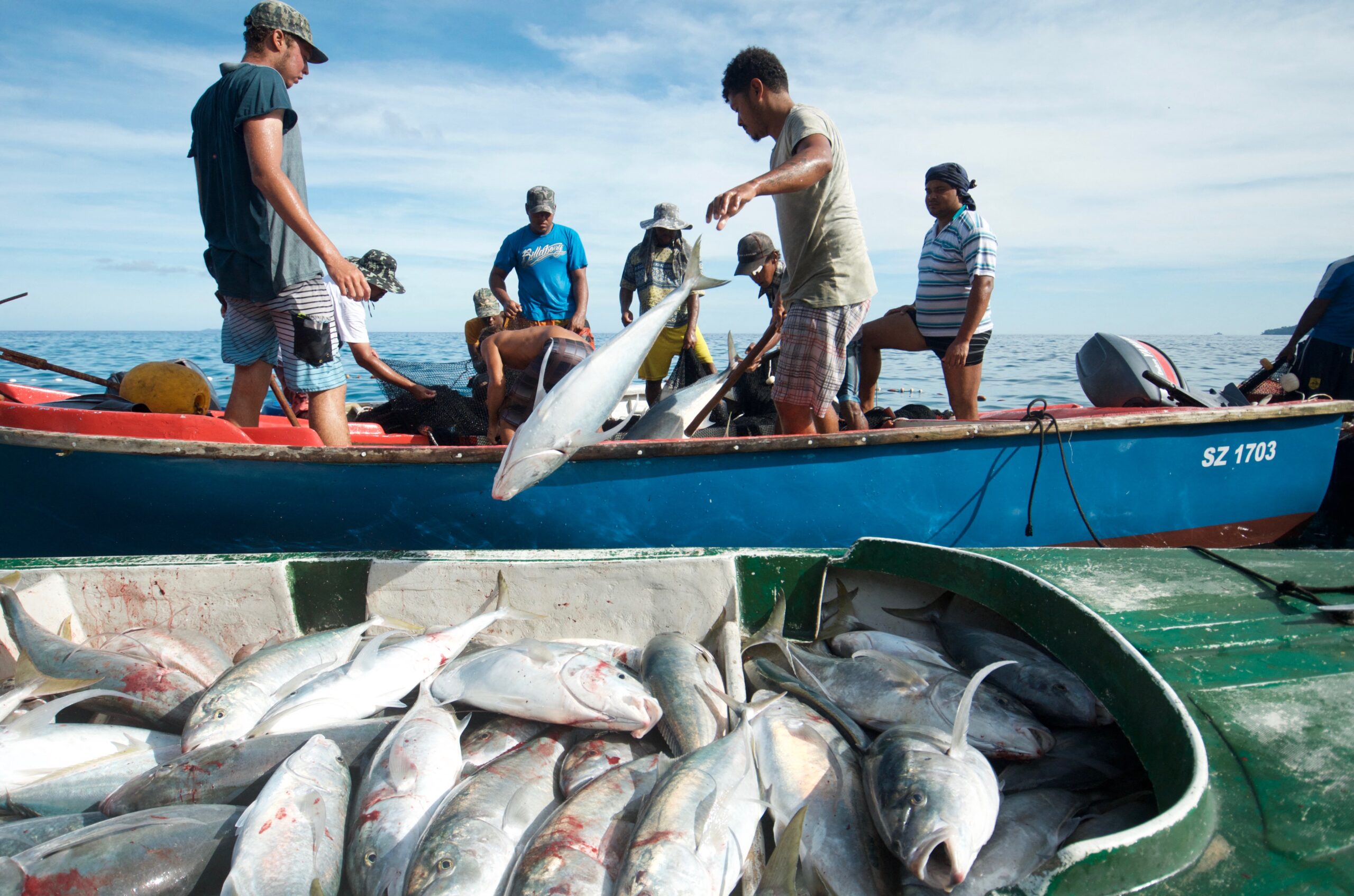
Fisheries are one of the region’s greatest economic opportunities, but many island states struggle to benefit fully from their ocean resources.
Together, the seven countries in the programme control an exclusive economic zone covering more than five million square kilometres – larger than the landmass of the European Union. However, much of the fish caught in their waters is exported before being processed, meaning that higher-value industries and jobs are often created elsewhere. AUDA-NEPAD hopes the programme will encourage greater investment in local industries, enabling countries to add value to their marine resources before exporting them.
Trade infrastructure is another major challenge. Although the island states are surrounded by the ocean, there are currently no direct maritime links connecting all seven countries. Goods often travel through ports outside Africa before reaching neighboring islands, increasing transport costs and delivery times. Limited air and sea connectivity has also made it harder for businesses to expand into regional markets and benefit fully from the African Continental Free Trade Area (AfCFTA).
Turning distance and small scale into advantage
Speaking at the launch, AUDA-NEPAD chief executive officer Nardos Bekele-Thomas said the programme recognises the important role island economies can play in Africa’s future.
“Africa’s island economies are not at the margin of our transformation; they are at its frontier,” she said.
“This programme meets them where they are, with a framework they own, and with the accelerators that turn distance and small scale into advantage.”
The framework was developed through consultations with officials from the seven participating countries. Ministers later adopted a communiqué confirming their commitment to the programme and inviting development partners to support its implementation.
The programme is being delivered in partnership with Korea, the African Development Bank, regional economic communities, and the Indian Ocean Commission – an intergovernmental organisation that links Comoros, Madagascar, Mauritius, Réunion, and Seychelles.