
For too long, Africa has been framed as a future opportunity: a market whose moment would come later. That framing no longer holds. Across energy, infrastructure, trade and critical minerals, Africa is becoming more central to how global growth, capital and supply chains are being reshaped. For investors, corporates and policymakers alike, the strategic question is no longer whether Africa matters, but how to engage with momentum already underway.
Africa may be entering the most consequential decade of capital formation in its modern history. Energy systems are being re-engineered, infrastructure is scaling, trade corridors are shifting and the continent’s role in global supply chains is becoming more strategic by the year. These trends are not unfolding one by one; they are converging at pace. That is what makes this moment significant.
A structural growth proposition
At its core, Africa’s growth proposition is no longer speculative. It is structural.
Consider energy and infrastructure first. Africa’s energy investment requirements alone are estimated at between $130bn and $170bn per annum, with infrastructure needs at around $170bn annually. These numbers reflect real demand driven by population growth, urbanisation, industrialisation and digital adoption. They also reflect a global energy transition that cannot succeed without Africa – whether through renewable generation, transmission infrastructure, or the minerals required to electrify the world.
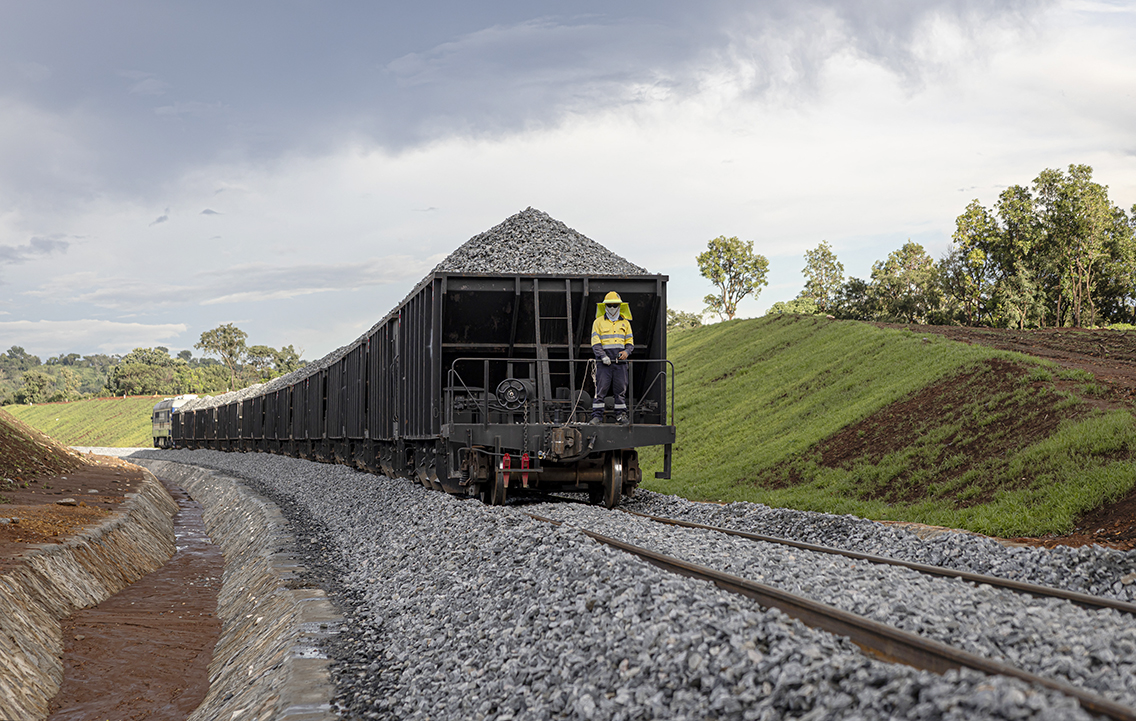
Infrastructure development, in particular, remains the backbone of Africa’s growth trajectory. Transport and logistics networks – ports, rail and roads – alongside water systems, digital connectivity and urban infrastructure are not just development priorities; they are economic multipliers. Efficient infrastructure reduces the cost of doing business, raises productivity and enables African economies to function as integrated markets rather than fragmented national systems. Every dollar invested has a ripple effect across trade, employment and competitiveness.
Reconfiguring corridors
The second structural driver is trade and the reconfiguration of corridors reshaping how goods and capital move globally. In recent years, geopolitical tensions, supply chain disruptions and a reassessment of concentration risk have prompted companies and governments to rethink where and how they produce and source materials.
As a result, corridors connecting Africa with Europe, China, the US and the Gulf Cooperation Council (GCC) states have gained greater relevance in global trade.
Africa’s key trade routes – Africa-EU, China-Africa and GCC-Africa – already represent more than $1 trillion in annual trade flows, growing at between 4% and 10% per year.
This growth is being supported by increased industrialisation, deeper regional integration and the rise of domestic and regional champions.
For African economies, the opportunity is not simply to export more, but to export differently: diversifying product mixes, moving up value chains and integrating competitively into the global economy. Trade, however, does not stand alone. It is increasingly intertwined with Africa’s third major growth driver: critical minerals.
Critical minerals
Africa sits at the heart of the global energy transition. The continent produces approximately 77% of the world’s cobalt; and countries such as the Democratic Republic of Congo and Zambia play pivotal roles in global copper supply.
These minerals are foundational to electrification, renewable energy infrastructure, battery storage and the expansion of power grids worldwide. Simply put, there is no global decarbonisation pathway that bypasses Africa.
Yet the real opportunity lies beyond extraction. Africa’s next phase of growth will be defined by its ability to develop integrated mineral value chains – processing, beneficiation and the enabling infrastructure that supports them.
Doing so allows natural resource wealth to translate into industrial capability, skilled employment and long-term economic resilience. It also reshapes Africa’s position in global supply chains: from that of a raw material supplier to a value-adding partner.
What distinguishes this moment from previous cycles is that these drivers – energy, infrastructure, trade and minerals – are interdependent and structurally integrated. Infrastructure enables trade. Trade supports scale.
Critical minerals attract long-term global capital. Together, they form a growth ecosystem rather than a set of isolated investment themes. Of course, none of this suggests that Africa’s path is without complexity. Structural reforms, policy certainty, risk mitigation and effective capital mobilisation remain essential. But complexity should not be confused with fragility. In many respects,
Africa has spent decades building resilience – learning how to operate, grow and innovate through economic cycles.
Partnership, participation and strategic relevance
Africa’s story today is not one of charity or patience. It is one of partnership, participation and strategic relevance. The question for global investors and businesses is no longer whether Africa has potential, but whether they are positioned to participate in the opportunity already taking shape.
For global investors, banks and corporates, the implication is clear: Africa is no longer a peripheral allocation or a long-dated prospect. It is becoming a more important arena for capital, trade and strategic positioning. The institutions that will be best placed in the decade ahead will be those that treat Africa not as a side bet on future growth, but as part of the architecture of global growth itself.