
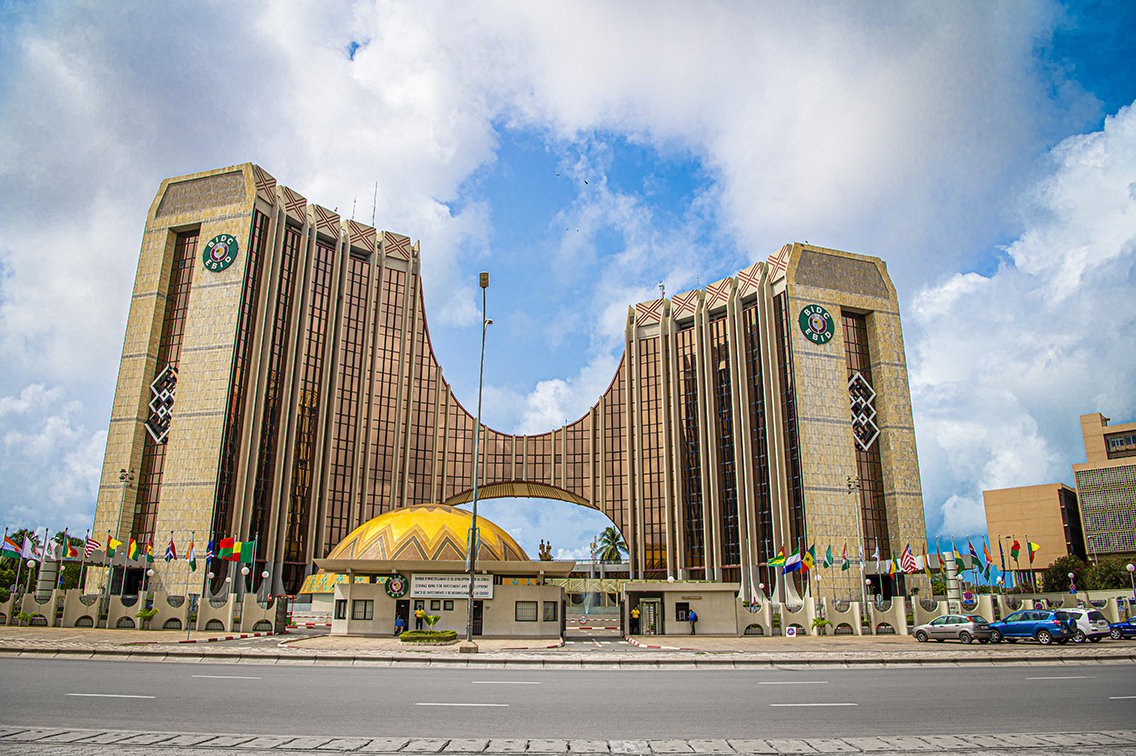
West Africa delivered one of its strongest macroeconomic performances in recent years in 2025, with robust economic growth, easing inflation, narrowing fiscal deficits, and declining debt levels and an improving external position. However, the region’s outlook for 2026 and 2027 has become more uncertain as geopolitical tensions, higher energy prices and food security concerns threaten to erode these gains, according to the 2026 West African Development Outlook, published by the ECOWAS Bank for Investment and Development.
Presenting the findings of the report, in a virtual briefing on 7th July, 2026, Dr Joseph Kwadwo Asenso, Head of the bank’s Macroeconomic Rresearch and Sstudies Division, said the region entered 2026 from a position of strength, but warned that external shocks, particularly the conflict in the Middle East, have introduced fresh risks for the region.
“We recorded strong growth, inflation declined significantly, fiscal deficits narrowed, debt ratios fell and current account balances improved,” he noted, warning however, that “while the outlook remains promising, it is also fragile because a number of external shocks could quickly reverse these gains if they are not managed well.”
According to the report, which is titled “Distant tremors, familiar shocks,” regional GDP growth reached 4.8% in 2025, with virtually all West African economies recording stronger growth than the previous year. Nigeria remained the region’s largest economy, accounting for 41.2% of West Africa’s nominal GDP, followed by Ghana (16.3%) and Côte d’Ivoire (14%), while the remaining 12 countries accounted for 28.5%.
Inflation also declined markedly across the region during the year, while fiscal balances improved as government revenues generally outpaced expenditure growth. Public debt ratios fell, with the number of countries whose debt exceeded 70% of GDP declining from five at the end of 2024 to four by the close of 2025. Current account balances also strengthened, supported by improved export performance.
Despite these gains, Asenso noted that economic growth had not translated into sufficient job creation. “Unemployment worsened slightly because our economies were unable to absorb the growing number of young people entering the labour market. Labour productivity also grew more slowly than expected, and poverty indicators deteriorated in many countries despite the stronger macroeconomic performance,” he said.
The report forecasts that the region will grow at 4.7% in 2026, a little below the previous year’s performance due to the impact of rising prices and supply disruptions experienced during the first half of the year. While inflation is expected to continue easing overall, the report also predicts that higher food and energy costs will create renewed inflationary pressures. Fiscal deficits are also projected to widen from 2.6% of GDP to 3.5%, partly because governments have introduced fuel subsidies and removed petroleum taxes to cushion consumers from rising prices.
Debt, however, is expected to continue declining relative to GDP, while commodity-exporting countries should benefit from favourable prices for oil, gold and other minerals, helping to strengthen external balances.
Asenso said favourable commodity prices and rising production present an opportunity for several countries to strengthen their economies. He pointed to increased oil production in Nigeria and Côte d’Ivoire, expanding gold production in Ghana and Burkina Faso, and higher iron ore and bauxite output in Guinea as developments that could help governments rebuild foreign exchange reserves and strengthen their resilience against future shocks.
“If favourable commodity prices continue, countries that export oil, gold and other minerals should use this opportunity to build their reserve buffers and strengthen their economies against future shocks,” Asenso advised, pointing out that “higher production combined with strong international prices creates an opportunity that should not be wasted.”
In spite of these opportunities, several downside risks remain for the region. Key among those identified by the report are the potential strain on public finances due to prolonged subsidies, fertiliser shortages with implications for food security, renewed inflation, exchange rate pressures arising from a stronger US dollar, widespread electricity outages and tighter monetary policy if inflation accelerates further.
Asenso explained that although the conflict in the Middle East may appear geographically distant, its economic consequences are being felt directly across West Africa through disruptions to global shipping routes and higher commodity prices. “Even if West Africa does not import all its crude oil or fertiliser from the Middle East, shortages in global markets drive up international prices. Since producers benchmark against global prices, our economies inevitably feel the effects through higher fuel costs, increased inflation and greater pressure on exchange rates,” he explained.
Additionally, Asenso warned that stronger global inflation could force central banks to delay interest rate cuts or even tighten monetary policy further, increasing borrowing costs for governments, businesses and development finance institutions.
To reduce vulnerability to external shocks, Asenso urged West African countries to accelerate investment in domestic refining capacity, fertiliser production and intra-African trade. Nigeria’s ability to supply refined petroleum products to neighbouring countries during recent global supply disruptions, he pointed out, have demonstrated the importance of developing regional industrial capacity.
“We need to build stronger resilience from within. That means expanding refining capacity, increasing fertiliser production, strengthening regional value chains and trading more among ourselves. We must use today’s favourable commodity prices to build reserves, strengthen fiscal space and prepare our economies for future external shocks rather than waiting until the next crisis arrives,” Asenso stressed.
Responding to a question on how EBID is supporting member states to reduce their exposure to external shocks, Asenso explained that the bank’s strategy is to invest in productive sectors that can boost resilience. “One of the key things we are seeking to do over the next five years is to invest in the growth drivers of our member countries – agriculture, industry and services. Our objective is to help these sectors reach their full potential by investing across their value chains,” he said.
On whether countries are already benefiting from elevated commodity prices, the Asenso pointed out that many producers in the region had assumed prices of around $73 a barrel in their budgets, compared to the above $70 prices currently, and an average of above $80 from year to date. That means commodity-exporting countries are benefiting from relatively favourable prices. The important thing now is to use this period wisely and prepare for whatever comes next,” he observed.
Asenso further cautioned that a succession of global crises such as the COVID-19 pandemic, the Russia-Ukraine war and the recent conflict involving Iran demonstrates that external shocks are becoming a recurring feature of the global economy. As West African economies become increasingly integrated into international markets, he said, they are also becoming more exposed to events beyond the region’s control. That is why countries must build buffers by managing expenditure prudently, increasing domestic revenue and trading more among themselves. Those are the measures that will make our economies more resilient.”
Asked whether governments across the region are pursuing fiscal strategies that reduce borrowing pressures, Asenso stressed that the bank’s approach is not limited to sovereign loans but increasingly focuses on mobilising private capital through partnerships that deliver infrastructure without adding significantly to public debt. This, he said, enables states to expand their infrastructure without adding to their debt stock.
Asenso also observed that some countries spend a significant share of their revenue on debt servicing and need to adopt new approaches to address this challenge. “The way forward is to increase domestic revenue mobilisation and diversify revenue sources so that governments are better able to meet their debt obligations while continuing to finance development priorities,” he suggested.
On trade, Asenso noted that intra-regional trade in Africa has remained below 10%, in spite of the disruptions to global trade since 2020. The African Continental Free Trade Area, he said, offers an avenue to boost regional trade by reducing barriers to trade and strengthening regional production links.
In his closing remarks, Dr George Agyekum Donkor, President and Chairman of the Board of Directors of the bank, stressed that development institutions in West Africa have a responsibility to help countries strengthen their economic foundations by supporting policies and investments that promote macroeconomic stability. “As a DFI in the West African region, we are supposed to succeed and actually support member countries to be able to achieve very efficient and stable macroeconomic indicators,” he said.
He noted that agriculture remains a critical sector for development finance institutions, drawing lessons from the economic transformation of other regions. “It is very important as a financial institution, as a DFI, to pay attention to agriculture,” he said, adding that the rapid industrialisation of Europe in the 19th century and the expansion of Asian economies after the Second World War were largely driven by industrialisation strategies supported by DFIs.
He argued that Africa’s development prospects would remain limited if countries continued exporting mainly unprocessed agricultural products. Instead, he called for greater investment in processing and manufacturing to enable African economies to capture more value from their resources. “If we want to make an impact in terms of hard foreign asset earnings, then we need to convert some of these into manufactured products which have an income on the world market,” he added.
Dr Agyekum said the bank would continue committing resources to strategic sectors in line with its GRO Strategy (2026-2030). “The bank is committed to its mandate by actually supporting all the people to fulfil their respective development agendas,” he declared.
Growth
GDP growth rose modestly to 4.8% (up from 4.7% in 2024).
Inflation
Dropped sharply by nearly 9 percentage points to an average of 16.8%, aided by falling food/energy prices and currency stability.
Fiscal health
The fiscal deficit narrowed to -2.6% of GDP (from -3.7%), driving public debt down significantly to 49.3% of GDP.
External position
The current account surplus expanded from 0.3% to 1.8% of GDP.
The growth outlook
Medium-term growth is projected to remain resilient but fragile, hovering between 4.7% and 4.9% through 2027.
The growth paradox
Despite stellar macroeconomic gains, working poverty worsened across all countries, revealing that the economic rebound was not inclusive.
Intra-regional trade
Global disruptions have inadvertently boosted regional trade in fuel, fertilizer, and food, paving a pathway toward lower import dependence.
Commodity windfall
Elevated global prices for oil, gold, and minerals offer upside revenue potential and fiscal space for exporting nations.
Key risks ahead
Progress remains vulnerable to renewed inflation, food insecurity, fiscal slippages, exchange rate pressures, and power outages.