
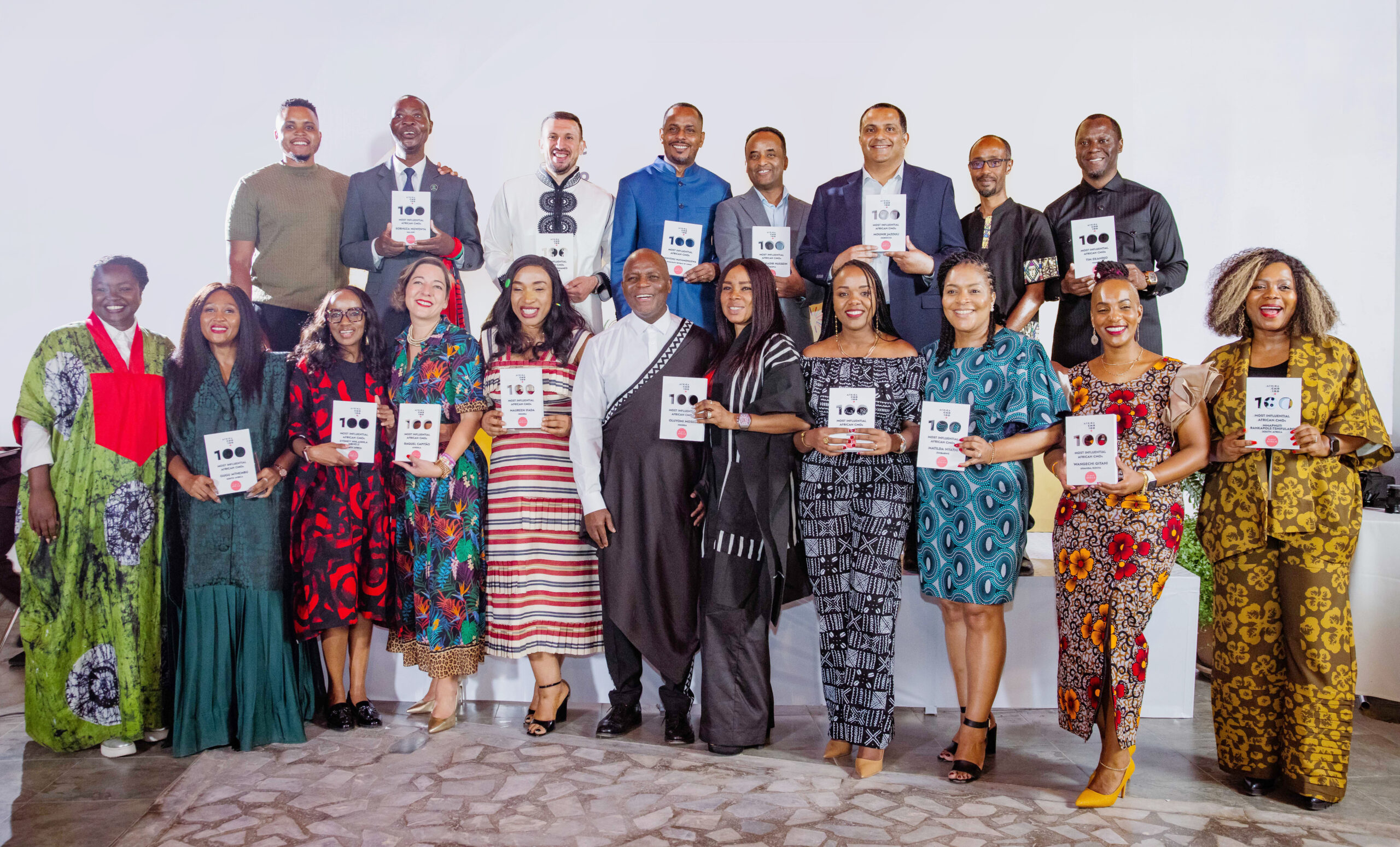
As the Addis Ababa skyline turned gold over the Ethiopian highlands, the rooftop terrace of the Hyatt Regency filled with a different kind of energy – and quiet recognition of something long overdue: the inaugural Africa Chief Marketing Officer 100 ahead of the Africa CMO Forum.
Hosted by Brand Africa in partnership with the African Union Commission, Opportunity Africa and African Business, presented by Absa and supported by the Ethiopian Marketing Professionals Association, the evening marked the first formal recognition of the 100 most Influential African and diaspora CMOs. The 100 honourees, drawn from 21 nations in Africa and the diaspora, lead brands whose combined global revenues approach $750bn to $800bn. It was, as Brand Africa founder and chairman Thebe Ikalafeng put it, not a celebration of individuals but of the unseen force behind the brands that shape how Africa sees itself and how the world sees Africa.
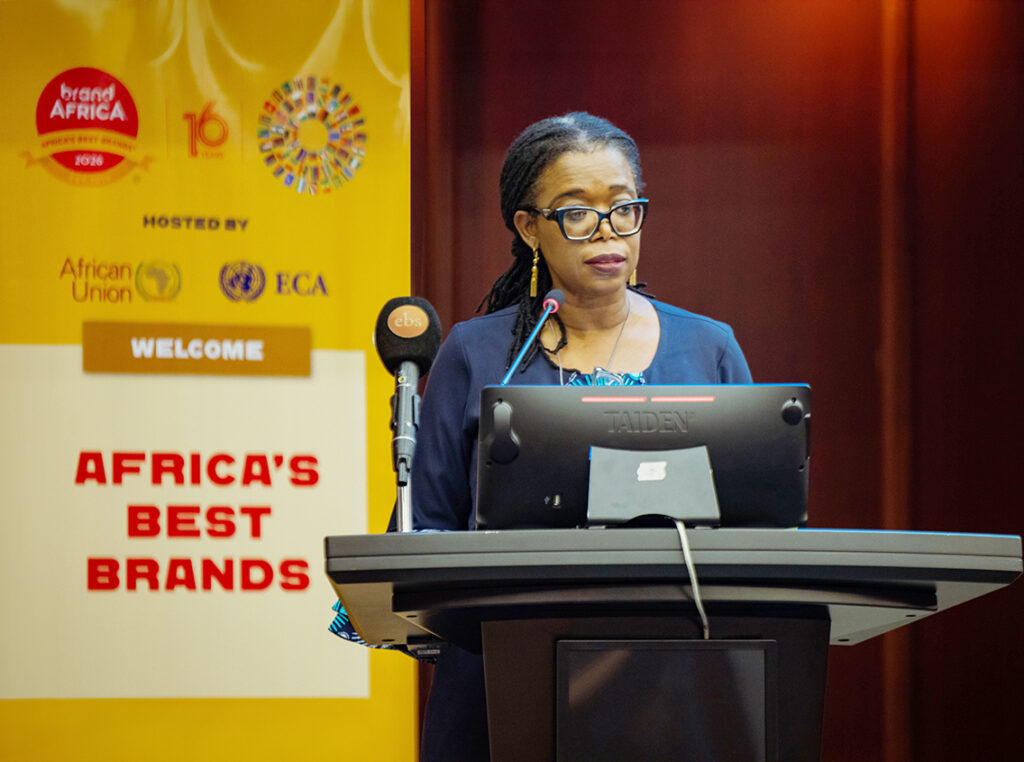
Delivering the keynote on behalf of Sydney Nhlanhla Mbhele, group CMO of Absa, Mwihaki Wachira, the CMO of Absa Kenya, drew on the importance of African storytelling as the continent’s most enduring marketing instrument.
“For too long, the African story was a commodity sold by outsiders. But the lion has found its voice. The campfire is no longer just in the village; it is on every smartphone, in every boardroom, and on every streaming platform. The world is hungry for the soul of Africa. Our stories matter,” Wachira declared. The list itself – research-based, independent, unpaid, unsponsored and not self-nominated – spans all six economic regions of the continent and the diaspora. It was produced by Brand Africa in collaboration with African Business magazine, Most Influential People of African Descent (MIPAD) and African Media Agency. Its integrity is its rigour, independence and coverage.
The inaugural Africa CMO Forum
If the evening at the Hyatt was a celebration, the meeting at the Africa Hall was a reckoning. The honourees and the African Union reconvened at the landmark United Nations Economic Commission for Africa (UNECA) venue, where the Organisation of African Unity was founded in 1963 – a deliberate choice of setting – to debate brand leadership, narrative power and economic integration as catalysts for a “made in Africa” and “buy Africa” renaissance.
Representing the African Union Commission, Faith Ochieng Odhiambo opened the proceedings by anchoring the day’s work within the continent’s broader institutional ambitions under Agenda 2063 and the African Continental Free Trade Area (AfCFTA).
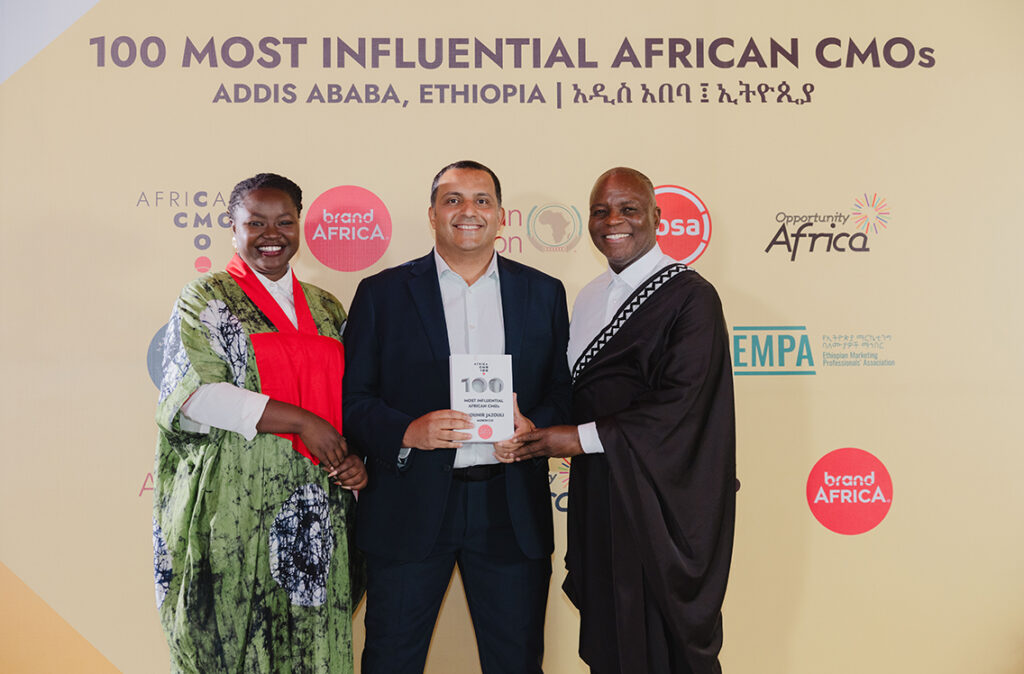
Four structural questions
Thebe Ikalafeng then opened with a provocation: “African brands are world-class. The problem is not the product – it is the story. And we, in this room, are the storytellers. So what are we waiting for?”
His presentation framed four structural questions for the room – on origin as brand asset, consumer choice, standards harmonisation and narrative reframe.
Dr. Oswald Chinyamakobvu is senior technical advisor within the Department of Economic development, Trade, Industry and Mining (ETIM) at the African Union Commission. He presented the Made-in-Africa Mark Certification Scheme (MMCS) – a voluntary certification framework built on the Africa Quality Policy, requiring products to meet harmonised standards, comply with AfCFTA rules of origin and satisfy accreditation and intellectual property (IP) requirements. Set to pilot in 2027, it gave the CMOs in the room a concrete policy scaffold: a continental mark of trust, quality and origin.
The day closed with the pre-launch of Opportunity Africa’s #NotWaiting campaign, presented by Moky Makura, executive director of Africa No Filter. This is not a campaign to watch, but a movement to join, he said, centred on African youth as the primary storytellers of a new continental identity.
The forum was followed with a dinner at Marcus Addis, a 5-star restaurant on the 47th floor of the Commercial Bank of Ethiopia head office tower. It was founded by the globally celebrated restauranteur, Ethiopian-born, Swedish raised and US-based Marcus Samuelsson.
The 16th annual Brand Africa 100
On Africa Day, Brand Africa announced the results of its 16th annual Brand Africa 100 – Africa’s Best Brands survey – the most comprehensive consumer-led study of brands across the continent, covering 30 countries representing more than 85% of Africa’s population and GDP. Before the results were announced, Marcel Bolboaca of the UNECA Publications and Conference Management Section set the stage with a brief history of Africa Hall – from its inauguration by Emperor Haile Selassie I in 1961, through its role as the birthplace of the Organisation of African Unity in 1963, to its recent renewal, completed in 2024.
The headline of 2026 is one of resurgence. African brands rebounded to 15% of the Top 100, up from a historic low of 11% in 2025 – the sharpest single-year recovery the survey has recorded. MTN, Dangote, Standard Bank and Ethiopian Airlines lead the African brands list. But for the ninth consecutive year the five most admired brands in Africa are all foreign: Nike, Adidas, Samsung, Apple and Coca-Cola. That gap – between what Africans believe about their continent and what they choose to buy – sat at the heart of the keynote by Dr. Mama Keita, Deputy Executive Secretary for Programme Support at the Economic Commission for Africa (ECA). She argued that Africa’s image and economic fortunes are inseparable. “Africa’s image is Africa’s brand. And Africa’s brand is Africa’s economy. The gap between belief in Africa and buying African brands is not simply a branding problem – it is a development challenge. It represents lost opportunities for intra-African trade, unrealised industrialisation, forgone jobs, weakened value chains and constrained competitiveness. It will not close through optimism alone.” The data made the challenge concrete. While 80% of Africans believe in Africa, made-in-Africa brands command only 15% of the most admired brands in Africa. This year, Standard Bank (South Africa), OCP Group (Morocco) and Equity Bank (Kenya) were inaugurated into the Brand Africa Hall of Fame, reserved for brands that have defined what it means to build with and for the continent.
Brand Africa Week 2026 closed as it opened, with the conviction that the story of Africa is Africa’s to tell, and that the people best placed to tell it are African CMOs through their brands and stories.