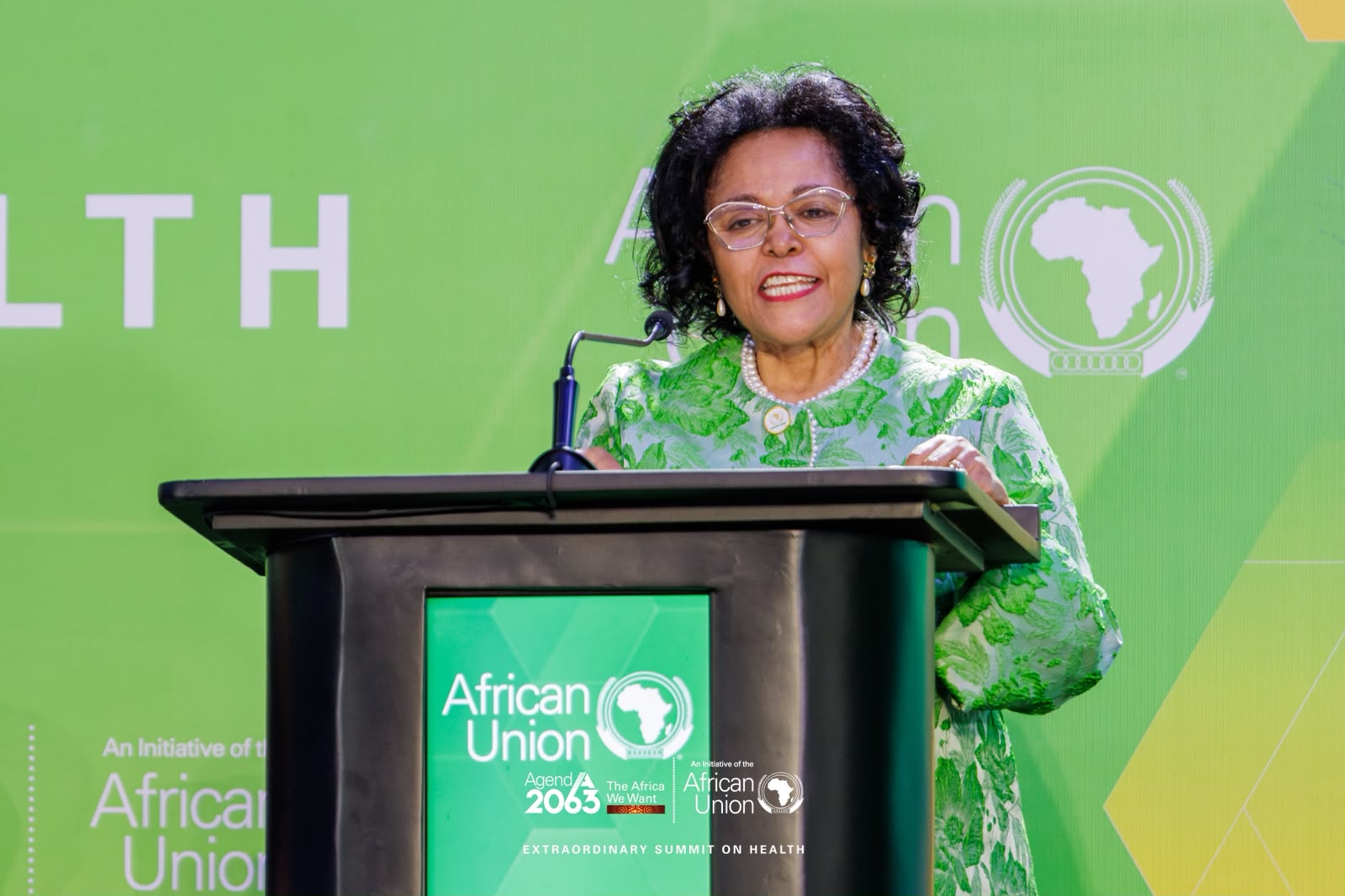
At the 20th Extraordinary Session of the Assembly of the African Union in Accra this month, heads of state took up a question that the continent’s health debate has circled for years without settling: why does Africa keep spending on disease and still lose ground on health?
The answer is not primarily clinical. It is structural.
Health equity is not achieved by the health sector alone. It is shaped by the conditions in which people are born, grow, learn, work, live and age — and by the public choices that determine whether those conditions protect life or reproduce vulnerability. The evidence on this is no longer contested. Social determinants can shorten healthy life expectancy by decades. The gap in life expectancy between countries runs as wide as 33 years. Children born in poorer countries are 13 times more likely to die before their fifth birthday than children in wealthier ones. Eliminating wealth-related inequality within low- and middle-income countries could save an estimated 1.8 million children every year.
Those figures describe a produced outcome, not an accident. Health inequity emerges where access to quality education is limited, literacy is low, nutrition is inadequate, housing is unsafe, water and sanitation are unreliable, livelihoods are insecure, transport is unavailable, and essential services are too distant or too costly.
Consider what this means in practice. A mother arrives at a facility with complications. The clinical event is recorded there. But the chain of risk began much earlier — with poor nutrition, interrupted schooling, insecure income, inadequate transport, weak primary healthcare and delayed access to quality-assured medicines. By the time she reaches the ward, most of the determinants of her outcome have already been decided elsewhere, by ministries that do not think of themselves as health ministries at all.
The strategic implication follows directly: disease-specific progress cannot be sustained on systems that continue to reproduce vulnerability. Social determinants must move from the margins of health policy to the centre of how we plan, finance and deliver development.
Equity as a model of government
For Africa, health equity must become a disciplined model of government. Not an aspiration attached to health strategies, but a test applied to how budgets are allocated, how infrastructure is designed, how primary healthcare is strengthened, how social protection is expanded, how supply chains are built, and how data is used to identify who is being left behind.
This is the work AUDA-NEPAD was created to do. As the African Union’s development agency, we operate at the intersection of health, financing, infrastructure, industrialisation, agriculture, education, digital transformation and regional integration. Our task is to help Member States translate equity from a principle into implementation. Four areas illustrate what that requires.
The first is sustainable and equitable health financing. Through the Africa Leadership Meeting on Investing in Health and the Programme for Investment and Financing in Africa’s Health Sector, we support Member States to strengthen health-financing governance, mobilise domestic resources, unlock blended capital and develop investment-ready health programmes aligned to national priorities. The objective is not simply to raise more money. It is to direct resources to the people, places and services where exclusion is greatest — primary healthcare, community systems, women and children, underserved districts, and the medicines and technologies that save lives.
The second is primary healthcare as the frontline of equity. Strong primary healthcare identifies risk earlier, prevents disease, links households to nutrition and social protection, and brings quality services closer to communities before illness becomes catastrophic. It is the point at which the structural and the clinical meet.
The third is access to essential medicines and health technologies. For too many Africans, the distance between a diagnosis and treatment is measured not only in kilometres, but in price, availability, regulation, procurement and supply-chain reliability. AUDA-NEPAD’s 24 Priority Medicines initiative and the Securing Access to Life-Saving Medical Products (SCALE) initiative address this full value chain, aligning regulatory strengthening, local production, pooled demand, financing and last-mile delivery around the products with the greatest potential to close access gaps. Through the Africa Forum for the Federations of Medical Products Manufacturers, we are coordinating private-sector efforts toward local production and preparing African manufacturers for competitiveness — a health agenda and an industrial one at the same time.
The fourth addresses inequity where it is most deeply reproduced: in the lives of women, adolescents and young people. The Africa Demographic Dividend and Sexual and Reproductive Health Programme is a five-year effort supporting Member States and Regional Economic Communities to strengthen sexual and reproductive health, primary healthcare and universal health coverage, while investing in young people as the foundation of Africa’s demographic dividend. It deliberately moves sexual and reproductive health beyond a narrow service agenda, connecting it to education, youth employment, social protection, gender equality, financing and accountable institutions — so that girls stay in school, young people access quality care, and national commitments translate into financed implementation.
Running through all of it is a requirement that receives less attention than it deserves: better data. Equity cannot be managed if it cannot be measured. We must know who is served, who pays, who is protected from hardship, where medicines are available, which districts are falling behind, and whether investments are actually reducing gaps by income, gender, geography, age and disability.
These health initiatives do not sit in isolation. The Skills Initiative for Africa and our education programmes help Member States close gaps in education, skills development and youth employability — themselves key social determinants of health. Our agriculture, food systems and nutrition programmes work to improve food availability, strengthen access to nutritious diets and improve the nutritional status of families, with particular emphasis on women and children. Health outcomes are shaped not only by healthcare systems but by education, employment, food security, nutrition and broader socio-economic development. It is the integrated mix that builds healthier, more resilient and more prosperous societies.
Governing differently
Ending AIDS by 2030, reducing preventable maternal and child deaths, and confronting communicable and non-communicable diseases will require more than programmes. It will require governance that acts on the conditions that make people vulnerable before they enter a clinic.
That is the harder ask. Real change in health inequity will require us to govern differently — with health, finance, education, agriculture, infrastructure, trade and social protection organising around the same people and the same places, using shared data, shared accountability and shared investment plans. Health equity must become visible in the way we allocate budgets, build infrastructure, procure medicines, design digital systems, protect households from financial hardship and deliver services to the last mile.
The Africa We Want will only be realised when the circumstances into which an African is born no longer determine the quality, dignity and full potential of their life. That is not a health target. It is a test of government.