
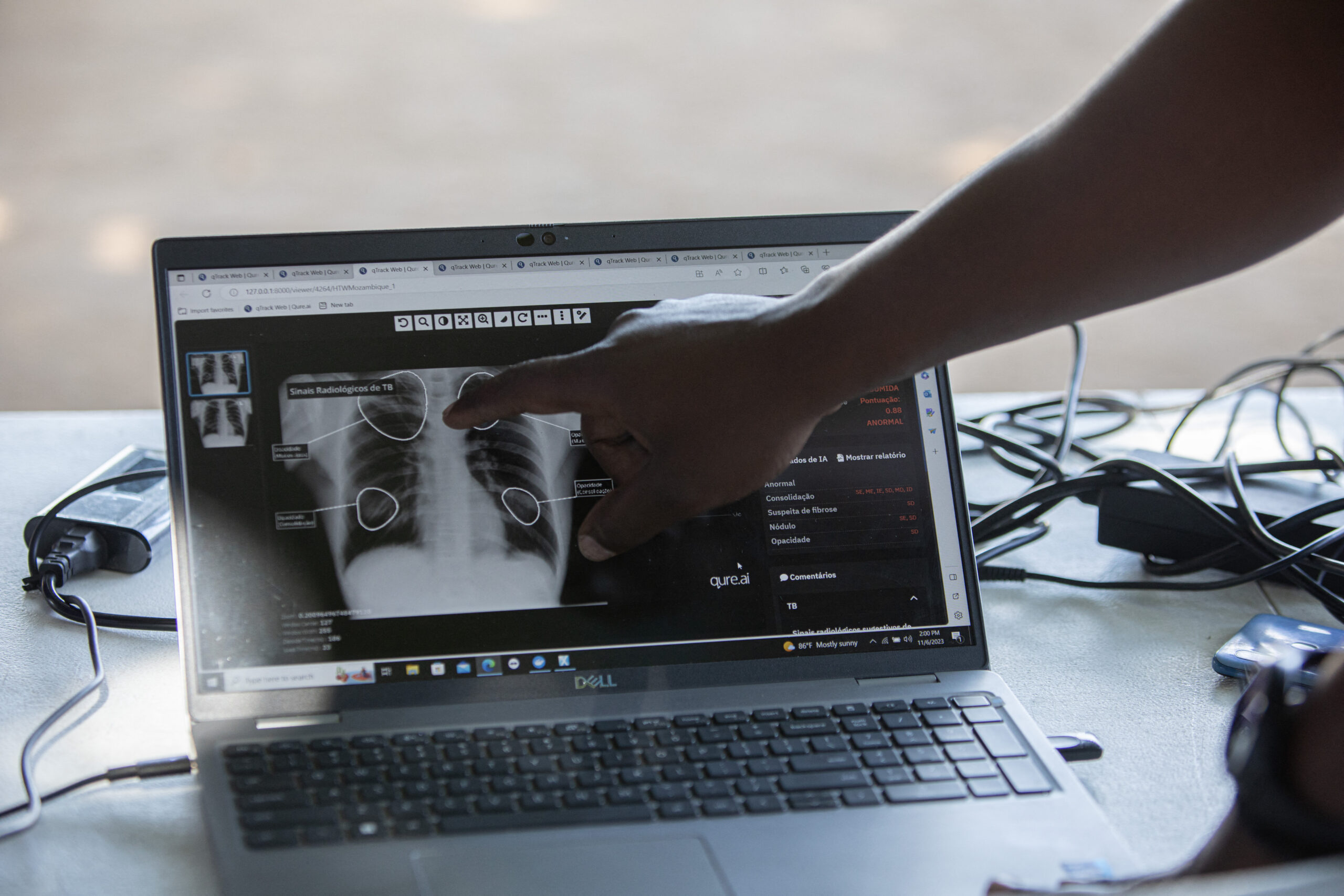
In December last year the United States signed a “data sharing agreement” with Kenya which purported to support “collaboration between the US government and government of Kenya to detect, prevent and respond to emerging and existing infectious disease threats affecting both Kenya and the United States”.
The agreement includes commitments from the US to provide around $1.6bn over five years to support Kenya’s supply of medical equipment, healthcare commodities, insurance coverage and expansion of the workforce. Supporters of the deal claim it is vital in strengthening Kenya’s ability to respond to diseases such as HIV, malaria and tuberculosis.
The move immediately sparked controversy, however. Central to the deal was the transfer of health data from Kenya to the US. The two sides pledged to “develop a named list of the Covered Data Systems, data to be provided, authorised users, type of access and the type of reports accessible from each system.” The aid money was made contingent on this transfer of Kenyan data to the US.
While the agreement included a guarantee that “to the maximum extent practical, Kenya shall not provide individual level data or personally identifiable information to the US government,” the deal raised profound questions about data sovereignty and the rights of Kenyan citizens to assert control over their data.
Within days, Kenya’s High Court issued an interim order to halt the implementation of the data sharing agreement following a petition from the Consumers Federation of Kenya (COFEK).
That organisation argued that the public was never consulted over the plans to transfer their data overseas. It further stated that numerous laws relating to data protection and privacy had been breached. COFEK also argued that the deal breached Kenya’s constitution, which includes the right to privacy.
In May 2026, however, Kenya’s Court of Appeal lifted the restrictions on the agreement, with a full ruling expected by October.
Transactional Trump
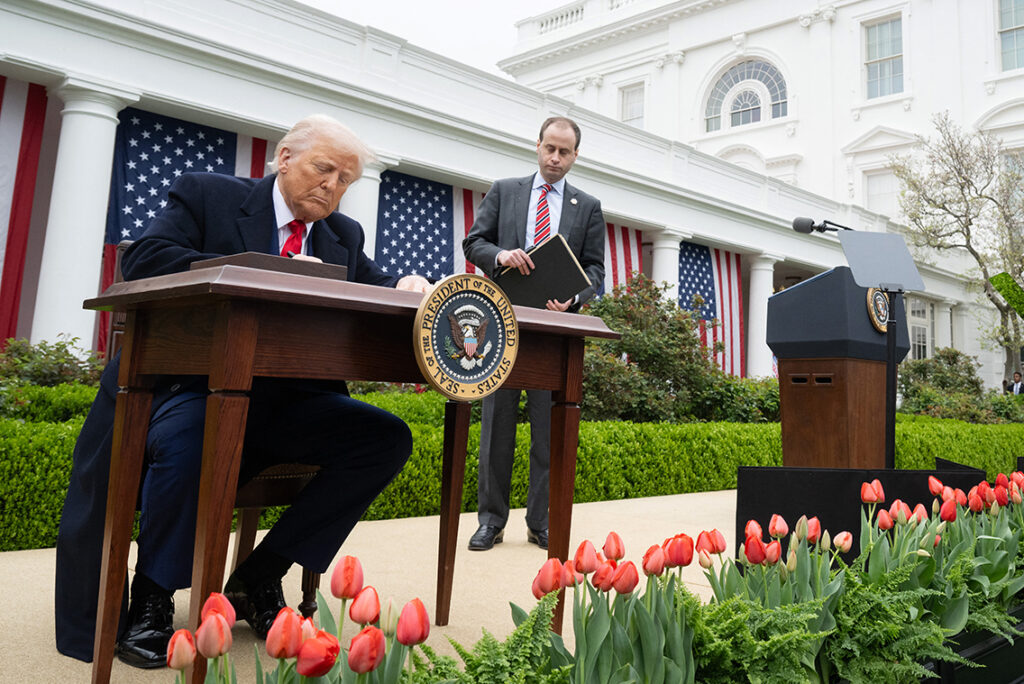
This case is indicative of the new approach to foreign policy the US is taking under the second Trump administration – one which is more nakedly transactional and single-minded in the pursuit of what it sees as US commercial interests.
Secretary of state Marco Rubio said the America First Global Health Strategy would see the US “enter strong bilateral agreements that promote our national interests while saving millions of lives, and help promote and export American health innovation around the world”.
The wider context is that the US hunger for data, including from Africa, has accelerated in recent years as it battles with China to secure access to the high-quality training datasets that will be needed to develop the world’s leading AI models. This in turn is vital to locking in control over the infrastructure and technology that will increasingly underpin the global economy.
In this context, data is increasingly being treated by the US and other global powers as a highly strategic resource – akin to energy or critical minerals. President Trump has been explicit about the importance he is placing on securing US global leadership in AI: in July 2025, he said it would be the “policy of the United States to do whatever it takes to lead the world in artificial intelligence.” In light of this, following the official closure of USAID in July last year, the Trump administration is increasingly seeking to tie aid money to the transfer of data that can be used by the US technology sector for training AI models.
Indeed, since December 2025 the US government has signed memorandums of understanding (MOUs) worth around $20.6bn with more than 30 countries around the world.
As with the Kenya deal, these MOUs involve governments accepting five years of funding in return for commitments to provide up to 25 years of patient data and disease pathogens.
So far 21 African countries have signed such deals under the America First Global Health Strategy, including Nigeria, the DRC, Ethiopia and Uganda. The US has said it needs data and samples pathogens to protect itself against pandemics, especially after it left the World Health Organization in January (WHO), meaning it no longer receives this information through that international collaboration.
Resistance grows
Several African countries have, however, refused to engage in what Ayoade Alakija, a Nigerian ministerial health envoy and co-chair of the African Vaccine Delivery Alliance, has called “a recolonisation of our health system”. Ghana, South Africa, Zambia and Zimbabwe have all rejected the deal or paused talks, citing concerns over data privacy and sovereignty. Nigeria has signed despite Alakija’s concerns.
Alberto Lemma, research fellow and expert on digital and artificial intelligence at the ODI Global thinktank in London, tells African Business that “aid for data is actually not something that is particularly new” but that it raises questions over African governments’ ability to assert sovereignty over their citizens’ data.
“China, under the Belt and Road Initiative, provides a lot of infrastructure in developing countries, but this includes monitoring tools and internet infrastructure that involves the exchange of data,” he says.
“A lot of developing countries are also supporting initiatives by organisations such as NASA, which raises questions about who captures the value of satellite data and who is sovereign over that data”.
“Developing countries have been giving data away for free for quite a long time – during the Covid-19 pandemic they gave a lot of genetic data to the WHO, for example – but I think with AI, the issue about data usage becomes a lot more urgent because it is much easier to process the data. A lot of focus is on the health sector for now, but I think it should a broader issue than that.”
Akhil Bhardwaj, senior lecturer at the University of Bath, also notes that the deals raise interesting legal and ethical questions – not just for Africa, but for practically every government worldwide grappling with the issue of how to handle and best use its citizens’ data.
“Data is created by people – so the question is who owns that data? Does the government actually have the right to give it away? This is a very difficult question to answer. In Europe, laws such as GDPR [the General Data Protection Regulation] give citizens privacy, but there are no frameworks I am aware of that defines who owns the data that individuals create.”
While much of the public outrage in Africa has surrounded ethical issues – with many citizens and civic organisations understandably concerned about the principle of their medical data being transferred for commercial use overseas – Lemma suggests the problem for Africa is as much an economic one as a moral one.
“It is actually more of a financial issue – these countries are giving their data away but are they going to see any particular value out of it?” he asks.
Limited data reciprocity
Nick Mangwana, permanent secretary in Zimbabwe’s ministry of information, publicity and broadcasting services, has explained in a statement that one reason Harare withdrew from talks with the US was precisely this lack of reciprocity.
“Zimbabwe was being asked to share its biological resources and data over an extended period, with no corresponding guarantee of access to any medical innovations – such as vaccines, diagnostics, or treatments – that might result from that shared data,” Mangwana said. “In essence, our nation would provide the raw materials for scientific discovery without any assurance that the end products would be accessible to our people should a future health crisis emerge. The United States, meanwhile, was not offering reciprocal sharing of its own epidemiological data with our health authorities.”
The overwhelming economic dominance of the United States means it is easier said than done for African governments to negotiate with Washington DC on an equal footing – particularly when they are also trying to guarantee access to vital healthcare for their populations.
But Lemma argues that African governments are in an increasingly strong position to negotiate – not least because the decline of aid flows, from the US and elsewhere, is forcing them to become more self-sufficient. “African countries are waking up to the fact that they cannot rely on aid any more, and so they are finding money to fund their own healthcare systems; therefore it is no longer the case that they are completely helpless and dependent on a few countries like the US,” he tells African Business.
“If they come together, they will be in an even stronger position to negotiate, such as through regional trading blocs like the AfCFTA,” Lemma adds, referring to the African Continental Free Trade Area. “Individual bargaining power is not going to be as strong, on top of which it is easy to fragment countries into different groups and isolate particularly weak ones.”
“Data needs to be treated as a resource: they cannot give it away and get nothing back for it, at least compared to the value that foreign tech companies are getting out of it.”
There have been some attempts to form a collective African position. In February 2022 the African Union (AU) released its “Data Policy Framework”, which sought to manage the “explosive growth of data as a strategic asset”. The framework also aimed at creating “harmonised digital data governance systems to enable the free and secure flow of data across the continent while safeguarding human rights, upholding security and ensuring equitable access and sharing of benefits”. In June 2023 the AU’s Malabo Convention on Cyber Security and Personal Data Protection came into force, providing a unified legal framework for African countries to govern cybersecurity and data protection issues.
Lemma suggests that Africa now needs to build on this by developing similar structures or frameworks that would allow the continent to reap maximum value.
“There needs to be a collective bargaining system,” he says. “This is something I have also been talking about for critical minerals, another strategic asset. Africa needs to get together and create its own kind of ‘mini-OPEC’ for critical minerals and the same principle applies to data.”
“In my opinion, Africa should start negotiating access to data in exchange for things like access to the actual AI tools, access to medicine and diagnosis systems, preferential pricing to use the models, as well as local research partnerships and support in building up local capacity. The real question is: how valuable is this data to the US and US companies and what are they prepared to give back in return for it? For African countries, not sharing the data is not a loss – they are just going to be in the same position that they were before. ,” Lemma argues. “But if could be a loss for these companies. Africa needs to start being a bit more strategic before they start signing these deals.”
While there is clearly a need for African governments to protect the value of their citizens’ data – and assert sovereignty over their strategic assets – there is also the need for African data to be more fully represented in AI datasets.
Need for a two-way data exchange
According to Germany’s development agency GIZ, only 2% of global AI training data comes from Africa. This is significant because AI models “learn” to make decisions based on the data they are trained with. As GIZ notes, “most global AI models are trained on Western data, so they fail to handle African names, languages, or cultural contexts.”
This lack of African data has led to suboptimal outcomes for Africans or those of African descent. Language models using AI have been found to deliver potentially harmful medical information to Africans or diaspora populations because the models lack the data to make more accurate decisions.
“Everyone agrees that the more data, the better,” Lemma says. “If this issue about the transfer of data was about tailoring medical procedures or outcomes to particular segments of the population, that would be a plus for everyone.”
“But the fear is that this is actually about monetising it and also excluding people. I do think it is important that large language models – particularly the medically inclined ones – are trained on local data but there needs to be a two-way exchange.”