
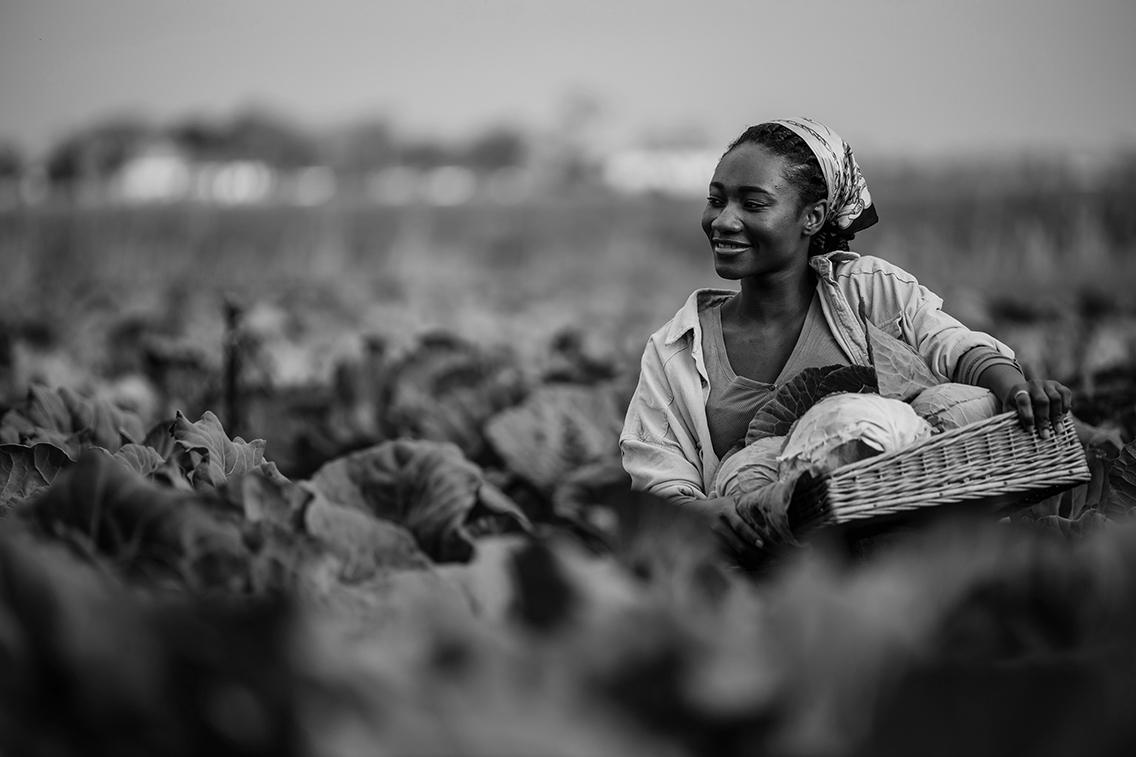
Let us begin with a market fact that is hiding in plain sight. Africa, the continent with extensive arable land, rich diversity of indigenous crops, and a farming tradition older than recorded history, spends more than $100 billion every year importing food from other people’s farms.
That figure is not a development statistic; it is a market signal. It tells you where value is leaking out of the continent and who is currently capturing it.
The argument is simple: reducing Africa’s food import bill from $100 billion to $80 billion within a decade is achievable. The $20 billion question is who captures the value of that transition.
Three Levers That Actually Work
For the African private sector to be at the forefront of this $20 billion opportunity, the first lever that needs to be pulled is the most unglamorous, but the most immediately actionable: build on, not around, the rural and the informal. Between 30 and 40% of Africa’s food production is lost before it reaches a plate. It is not from drought or disease, but from the absence of mills, cold storage, and packaging. That loss is not a tragedy; it is an addressable inefficiency, and addressing it is a business model.
The processing enterprises needed are not large-scale industrial plants. They are medium-scale, distributed infrastructure – community mills, solar dryers, cold storage units, packaging lines — operating at village and district levels. India offers the clearest private sector blueprint: ITC’s e-Choupal model built a procurement and processing network across 40,000 villages by meeting smallholder farmers where they were, digitising transactions, and capturing margin at every stage of a previously informal value chain. The Amul cooperative demonstrated that aggregating smallholder supply into a branded consumer product could displace imports and build a category. Africa can adapt both models – at scale.
The supply side infrastructure already exists in embryonic form. CARE’s Village Savings and Loan Associations (VSLA), operating across 67 countries with over 30 million members, have already demonstrated that women’s groups possess the financial discipline, market knowledge, and collective trust to run small processing enterprises when connected to capital and reliable markets. In northern Nigeria, women’s groups working with the International Fertiliser Development Center have demonstrated that small-scale processing enterprises can compete with imports on price. The infrastructure is human. What it needs is a business model connected to capital, offtake agreements, and brand architecture. That is a private sector role, not a donor one.
The second lever is the procurement market. African governments are among the continent’s largest food buyers for schools, hospitals, military canteens, and civil service cafeterias, a role which shapes entire value chains. Every day, that purchasing power flows overwhelmingly toward imported goods. For the private sector, it is a procurement pipeline waiting to be redirected.
Brazil’s school feeding programme mandated 30% of procurement from local family farmers. In doing so, it created reliable, large-volume demand that justified private investment in processing capacity across the country. African governments have the same instrument. For the private sector, this is the PPP opportunity linking African government procurement and smallholder supply chains.
The third lever is food culture as a brand market. South Korea did not accidentally turn kimchi into a global phenomenon. It invested deliberately in Korean culinary identity as a strategic asset, and the result is a food export sector worth billions. Africa’s culinary heritage is, similarly, a consumer goods and media opportunity, as much as an agricultural one. The chefs, food bloggers, and hospitality entrepreneurs are already doing the cultural work. What they lack is the brand investment, distribution infrastructure, and retail partnerships to turn cultural momentum into category creation. The African food brand that achieves what Goya did for Latin American consumers, or what Halal certification did for Muslim consumer markets globally, will be built by private capital that converts cultural identity into market signals.
The AI Question: Accelerant or New Dependency?
There is a fourth dimension reframing all three levers. Artificial intelligence is arriving in African food systems, whether the continent is ready or not, through precision yield mapping, post-harvest loss prediction, and digital platforms connecting processors to buyers.
But as Gabon’s Minister of Digital Economy, Mark-Alexandre Doumba, has argued compellingly, the greatest risk is not missing the AI revolution, it is joining it before building the foundations to harness it. For private sector players, that sequencing argument translates into a precise investment thesis: AI’s greatest contribution towards African food systems is not through standalone platforms, but rather through intelligence layers built on top of functioning procurement systems, processing infrastructure, and data that African institutions own. The company that builds the market-matching layer connecting a processor in Kano to a buyer in Lagos, trained on African supply chain data, governed by African institutions, and integrated into existing VSLA and cooperative networks, will have a durable competitive position that an externally built platform cannot easily replicate.
Once it was raw materials that left the continent. Then raw agricultural commodities. The next extraction is raw data. The private sector that governs African food system data will not just avoid extraction, it will own the intelligence layers built off a $100 billion market in transition.
The $20 Billion Question
A $20 billion reduction in Africa’s food import bill is not an abstraction. It is jobs in processing, logistics, and retail; most of them for women. It is foreign exchange retained for health systems and infrastructure. It is dietary diversity and resilience against the supply shocks that, as the last five years have shown, arrive without warning and punish import dependency most severely.
Fifty years ago, Sahelian women chose imported rice over home-grown millet on the heels of massive droughts, and completely transformed regional consumption patterns. They were not wrong to do so. They were making rational decisions with the options they had. The task for this generation is to create better options, recognising that doing so is one of the most significant market creation opportunities on the continent. The $20 billion is on the table. The question is who picks it up.