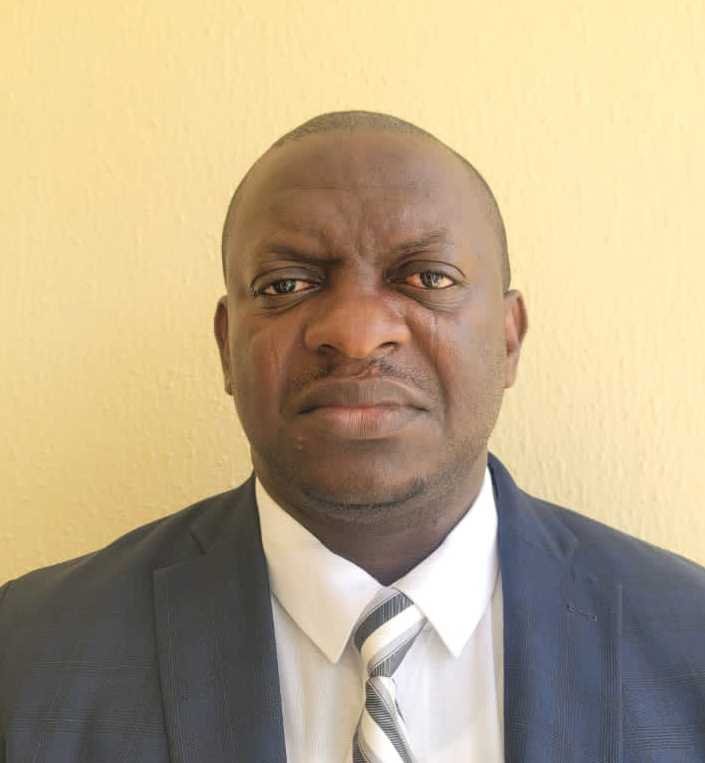
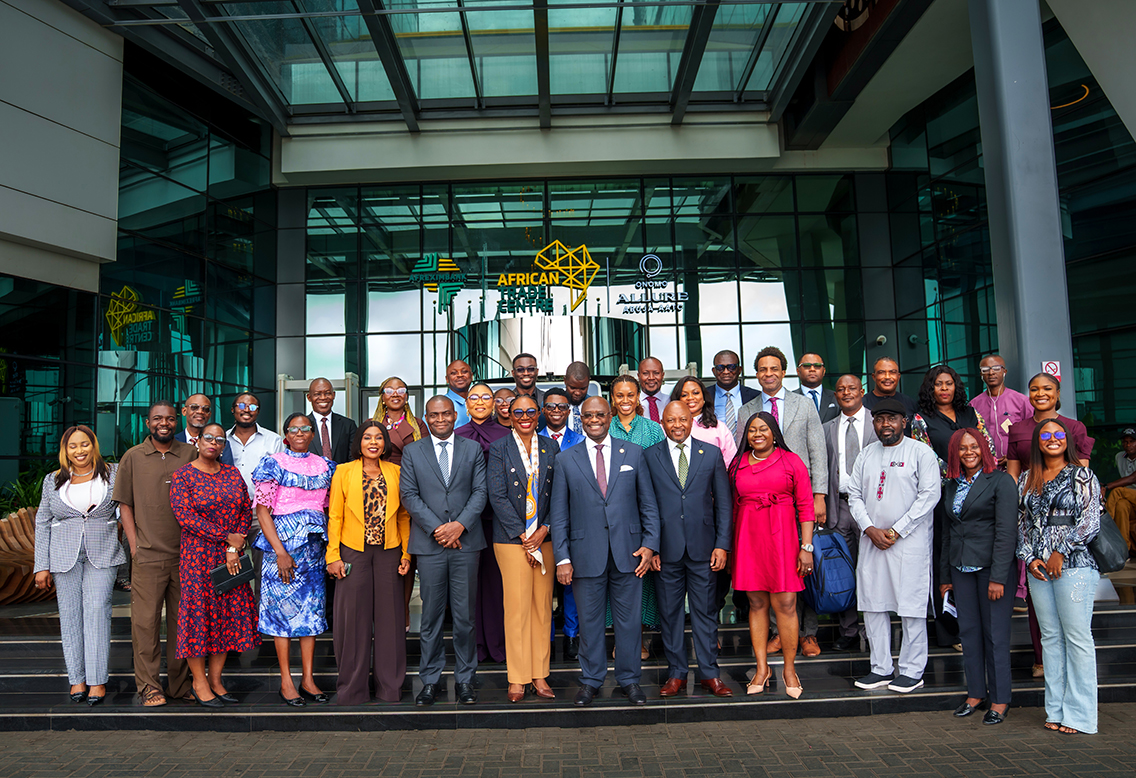
Afreximbank has spent three decades positioning itself as the financier of last resort for African trade. Speaking during a mid-year media roundtable at the bank’s African Trade Centre (AATC) in Abuja, President George Elombi set out a broader ambition: using the bank’s balance sheet to move Africa up the value chain in minerals processing, deepen a continental payments system now facing competition from stablecoins, and build medical research capacity the continent currently exports to hospitals abroad.
Betting on batteries and bytes
Responding to a question about recent investments in electric-mobility firm Spiro and telecoms infrastructure group Liquid Telecom, Elombi traced the decisions to a recent Afreximbank delegation trip to Shanghai, where bank officials toured China’s battery and electric-vehicle supply chains.
What struck him, he says, was less the scale of Chinese manufacturing than the composition of the batteries themselves, assembled from hundreds of small cylindrical cells rather than the single composite block he had expected.
The visit, he said, reinforced his view that Africa risks repeating a familiar pattern: exporting the raw minerals that feed the global battery supply chain while importing the finished product. “We are no longer interested in anyone who wants to mine and export lithium in its raw state,” he tells African Business. “We only want people who mine and process at home.”
That principle, he says, now shapes how the bank screens mineral-sector deals, with financing reserved for promoters who can secure local processing concessions rather than pure extraction plays.
The Spiro investment, in his view, is as much a bet on building local technical expertise across a fast-growing but underserved sector as on the commercial returns from the mobility business itself. The same logic, he says, extends to data centres, which he frames as infrastructure Africa cannot afford to keep sourcing from abroad.
PAPSS: slow build, big ambition
Much of the session’s technology discussion centred on the Pan-African Payment and Settlement System (PAPSS), the cross-border payment rail Afreximbank helped launch in 2022 and which Elombi was closely involved in developing during his years leading the bank’s legal and governance functions. He acknowledges that the platform’s roll out has been slower than hoped, largely because central banks initially feared it would encroach on their regulatory authority.
PAPSS currently connects more than 190 commercial banks and fintechs across 28 African countries, figures the bank’s team flagged as a floor rather than a ceiling.
Afreximbank itself maintains correspondent relationships with roughly 600 African commercial banks; a scale the bank says the payment platform needs to approach before it can be considered to have reached critical mass.
Elombi defended the decision to pilot PAPSS in West Africa first, given the region’s mix of currencies and existing monetary integration through the West African Monetary Union, but conceded the choice fed suspicion elsewhere on the continent that the system was a West African “hijack” of a pan-African initiative.
That perception, he says, slowed adoption in other regions for roughly two years before the bank began inviting governors from those regions to observe the platform’s oversight committee.
In identifying one of PAPSS’s most-cited use cases, Elombi points to currency-swap functionality that lets businesses offset accumulated local-currency holdings without routing through third currencies citing, as an illustration, the kind of naira-for-birr swap that allows an airline to settle obligations without pressuring Nigeria’s foreign exchange market. A PAPSS-branded card, allowing users to spend in a preferred currency across the network without holding foreign cash, is in development, though the entity set up to issue it has only recently started recruiting
Can PAPSS outrun stablecoins?
Pressed on whether PAPSS can hold its ground against the rapid uptake of cryptocurrency and stablecoins for cross-border payments – Nigeria has one of the world’s highest rates of stablecoin adoption for that purpose – Elombi was cautious rather than dismissive. Stablecoins backed by real underlying assets, he says, can build genuine trust; those without such backing risk a loss of confidence once they face scrutiny.
His broader wager is that African currencies will not stay fragmented indefinitely.
Afreximbank’s strategy, he explains, is to deepen sub-regional payment systems first, with the expectation that these will eventually consolidate into regional currencies and, further out, a continental one, at which point, he argues, African-based digital currencies “will begin to make sense” in a way that today’s patchwork of national currencies does not.
Rather than treating stablecoins as a threat, he says Afreximbank wants to work alongside credible projects in the ecosystem, provided they preserve the confidence on which banking depends.
A $75m bet on genomics
The session’s most poignantl moment came in response to a question about the African Medical Centre of Excellence (AMCE) in Abuja, the quaternary-care hospital Afreximbank has backed in partnership with King’s College Hospital, London.
Elombi described a $75m endowment establishing a research centre at the facility, an African Life Sciences Foundation.
The Foundation was built around the argument, credited to visiting haematologist, Professor Mofty, that treating patients without researching how they respond to treatment forfeits both scientific insight and revenue to research centres abroad.
The Foundation’s initial research focus is sickle cell disease, which disproportionately affects people of African descent. It will be led by a former director of Africa’s Centre for Disease Control, alongside a board of Nigerian medical professors, according to Elombi.
He was candid that the hospital’s biggest constraint is not equipment or capital but staffing, especially with attracting Africa’s diaspora of specialist doctors back to the continent, many of whom, in his telling, have built lives, careers and family ties abroad over decades.
The bank’s approach, he says, has been to recruit specialists in phases, bringing enough clinicians to sustain a service line before publicising it, rather than advertise capacity the hospital cannot yet deliver.
More AMCE facilities are now being considered in Cameroon and Tanzania, Elombi confirmed, as the bank looks to replicate the model beyond Nigeria.
Recent rating from S&P Global
Elombi also commented on the recent investment-grade rating from S&P Global Ratings, which assigned the Bank a BBB+ long-term and A-2 short-term issuer credit rating. He said “it showed the importance of assessing African institutions in their proper context.”
S&P’s assessment comes after Afreximbank’s Q1 2026 performance, with total assets and contingencies rising to $49.4bn, shareholders’ funds of $8.6bn, a capital adequacy ratio of 23% and a non-performing loan ratio of 2.40%.
The common thread
Taken together, the initiatives outlined in Abuja point to a bank trying to shift its own centre of gravity, from financing the movement of African commodities abroad to financing the infrastructure, payment systems and research capacity that let value stay on the continent.
Whether that bet pays off will depend on execution challenges Elombi himself flagged: PAPSS scaling past its adoption bottlenecks, mineral-processing ventures competing for scarce technical expertise, and a flagship hospital’s ability to draw specialists home. It is, by the president’s own account, a slower and messier path than exporting raw trade finance but one he argues Africa can no longer afford to skip.