
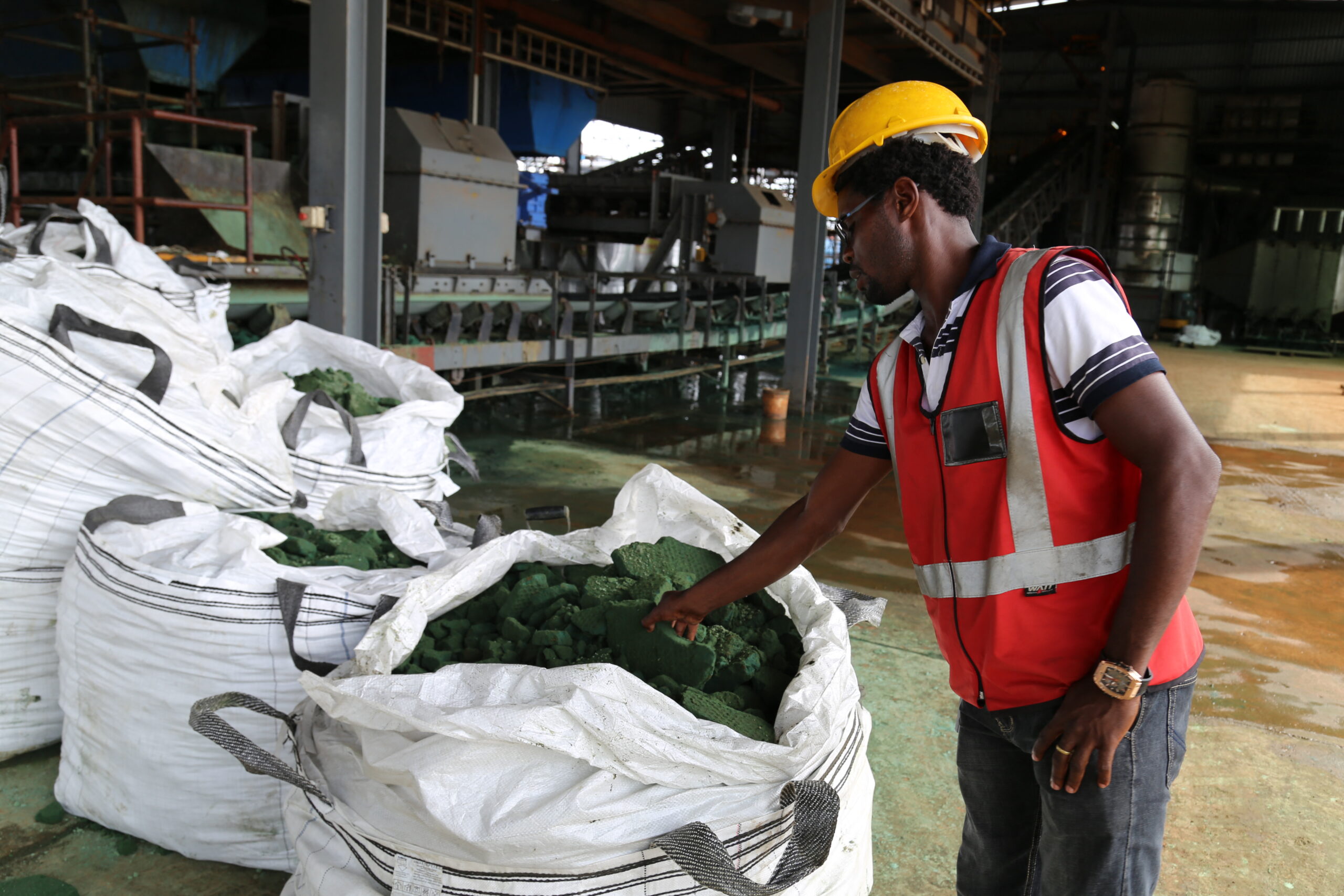
In April the government of the Democratic Republic of the Congo (DRC) announced the launch of a “mining guard” – an armed security force backed with $100m from the United Arab Emirates and United States to protect key mining sites and ensure robust supply chains in the DRC.
Rafael Kabengele, the DRC’s inspector general of mines, said the new unit would “clean up the entire mining sector in the DR Congo by eliminating practices contrary to governance, transparency and mineral traceability”. He added that the initiative was “part of a framework of co-operation and dialogue with several international partners, including within the context of relations with the US and UAE”.
While the move has proved to be controversial – with some analysts fearing that it could lead to a militarisation of mining sites in what are already politically sensitive zones – it is nonetheless indicative of the efforts the DRC is making to secure its critical minerals sector and make it more attractive to international partners.
Taking full advantage of its minerals wealth, estimated at a total value of $24 trillion, has been a key priority for the DRC’s government, which sees the sector as vital for its long-term growth and economic development prospects. As the government itself has noted, “extractive industries remain central to fiscal revenues and export performance, underscoring their importance for macroeconomic stability.”
Jean-Marie Kanda, senior advisor on critical minerals to the president of the DRC, tells African Business that the country is trying to diversify its investment partners through reforming the mining sector and making it commercially viable for a broader range of partners.
“The DRC is open to diversified investments and is targeting more investors from the US, Canada and Europe, as well as China and India,” he says.
New minerals transparency push
Kanda says that strengthening the fight against corruption has been central to these reform efforts. The DRC is party to the Extractive Industries Transparency Initiative (EITI), which encourages mining companies and governments to publish information related to the mining and oil sectors. The EITI requires governments to disclose all information related to tax and other payments made by private sector companies to central governments.
The government has been encouraging civil society to scrutinise EITI-related disclosures to ensure transparency in the sector, Kanda says. “We are working to give civil society the capacity to view mining-related information in a transparent way and to be able to see traceability in terms of government payments,” he notes.
Kanda adds that the government is investing in digitalisation projects which aim to boost transparency in the sector further. “The government is looking to digitise the processes in departments such as the customs and foreign trading offices to make the entire system more transparent,” he explains. “This helps improve the climate of doing business in the DRC.”
Digitalisation has been at the heart of several key initiatives related to mining in the DRC. In 2025, for example, the DRC’s state-owned mineral certification agency announced the launch of its mineral traceability platform, “E-trace”. The platform is able to track and record the entire journey of a mineral, from mining to its ultimate export, and thereby ensure that it has been responsibly sourced. This should in turn help cut out illegal mining. According to the government it will helps mining projects ensure that they are fully aligning themselves with international best practice standards.
Formalising artisanal miners
This enhanced traceability is particularly important as the DRC has made efforts to formalise the artisanal mining sector, which is believed to employ up to 2m people in the country. The World Bank estimates that artisanal mining provides a livelihood for around 10m people in the country, with the practice accounting for up to 20% of the DRC’s copper and cobalt production.
It is a problem for the DRC government, however, not least because the practice is extremely dangerous. Exact figures are difficult to verify as incidents tend to happen at unregulated sites in remote areas, but it is possible that thousands of artisanal miners die in the DRC each year, given the practically non-existent safety measures.
Beyond the human impact, artisanal mining also depletes government revenues as it is much harder to tax, given that the minerals produced bypass official export channels. Artisanal mining is therefore permitted only in regulated zones; but in practice it has been difficult to ensure that illegally-mined minerals do not end up on the market.
Initiatives such as E-trace are designed to make enforcement easier – with Kanda also noting that, to this end, the DRC’s Ministry of Mines is taking a much more proactive approach to clamping down on illegal mining. In May this year the DRC imposed a three-month suspension on all mining activities in parts of the country’s South Kivu province, with the authorities citing illicit mineral flows as a key reason behind the move.
The International Monetary Fund (IMF) notes that transparency and traceability are essential for the DRC in attracting international investment and achieving its full potential. “Significant bottlenecks linked to governance weaknesses and capacity and financing constraints need to be addressed for the country to achieve its potential,” the IMF has said. “Improvements in mining governance and in compliance with socially and environmentally responsible mining practices are key prerequisites.”
Better communication with industry
Kanda notes that, as well as these tech-based solutions to traceability and enforcement, part of the DRC’s push towards stronger transparency in the minerals sector has simply involved ensuring better lines of communication between government ministers and industry.
“Through the Chamber of Mines – the platform where big mining companies and investors come together for discussion with the Minister of Mines and other relevant stakeholders – we now have frequent roundtables where people can talk easily and bring difficult topics to the attention of minister,” he tells African Business.
“In the past, some dialogue was in existence, but to bring about more consistent and structured dialogue between all parties is also a major part of our efforts to make the business climate in DRC stronger,” Kanda adds. In the longer-term, the aim behind these reforms is to give the DRC the capacity and institutional framework to capture much more value from its abundant natural resources, by moving beyond simply exporting goods for higher-value activities abroad.
As President Tshisekedi said at an event in Washington DC earlier this year, “we want industrial projects that create local jobs, transfer technology and respect environmental and social standards.”
A new critical minerals framework
In January this year the DRC launched a new national critical minerals strategy, which revolved around four key pillars: discovering new deposits and certifying resources through geological exploration; promoting local processing and value-added activities within the DRC; building skills and human capital development; and enforcing stronger environmental, social, and governance (ESG) standards to improve the climate for doing business. Kanda says that the strategy reflects a shift in narrative.
“The DRC refuses to be merely an extractive country, but is committed to developing value chains within the country – the ‘from pit to port’ approach is over; ‘do it in the DRC’ is now in,” he says. While there remains work to be done, the DRC’s reforms are designed to ensure the country is aligning itself with the highest international standards and thereby positioning itself for long-term, sustainable growth.