
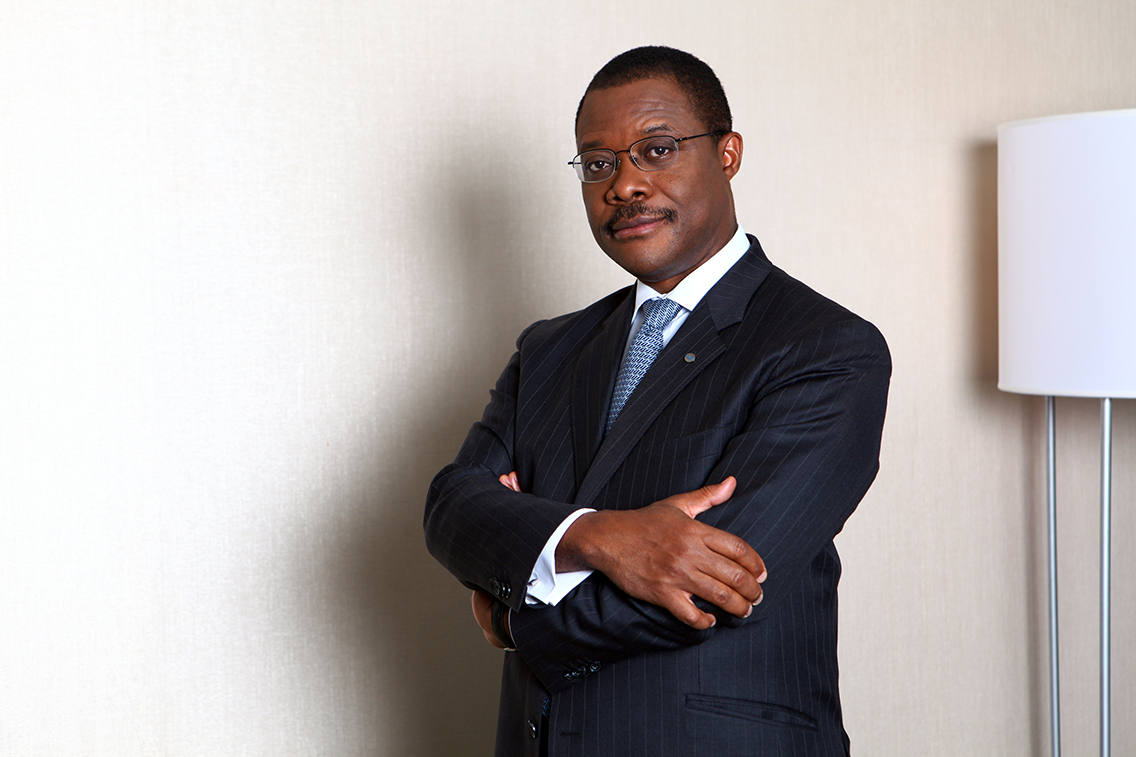
Only four African economies are structurally positioned to sustain high-growth industrialisation, according to the 2025 RED Index of Industrial Development in Africa, released by the Business Council for Africa, a UK-based think-tank, in May. The brainchild of Arnold Ekpe, current chair of the Business Council for Africa and former Ecobank Group CEO, the index looks at a number of key metrics that are seen as critical for economies to emulate their Asian peers and achieve consistent high industrial growth rates.
When we spoke to Ekpe, he said that no country will achieve sustained rapid growth without large banks, reliable access to power and key infrastructure – namely a strong road and rail network.
As the world electrifies and the advent of AI produces an even greater need for energy, power becomes a greater factor that will determine competitiveness and future success. The recent closure of the Strait of Hormuz chokepoint has reminded the world how vulnerable countries can be to external shocks and of the need for stronger sovereignty.
Industrialisation is constrained by ambition, and also by structure. In its inaugural year the RED Index looks at the conditions that determine whether economies can transform at scale. It finds that most African countries do not yet meet them.
Morocco, Egypt, South Africa and Mauritius emerge as the only African economies with the alignment required to sustain industrial growth. Rwanda and Nigeria show meaningful progress but remain incomplete in their trajectory, while the majority of African economies are classified as either vulnerable or stalled.
At the end of May in Abidjan, the African Development Bank announced its latest ranking of Africa’s most industrialised countries. Morocco took top spot from South Africa, which has suffered in recent years both from power (because of a faltering utility, Eskom) and from logistics issues (with the rail, port and pipeline company Transnet struggling).
Both countries do have substantial financial firepower, through a strong banking system and functioning capital markets. South Africa’s power issues have to a large extent been overcome and the government is working to resolve problems at Transnet that have made the movement of goods more costly in the country.
Accelerators and decelerators
The Index evaluates each economy across three decisive dimensions: engines of industrialisation, representing foundational capabilities; accelerators, determining the pace of transformation; and decelerators, the structural constraints that can stall or reverse progress. Across the continent, corruption and security instability remain the most significant decelerators, undermining institutional effectiveness and limiting the execution of industrial policy.
According to the report, the seven engines of industrialisation represent the minimum set of national capabilities required to move from low productivity activity to modern industrial growth. These engines must be understood as mutually reinforcing. Electrification is weakened without transport. Strong banks have little impact without investment-ready firms. Digital broadband cannot translate into productivity without skilled workers. A country becomes industrial when these foundational systems mature together.
Political mindset is key
The right political mindset is key. This has nothing to do with democracy but rather reflects a country’s willingness to pursue accelerated development and to sustain that pursuit across political cycles, crises and leadership changes. They treated economic transformation as a long-term mission rather than an election-cycle programme.
This mindset expresses itself through policy consistency, institutional discipline and national ambition. It enables governments to take difficult decisions, prioritise productive investment, and maintain direction even when immediate results are not visible.
By contrast, many African states suffer from policy volatility, frequent strategic resets and institutional fragmentation. These weaken investor confidence and break the continuity required for structural change.
Countries that industrialised rapidly, such as South Korea, Malaysia and Vietnam, embedded development into their national identity.