
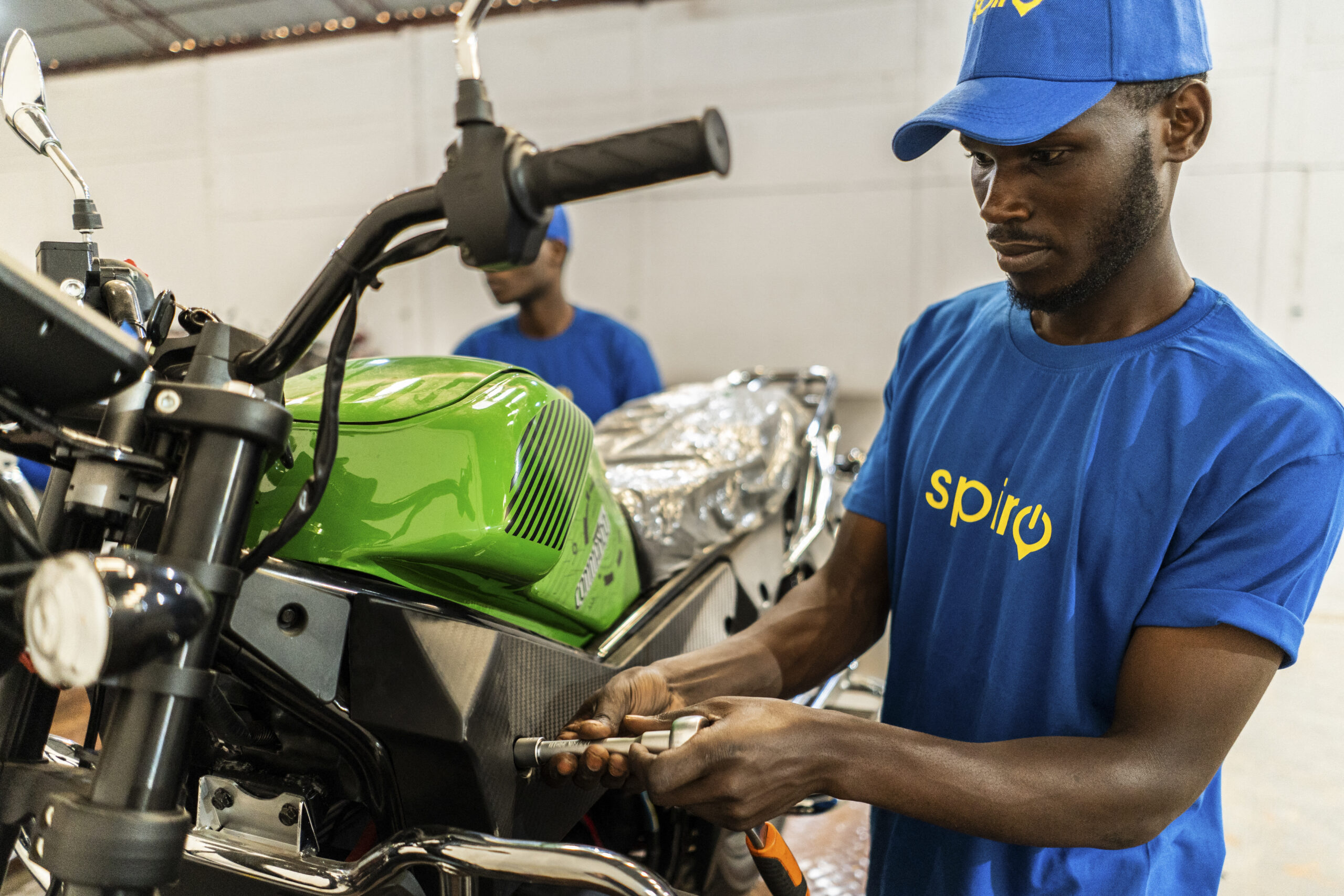
Spiro, Africa’s largest electric vehicle (EV) company, has announced the successful closing of a $270m equity funding round, including a $55m investment from a Chinese fund.
The Dubai-based firm, which manufactures electric motorcycles and operates battery-swapping stations, is present in seven African markets.
The rest of the equity funding round includes backing from European and African institutional investors, including Impact Fund Denmark, Equitane and the Fund for Export Development in Africa (FEDA). Investment platform Nithio and the Africa Go Green Fund injected $50m in debt financing earlier this year.
NewTrails Capital is a Chinese growth-stage investment fund with offices in Shanghai, Shenzhen and Nigeria, focused on emerging markets across Africa, the Middle East, Southeast Asia and Latin America. Its investment strategy aligns with China’s trillion-dollar Belt and Road global investment initiative.
“As a Chinese fund committed to investing in Africa’s energy transition and green technology, we are also very encouraged to see Chinese supply chains and financing playing an increasingly important role in this process,” said NewTrails Capital founding partner Yufan Zhang.
Zhang said the fund would have a “long-term investor” role as it grows alongside Spiro.
“This represents not only a vast and highly imaginative market opportunity, but also the potential to grow into an infrastructure-like business that creates meaningful commercial, social and environmental value,” he added.
NewTrails’ investment carries broader significance: backing for African-led electric mobility startups at this scale from Chinese capital is relatively new territory.
What this means for Spiro
The deal also reflects the wider continental efforts among African economies to cut reliance on imported fuel, strengthen energy and industrial independence and modernise urban transport. It also supports China’s growing pattern of backing electric vehicle ventures across emerging markets, as Chinese capital and supply chains take on a larger role in Africa’s energy transition.
This new capital is expected to drive Spiro’s manufacturing localisation efforts, particularly with Chinese suppliers, while supporting its push into new markets such as the DR Congo, Ethiopia, Malawi and Mali. Simultaneously, the deal ties Spiro’s growth more closely to Chinese capital and supply chains.
How it works
Spiro’s model works like this: riders buy the electric motorcycle itself, but the Dubai-based company retains ownership of the battery, the most costly component. Rather than charging the bike overnight, riders can visit a Spiro station, swap a depleted battery for a charged one within minutes and pay per swap. The main selling point to riders is affordability. Spiro claims that its model can lower a rider’s daily transport costs by as much as 40% compared to petrol motorcycles, as battery swaps work out cheaper than fuel. The company’s industrial footprint includes manufacturing plants in Kenya, Rwanda and Uganda, along with a battery recycling facility in Nigeria.
Gagan Gupta, founder of Spiro and chair of Equitane, says that the company operates more than 100,000 electric motorcycles, with over 2,500 battery swap stations, and is active across Kenya, Rwanda, Uganda, Togo, Benin, Nigeria and Cameroon.