
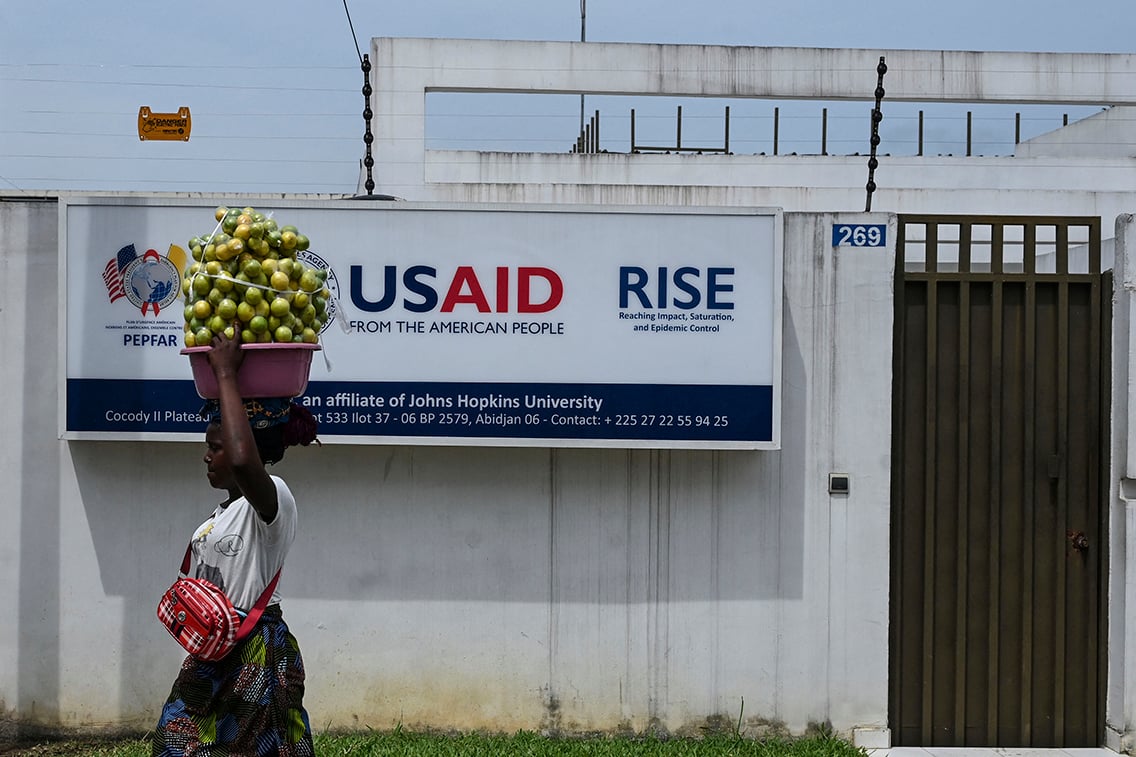
The latest round of aid cuts has been brutal for Africa. According to the IMF, early estimates point to bilateral aid cuts of about 26% in 2025 alone in sub-Saharan Africa. In a note, IMF Africa department economists Chie Aoyagi, Maurizio Leonardi and Athene Laws, with research analyst Hamza Mighri, say that sub-Saharan Africa remains more dependent on aid than all other global regions.
On average, aid accounted for 3% of GDP at the regional level in sub-Saharan Africa. But in low-income countries and fragile states, aid often reached the equivalent of 6% of GDP or more, and in some cases far higher. Over half of that aid was used to finance essential services such as health, education and humanitarian assistance, they write.
What is driving the decline? The Trump administration’s decision to drastically slash aid budgets is a major factor. Once a generous donor, the US has shuttered US Aid and shifted towards business-minded deals with African countries. US global economic aid obligations were down 65% in 2025.
In June the US government even said that it will stop funding programmes in South Africa intended to tackle the spread of HIV and Aids. The US was previously providing around $400m a year to South Africa through the President’s Emergency Fund for Aids Relief (Pepfar). The decision to end that – which is likely to cost lives, according to UNAIDS chief Winnie Byanyima, follows months of geopolitical tension between the countries.
Other contributing factors include unremitting global shocks – from Covid-19 to wars in Ukraine and the Middle East – that have led traditional donors to focus on domestic spending. The UK is gradually reducing its official development assistance budget from 0.5% to 0.3% of gross national income by 2027, the lowest level since 1999, to fund expanded defence.
“Aid flows have always fluctuated. But this episode stands apart. The recent cuts are large and broadly simultaneous across countries. They are driven by donor decisions rather than changes in recipient economies,” the IMF analysts write.
“While non-traditional donors, such as China and the Gulf States, have grown their aid presence in the region, the magnitudes are not able to cover the reduction in traditional donors.”
The IMF says that some African governments are not replacing aid at all and allowing programmes to lapse, limiting fiscal strain but carrying “high social costs”. Others are cutting back on public investment, or borrowing more to fill the gap and thus elevating debt risks. Some are attempting to drive longer-term revenue mobilisation.
“Replacing lost aid can protect services and growth, but at the cost of wider deficits and external imbalances. Not replacing it stabilises budgets and protects debt sustainability, but risks lasting damage to human capital and development. There are no easy choices,” the authors say.
Protect priority aid
The Fund recommends that donors protect priority spending – especially to low-income countries, fragile states and essential humanitarian needs. Going forwards, the IMF says a shift to a mix of public and private capital – known as blended capital – could help to fund key sectors, though the analysts admit it is “harder to scale, more complex and can add to debt if poorly designed”.
Domestic resource mobilisation is needed but will take “time and sustained investment”. Such an approach could protect funding for emergencies such as Ebola – during June response needs tripled to $1.4bn – and set African countries on a longer-term path of resilience.
But in the meantime, for less headline-grabbing causes like maternal healthcare and education, there is no going back to the old world.
“The shift that began in 2025 is unlikely to be temporary,” the IMF team writes. “The longer-term challenge is to adapt to a world where aid is less abundant and less predictable. How countries navigate both will shape growth and development outcomes for years to come.”