Lagos State is unarguably Nigeria’s commercial engine, economic nerve centre and Africa’s most active hub for enterprise development, unlocking domestic capital and attracting foreign investment. This should not come as a surprise because Lagos contributes over 30% of the nation’s GDP, controls 70% of maritime cargo freight and handles over 80% of international air traffic.
With the government pursuing a 24-hour economy agenda through its THEMES agenda for traffic management and transportation, health and environment, education and technology and a “No One Left Behind” philosophy, Lagos offers scale and a proven market for investors.
The state’s strategy is clear: reduce friction, improve infrastructure and make Lagos bankable for private capital. A typical example is the $20bn investment by Alhaji Aliko Dangote in the 650,000 barrels per day oil refinery in Ibeju-Lekki.
For investors and operators heading to Lagos for the Invest in Lagos 3.0 Summit on 8 and 9 June there are opportunities in six strategic sectors where demand is structural, policy is supportive and execution creates pathways to defensible returns.
From import substitution to export
Lagos has historically been Nigeria’s manufacturing base, hosting over 60% of the country’s factories. The next phase is about upgrading from light assembly to industrial processing and export-oriented production. The state’s access to Apapa and Tin Can ports, the new Lekki Deep Sea Port and a large domestic market provide unique advantage. The Lekki Free Zone, Lagos Free Zone and Alaro City offer tax holidays, duty exemptions and single-window customs clearance. The Dangote Refinery in Ibeju-Lekki has also created a downstream cluster for petrochemicals, plastics and fertiliser.
Capital should therefore flow into three areas as follows: first to agro-processing, such as tomato paste, dairy, beverages and packaged foods targeting Nigeria’s 220m consumers and beyond; second, pharmaceuticals and packaging, driving import substitution driven by the National Agency for Food and Drug Administration and Central Bank of Nigeria foreign exchange policies; and thirdly to building materials – cement, steel and prefabricated housing components to meet Lagos’s housing deficit.
Investors need access to reliable power and partnerships with local distributors. The Lekki Free Zone is the preferred structure for export-oriented firms to manage forex and customs friction. Within the African Continental Free Trade Area (AfCFTA) a manufacturer in Lagos can now target 400m consumers in the Economic Community of West African States (ECOWAS) with preferential tariffs.
Africa’s startup capital
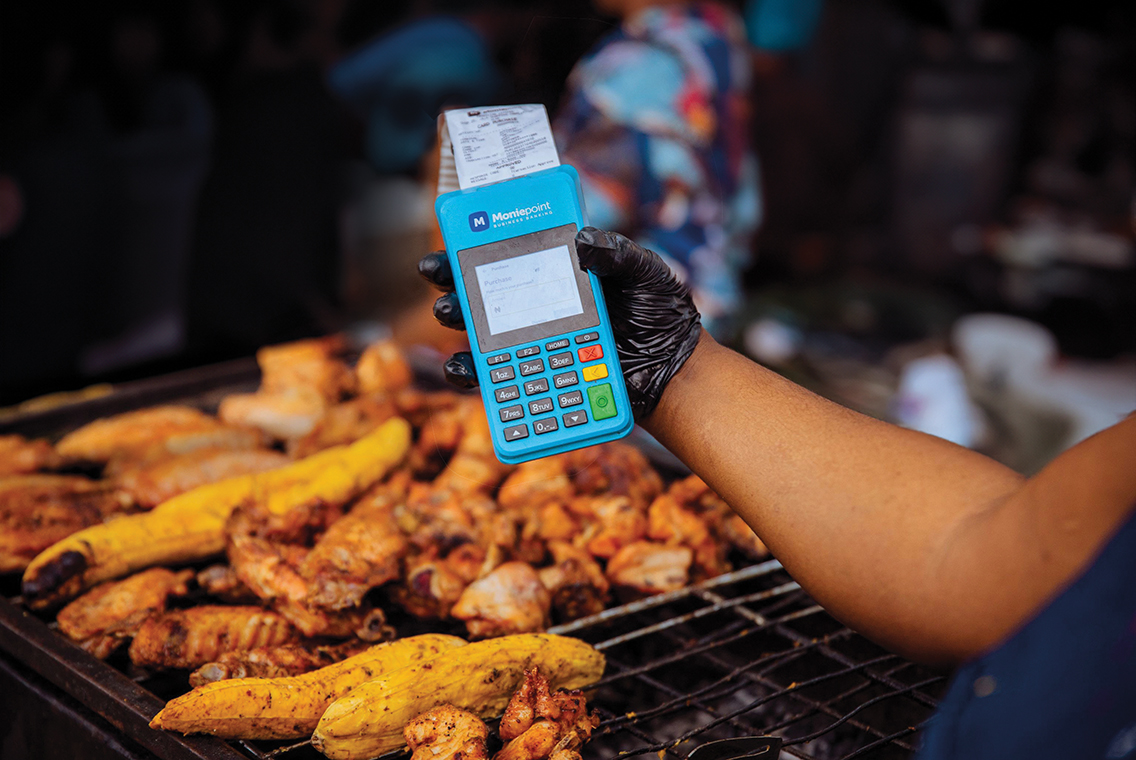
Lagos is Africa’s undisputed startup capital. Over 80% of Nigerian venture funding goes to Lagos-based companies, and the city produces more fintech unicorns than any other African city. The key drivers are high internet penetration, a young population and dense urban problems in payments, logistics and lending. Yaba remains the talent and startup district, but Lekki and Ikeja are growing as secondary hubs. The active sub-sectors are fintechs (Flutterwave, Paystack, Interwitch and Moniepoint started in Lagos); logistics and mobility (Kobo360, Gokada and new B2B logistics platforms solving inter-state freight); healthtech and edtech (telemedicine diagnostics and skills platforms targeting the middle class); and B2B and AI (startups building tools for small and medium enterprises (SMEs), banks and manufacturers).
For investors, the play is in early-stage equity, but there’s growing opportunity in growth equity for companies scaling beyond Nigeria. The challenges, however, are in talent retention and forex for cloud and software costs. The opportunity is that a product that works in Lagos can scale across Africa with minimal localisation.
Feeding over 20m Lagosians
Over 80% of the Lagos food supply comes from other states and imports – a gap which presents a business opportunity. Lagos is building food security through the Lagos Agripreneurship Programme, the Eko Rice Project and the Food and Logistics Hub in Epe.
The goal is to reduce post-harvest loss, improve the cold chain and formalise food markets. Nigeria loses over 40% of perishables post-harvest, which demands investment in cold rooms, refrigerated trucks and food-grade warehousing. There are investment opportunities in urban agriculture, poultry, fish and vegetable processing. There are also opportunities for the development of market infrastructure for abattoirs and wholesale markets, while e-commerce platforms for farm-to-consumer delivery can be accessed by more consumers.
Lagos is pushing aggregation models in which SMEs and cooperatives supply large retailers and manufacturers. Investors can finance aggregation centres and provide working capital to smallholder suppliers. AfCFTA makes Lagos a potential hub for processed food export to West Africa.
Powering a 24-hour economy
The Electricity Act 2023 allows states to regulate and license power generation and distribution. Lagos State has moved quickly to establish the Lagos State Electricity Regulatory Commission and is contracting independent power projects. SMEs in manufacturing and logistics are the biggest buyers of off-grid power. Investors can structure power-as-a-service models with Power Purchase Agreements (PPAs), while the state’s public-private partnership (PPP) framework provides bankable contracts, which is rare at the sub-national level.
The bottleneck remains financing and forex for imported equipment. Development finance institutions (DFIs) and blended finance are active here and the market is large enough to absorb multiple players.
Time to build affordable homes
Lagos has a housing deficit of over 3m units. Real estate and infrastructure are therefore core to enterprise development. Demand for housing is strongest for middle-income buyers. Developers are using off-plan sales, mortgage partnerships and real estate investment trusts (REITs) to manage capital.
Lekki-Epe, Ibeju-Lekki and Alimosho are new growth corridors due to new roads and industrial activity. Grade-A office demand is rising in Eko Atlantic and Victoria Island; while warehousing and light industrial space is booming around Lekki Free Zone and along the Lekki-Epe corridor.
The state is using PPPs for roads, rail and water. The Blue and Red Line rail projects are operational, cutting commute times and opening new real estate corridors.
For SMEs, opportunity lies in construction materials, prefabrication and facility management services that supply larger developers.
Risk management means understanding title, regulatory approval and market absorption. Investors who partner with established local developers and focus on cash-generating assets like warehouses and student housing see the most stable returns.
Monetising culture at scale
Lagos, as the cultural capital of Africa, hosts over 200 major events annually. Nollywood, Afrobeats, fashion and digital content generate billions in revenue and global influence. This explains why we have the Lagos State Creative Industry Initiative and the Lagos Film City project in Epe, while the Lagos Creative Hub provides infrastructure, training and financing. The goal is to formalise the sector and increase export revenue.
The boom in this sector is phenomenal, and it presents investment opportunities in film and content production, live events and hospitality, fashion and design and digital platforms.
Key challenges, however, include piracy and the payment infrastructure for digital content. The opportunity is that Lagos content already has global demand.
Too large to be ignored
The six sectors highlighted above represent an investor playbook for Lagos, but it is by no means exhaustive. Lagos is not a passive market; so, the investors who win do three things differently: partner locally, focus on unit economics and build for AfCFTA, because the Lagos market is too large to be ignored.
Lagos offers scale, liquidity and a proven path to returns. For entrepreneurs, it offers a market that rewards speed, resilience and localisation.
If Africa’s enterprise story is going to be written about at scale, it will be written first in Lagos.
The capital, talent and demand are already in Lagos. The question is who builds what and how fast.