
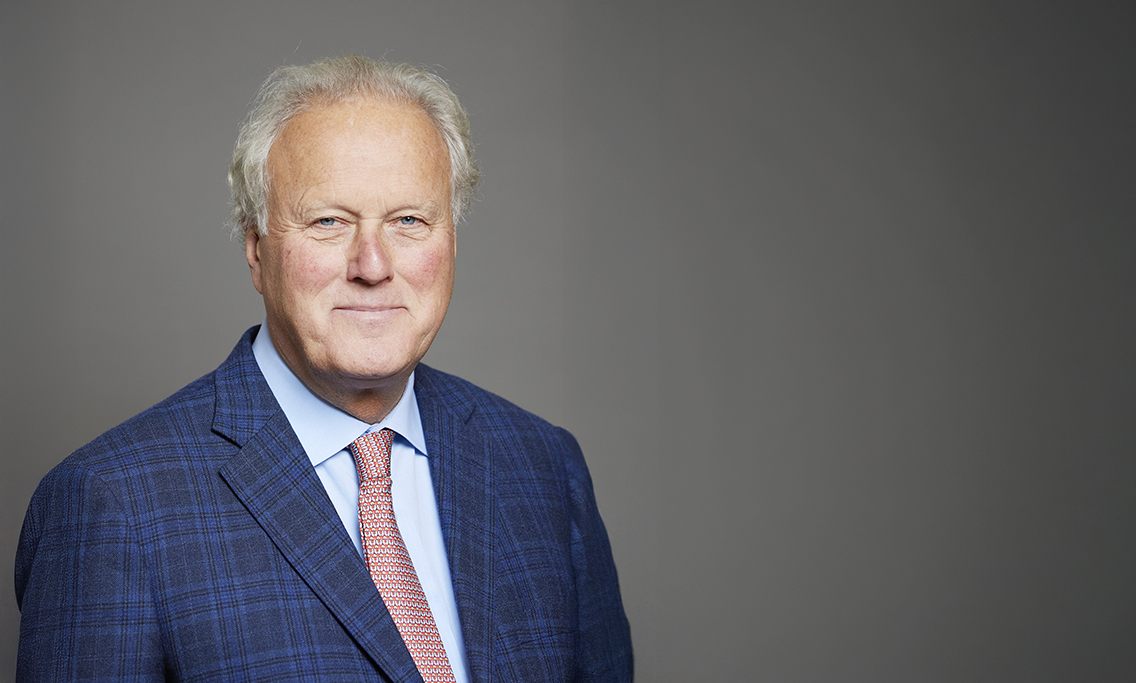
Lord Marland speaks about Lagos with fondness and the conviction of someone who has watched the city evolve. As he prepares to deliver the opening remarks at Invest in Lagos 3.0 his message is clear: Lagos is no longer a promise; it is a proposition. “What I’ve noticed in the last few years is great transformation in Nigeria but in particular Lagos,” he says. “It’s become open for business.”
The shift, he says, is not abstract; it is visible in the energy of the private sector, the ambition of developers and the boldness of industrialists.
Nigerian businesses doing wonders for Nigeria
He points to the Dangote Refinery as a defining symbol of this new era. “I think the magnificently brave decision by Mr. Dangote to build this refinery has done wonders for the Nigerian economy,” while the free port, he adds, has created “very strong access to the Nigerian economy but also the greater economies of Western Africa”.
Invest in Lagos 3.0, in his view, could not be happening at a better moment. “I think the event we’re going to have in Lagos is just perfect timing to demonstrate to the world what’s going on in this fast developing and hugely populated country.”
He credits Governor Babajide Sanwo-Olu for accelerating the city’s transformation, pointing to the private sector’s continental expansion as reinforcing this momentum from banking to oil and gas.
“We’re taking 250 delegates from across the Commonwealth,” he says. “As I speak it’s 243 and by the time we get to Lagos I’m sure it’ll be near 300.” For Lord Marland, the purpose of Invest in Lagos 3.0 is straightforward: global investors need to see Lagos for themselves. “That’s the whole point of this event,” he says. “It’s to show people what’s going on, what the opportunities are.”
He believes the showcase will “provoke a lot of interest,” especially given Lagos’ fiscal performance and potential. The state earned a princely $1.9bn in revenue in 2025 and has become a model for Nigeria’s sub-nationals.
It will also benefit from the “Commonwealth advantage” which ensures that bilateral trade costs between Commonwealth countries are on average 21% lower, while foreign direct investment (FDI) flows between Commonwealth country pairs are about 27% higher than those between others.
What of investor concerns around safety, energy access and ease of doing business? These, Lord Marland avers, are precisely the issues that platforms like Invest in Lagos 3.0 are designed to address. “For businesspeople, they want to feel that the rule of law will support them if there is any wrongdoing,” he says. “Free and open access to market is very important.”
Power as key to industrialisation
Lord Marland is candid about the challenge of power supply. “Generating power is an all-world problem,” he says before noting that data centres “consume a huge amount of power and employ very few people,” before adding that there are “great advantages”.
Nigeria’s demographic advantage is unmistakable. “You’re always going to need the educated and skilled people… particularly in medtech and agriculture; two big issues for Nigeria.”
Marland identifies four global challenges that will shape discussions at Invest in Lagos 3.0. “The key issues around the world at the moment are food security, energy security and security,” he says. “Add to that medical security.
“You can only judge what 3.0 is going to be after we’ve had this conference and if people start investing more in Nigeria,” he says before noting that the delegation he is bringing is curious and open-minded. “A lot of them are coming to have a look and say, ‘Okay, well, our friends at CWEIC are saying it’s open for business. We’ll come and we’ll have a look at it’.”