Lagos is already one of the defining economic centres of Africa by any measure. Home to Nigeria’s financial industry, one of the continent’s largest startup ecosystems and a fast-growing industrial corridor anchored by the Lekki Deep Sea Port, the city has become central to conversations about Africa’s economic future.
Now the Lagos State government wants to deepen that role through Invest in Lagos 3.0, a summit designed to attract more than 4 trillion naira in investment commitments while positioning Lagos as Africa’s leading sub-national investment platform.
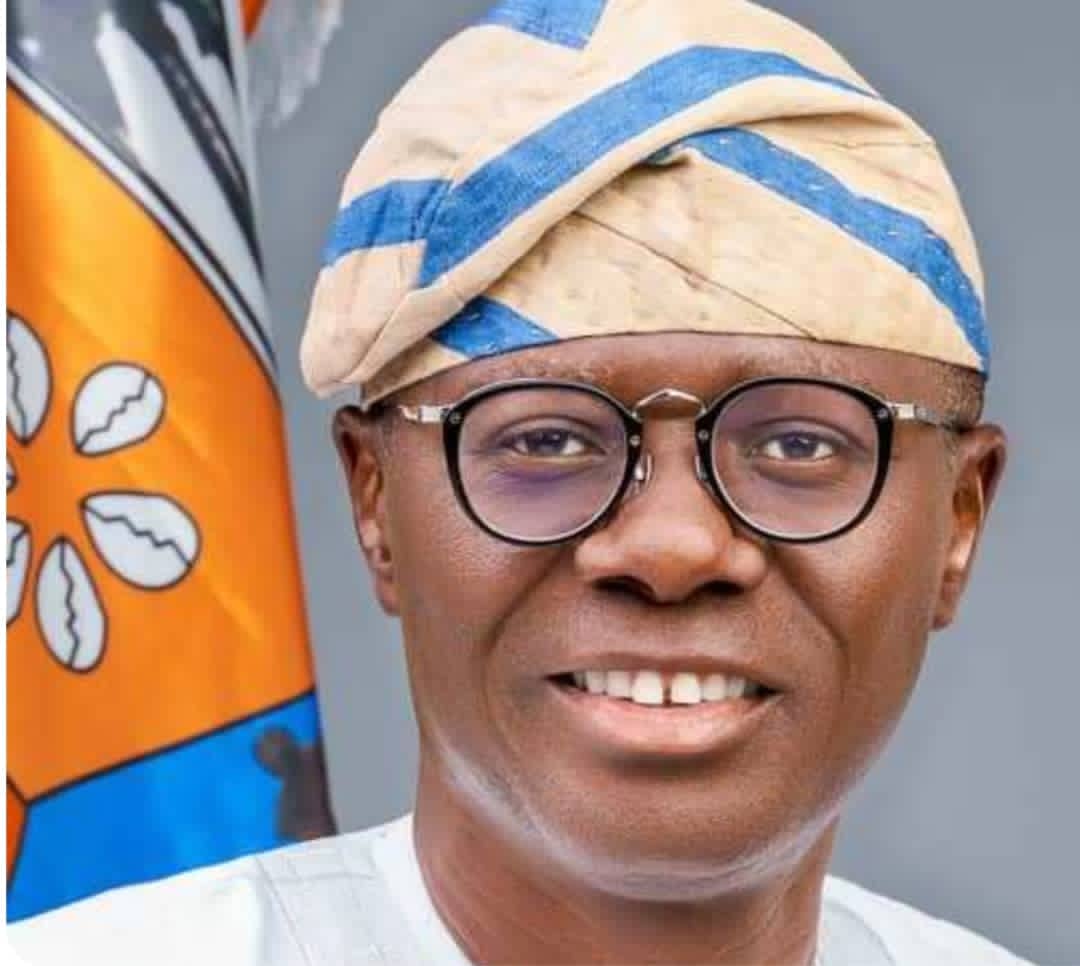
Governor Babajide Sanwo-Olu insists the summit is about far more than headline investment announcements. “An ambitious investment target carries its own accountability discipline,” he says. “The real test is whether commitments translate into projects, jobs and measurable value for Lagosians.”
To ensure that happens, the state has built what it calls “Deal Room 2.0”, an invitation-only transaction platform focused on investment-ready projects across strategic sectors. Each project will be subject to a 90-day post-summit monitoring process and a 180-day financial close target.
The state government has also strengthened its investor aftercare framework through the Ministry of Commerce, Cooperatives, Trade and Investment, which now coordinates relationships between investors, regulators and state delivery agencies.
Combination of advantages
Sanwo-Olu believes Lagos enjoys a combination of advantages unmatched by any other African commercial hub. While acknowledging the strengths of cities such as Johannesburg, Nairobi, Cairo and Kigali, he argues that Lagos possesses a unique blend of scale, sectoral depth and market access.
With a gross state product estimated at around $259bn in purchasing power terms and contributing more than 30% of Nigeria’s GDP, Lagos remains one of Africa’s largest urban economies. It also sits within the continent’s biggest national economy and provides direct access to the African Continental Free Trade Area market.
“What distinguishes Lagos is scale combined with institutional momentum,” Sanwo-Olu says. “We are building infrastructure, industrial capacity and digital capability simultaneously.”
Technology and innovation sit at the centre of that strategy. Lagos is now home to more than 2,000 startups, including several African unicorns such as Flutterwave, Moniepoint, Interswitch and Jumia. The city has also become a magnet for venture capital, fintech expansion and data centre investment.
According to the governor, the state’s long-term ambition is to convert this startup success into a broader industrial and technological ecosystem capable of generating sustained economic growth.
“The Lagos I am building towards is one where capital and innovation arrive together,” he says.
Invest in Lagos 3.0 will reflect that focus through dedicated pavilions on artificial intelligence, fintech and the digital economy, alongside an AI-powered investor dashboard intended to remain active beyond the summit itself.
Focus on industrialisation
Sanwo-Olu is equally focused on industrialisation. In April 2026, Lagos launched its Industrial Policy 2025-2030, the first comprehensive industrial policy introduced by any Nigerian state government.
The policy aims to position Lagos as a leading African manufacturing hub through serviced industrial clusters, streamlined regulation and targeted incentives for manufacturers.
Industrial estates in Matori, Sabo Ikorodu and Imota are being revitalised, while a 10bn naira financing partnership with the Bank of Industry (BOI) is intended to improve access to affordable capital for small and medium-sized businesses.
“We are open to industrial capital and structured for it,” the governor says. “This is about creating long-term productive capacity, not simply attracting speculative investment.”
Accelerating infrastructure
Infrastructure remains one of the city’s greatest challenges. Rapid urbanisation continues to place enormous pressure on transport, housing, power and water systems. Sanwo-Olu acknowledges that Lagos is still playing catch-up in many areas, but argues that delivery is accelerating under the state’s THEMES+ development agenda.
The Blue and Red rail lines are already operational and expansion work is continuing, while embedded power solutions are being developed for industrial clusters. Housing delivery is increasingly being driven through public-private partnerships and long-term urban planning is being guided by the Lagos State Development Plan 2052.
“No megacity in the world has ever declared its infrastructure agenda complete,” he says. “But what matters is the pace and consistency of delivery.”
The governor also sees major untapped opportunities in the blue economy and creative industries. With the Lekki Deep Sea Port, an extensive coastline and growing fisheries and tourism sectors, Lagos believes it can become a leading maritime economy within Africa.
At the same time, the city’s dominance in music, film and digital content is creating opportunities for export-led growth if institutional finance and long-term investment can be mobilised more effectively.
“Nigerian culture is already globally consumed,” Sanwo-Olu says. “What remains is to build the financing architecture that allows the creative sector to operate at industrial scale.”
Partnerships will play a critical role in that ambition. The Commonwealth Enterprise and Investment Council (CWEIC) is serving as a strategic partner for Invest in Lagos 3.0, helping to bring delegations from across the Commonwealth, including the UK, Canada, India, Singapore and Australia.
The summit will also host sovereign wealth funds, development finance institutions and multilateral lenders, including Afreximbank, the African Development Bank, the International Finance Corporation and the Islamic Development Bank.
For Sanwo-Olu, however, attracting capital is only part of the equation.
The broader challenge is ensuring that growth becomes more inclusive, particularly for young people, women-led businesses and underserved communities.
He points to programmes such as LASMECO, a 10bn naira cooperative finance initiative created in partnership with the BOI, as evidence of efforts to broaden economic participation.
The programme has digitised thousands of cooperative societies and expanded access to financing for small businesses.
The state is also investing heavily in workforce development, technical training and skills partnerships designed to align Lagos’ labour force with the needs of a rapidly evolving digital economy.
“We want inclusive growth to become structural,” the governor says. “That means building systems that create opportunity at scale.”
Despite Lagos’ success, the city still faces a persistent challenge: retaining talent and businesses amid Nigeria’s wider macroeconomic pressures. Some startups and technology firms have relocated operations abroad in recent years due to currency volatility, energy costs and regulatory uncertainty.
Sanwo-Olu argues that Lagos is responding through a combination of regulatory reform, infrastructure investment and targeted incentives. The state currently ranks first in Nigeria on ease of doing business according to the Presidential Enabling Business Environment Council assessment.
“We understand the pressures businesses are facing,” he says. “Our responsibility is to reduce friction, improve reliability and create the confidence that encourages long-term investment.”
A long-term framework for growth
Ultimately, Sanwo-Olu says his administration’s biggest achievement has been institutional rather than political. He believes Lagos has shifted from promoting investment through isolated deals to creating a long-term framework capable of sustaining growth beyond individual administrations.
“The first edition of Invest in Lagos introduced the vision,” he says. “The second consolidated it. The third is about conversion.”
Looking ahead to 2035, the governor envisages a Lagos that has strengthened its position as one of the world’s most important emerging urban economies, with deeper industrial capacity, globally competitive technology firms and a stronger manufacturing base.
By then, he hopes Lagos will be firmly embedded in the strategic plans of global investors seeking exposure to African growth.
“The decisions we are making now,” he says, “are intended to shape the trajectory of Lagos for decades to come.”