
Lagos State is making an assertive pitch to position itself as Africa’s leading gateway for capital, technology and infrastructure investment, as global investors reassess their exposure to emerging markets amid inflationary pressures, geopolitical uncertainty and currency volatility.
At the centre of that effort is the Invest in Lagos 3.0 Summit, scheduled for 8 to 9 June 2026 at the Eko Hotel & Suites in Victoria Island. The event is expected to attract investors, development finance institutions, multinational corporations and diaspora business leaders from across the world. Lagos State hopes to secure commitments worth 4 trillion naira, approximately $2.5bn, across sectors including infrastructure, energy, technology, manufacturing and industrial development.
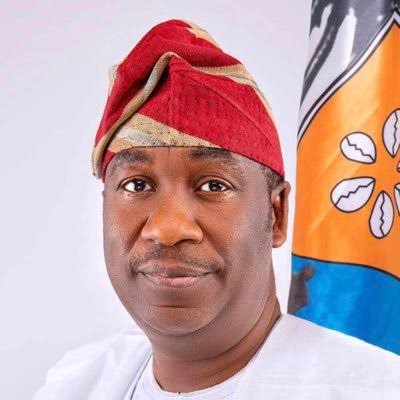
For Deputy Governor Kadri Obafemi Hamzat, however, the summit represents more than an investment conference. It is intended as a statement about Lagos’s long-term economic positioning.
“Macroeconomic volatility is not new to investors,” Hamzat tells African Business. “Serious capital is designed to manage volatility. The real question is whether the underlying market is structurally sound and whether the institutional architecture can absorb capital and convert it into returns.”
His argument rests on scale. Lagos remains Africa’s second-largest city economy after Cairo and contributes more than 30% of Nigeria’s GDP. It hosts much of the country’s financial services industry and the headquarters of several African technology unicorns, including Flutterwave, Interswitch, Jumia, OPay and Moniepoint. As implementation of the African Continental Free Trade Area gathers pace, Lagos is also positioning itself as the commercial gateway to a market of more than 1.3bn people.
“These are structural realities that do not disappear because of quarterly currency movements,” Hamzat says.
Yet he insists that scale alone is not enough. Much of the administration’s focus has been on building institutional systems capable of reassuring long-term investors. Lagos recently ranked first among Nigeria’s 36 states and the Federal Capital Territory in the Presidential Enabling Business Environment Council’s ease-of-doing-business assessment, while the state’s Industrial Policy 2025–2030 is intended to provide investors with a more predictable planning horizon.
Continuity and institutional discipline
Hamzat repeatedly returns to the importance of continuity and institutional discipline, themes that have become central to Lagos State’s investment messaging. “The investor who commits to Lagos in 2026 must know that the institutional architecture will honour those commitments well beyond political cycles.” His own academic and professional background shapes much of this thinking. Hamzat holds a PhD in systemic engineering, a discipline concerned with how complex systems interact and function together. He sees Lagos itself as a vast interconnected system whose greatest challenges lie not in isolated problems but in the friction between institutions, infrastructure and data systems.
“The biggest bottleneck in Lagos today is at the interfaces,” he explains. “Between transport systems that should connect seamlessly, between agencies that hold complementary data but operate in silos, and between regulatory structures that move investors from one ministry to another without continuity”.
Addressing those bottlenecks has become a major priority for the administration of Governor Babajide Sanwo-Olu. Hamzat says that Lagos is working to integrate transport planning across rail, road and waterways while simultaneously building interoperable digital systems across ministries and agencies.
The broader objective is to make Lagos easier to navigate, both for citizens and for investors seeking regulatory clarity.
Need for blended finance
That systems-based approach also informs the state’s infrastructure financing strategy. Across emerging markets, governments are increasingly constrained by debt burdens and rising borrowing costs. Lagos, Hamzat argues, has deliberately adopted a different model. “The classical approach of governments borrowing heavily against future tax revenues is reaching its limits,” he says. “We are pursuing a blended structure that combines concessional capital, commercial investment and targeted public funding.”
The private sector sits at the centre of this strategy. The Lekki Deep Sea Port was developed under a concession framework, while the Lekki Free Zone has attracted hundreds of millions of dollars in foreign direct investment. Lagos’s Blue and Red rail lines have also been financed through combinations of state resources, federal support and concessional funding arrangements.
The administration is particularly keen to attract institutional investors and development finance institutions into infrastructure partnerships that avoid placing excessive pressure on the state balance sheet.
“Our discipline is straightforward,” Hamzat says. “Every partnership must demonstrate value for money, every project must have a credible financial close horizon, and every commitment must withstand public scrutiny.”
Technology and innovation are another major focus. Lagos has emerged as Africa’s most dynamic start-up ecosystem, but Hamzat believes the next phase of growth must involve greater ownership of intellectual property by African founders themselves.
“The value compounds on whoever owns the underlying technology,” he says. “Historically, Africa has been on the wrong side of that equation.”
The state government is now seeking to strengthen intellectual property registration, expand technical skills training through Lagos State University and other institutions, and use government procurement to support locally developed digital platforms.
“A continent that consumes technology built elsewhere will always pay rent on its own progress,” he argues. “Lagos is choosing to build and own the technology so the value compounds at home.”
That ambition is closely tied to the rapid growth of digital infrastructure across the city. Lagos already hosts some of Africa’s largest data centres, and demand for local data storage capacity is expected to rise sharply as digital services expand across the continent.
For Hamzat, data sovereignty has become a strategic infrastructure issue requiring reliable power, cybersecurity, fibre connectivity and clear regulation.
The Lagos that wants to host Africa’s data infrastructure has to be the Lagos that has done the infrastructure work,” he says.
Power reliability remains one of the most closely watched issues for investors. The administration points to its Embedded Power Programme and broader engagement with federal electricity reforms as evidence of progress, particularly for industrial clusters and digital infrastructure operators.
Diaspora outreach
Beyond foreign institutional investors, Lagos is also targeting Nigeria’s vast diaspora community. Remittance inflows into Nigeria exceed $20bn annually, but much of that capital remains disconnected from structured long-term investment opportunities.
Hamzat believes diaspora investors have often been discouraged by opaque property markets, informal arrangements and weak institutional protections. The government is now working with federal authorities on diaspora-targeted investment instruments, including infrastructure and housing vehicles backed by stronger governance frameworks.
“The Lagos people carry in their hearts can become the Lagos they co-own in their portfolios,” he says.
As discussion turns to politics and the 2027 governorship transition, Hamzat remains careful and measured. Widely viewed as a possible successor to Governor Sanwo-Olu, he repeatedly stresses that the current administration’s work is ongoing and that institutional continuity matters more than political personalities. “The architecture of this administration must remain the architecture of the next,” he says. “Continuity is the discipline that compounds value.”
For Hamzat, the success of Invest in Lagos 3.0 will ultimately not be measured solely by announcements or memoranda signed during the summit itself. The real test will come months later, through the conversion of commitments into operational investments and jobs.
In the longer term, he hopes Lagos will secure a permanent place on the global investment calendar as the preferred entry point for international capital seeking exposure to African markets.
“Our objective,” he says, “is for Lagos to become the default sub-national gateway for investment into Africa.”