
Mombasa became the centre of the ocean world last week, as the Kenyan city hosted the eleventh Our Ocean Conference. This marked the first time the meeting, which attracted over 5,000 delegates, was held on African soil.
The conference resulted in a total of 320 investment pledges adding up $6.2bn, many of which focused on African priorities such as cracking down on illegal fishing and strengthening coastal ecosystems that absorb carbon.
The event also put the spotlight on efforts to grow a sustainable ‘blue economy’ in East Africa and the Western Indian Ocean.
Whether the policy commitments made in Mombasa and other conferences have a meaningful effect in practice remains to be seen, however.
“I have attended coastal and ocean conferences for more than three decades,” says Nirmal Jivan Shah, CEO of Nature Seychelles. “The challenge has never been a shortage of declarations. The challenge has been turning commitments into action.”
“The Western Indian Ocean does not need another decade of plans sitting on shelves,” he adds. “It needs investment in fisheries, ports, coastal protection, marine conservation, renewable energy, blue enterprises and climate adaptation.”
Ocean monitoring
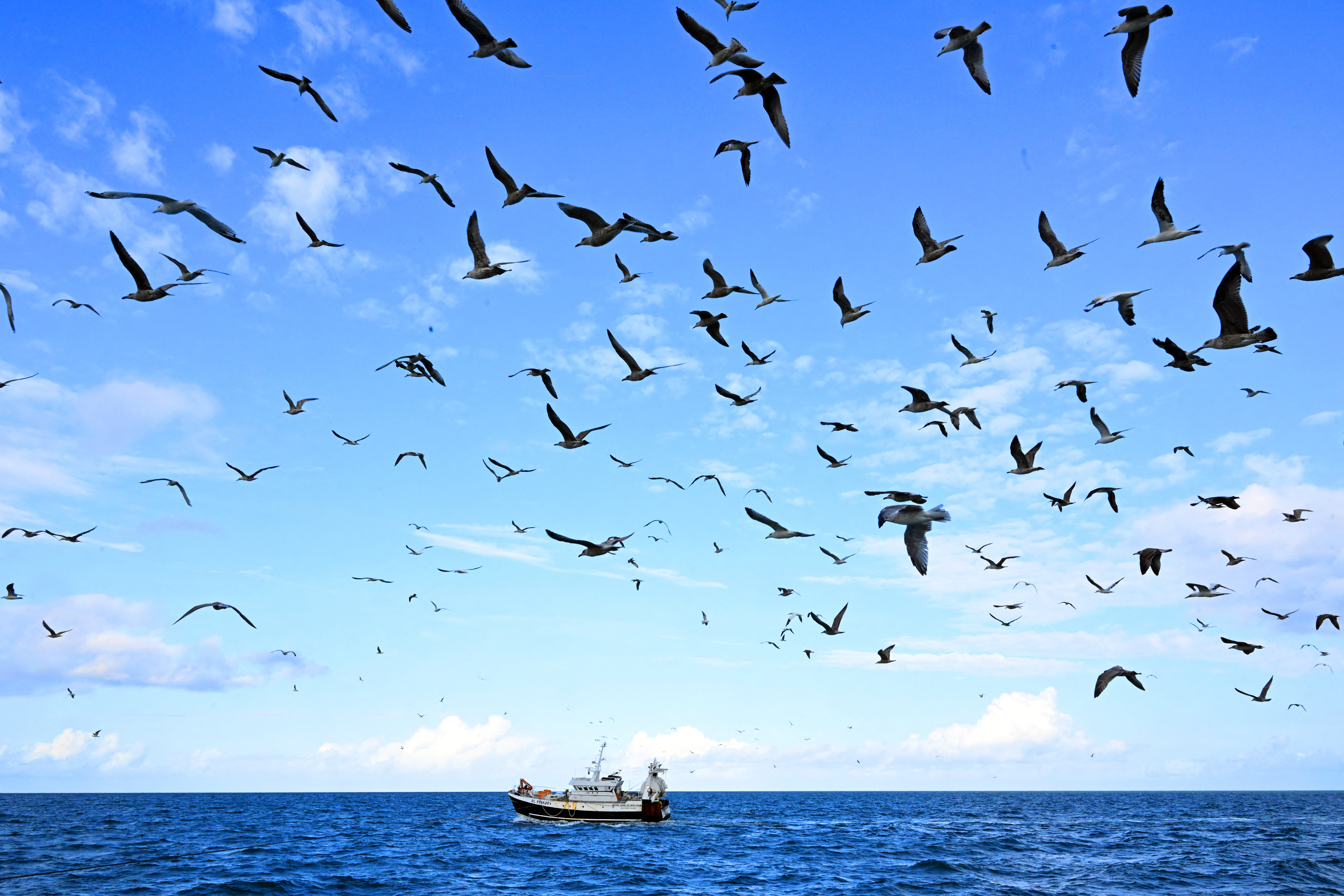
Jeff Ardron, Africa oceans director at The Nature Conservancy, highlights that a key achievement of Our Ocean this year was a pledge from several countries to enforce electronic monitoring on industrial fishing vessels operating in their exclusive economic zones.
The Seychelles is committed to monitoring all industrial tuna vessels in its waters by 2027, while Kenya pledged to monitoring all industrial fishing vessels by 2030.
“It looks good on electronic monitoring,” says Ardron. “It looks like there was a certain momentum, that people realised that if we’re going to have these big fisheries offshore out of sight, we really should trust but verify.”
Monitoring and regulating the activities of industrial fishing vessels, with the help of cameras on their decks that record their catch, is seen as vital to protecting artisanal fishing communities that operate close to the shore.
Overfishing by offshore vessels inevitably leads to declining fish stocks in inshore areas, Ardron notes.
“Fisheries management improves with the quality of the data, so if have better quality data, you can have better quality management decisions, and then that does affect everything.”
Marine biotechnology
One of the themes that attracted attention during the Mombasa event was marine biotechnology – in other words, the use of marine genetic resources to create new products and services. This is a sector meant to be turbocharged by the High Seas Treaty, which entered into force earlier this year, and provides a framework for ocean governance beyond the exclusive economic zones that extend 200 miles from a country’s coastline.
“We still have some way to go when it comes to investing in infrastructure and the necessary enabling environments to really kick off some of these emerging sectors,” says Angelique Pouponneau, a Seychelles-based environmental lawyer who serves as lead ocean negotiator for the Alliance of Small Island States.
“I think we need to invest in research vessels,” she says, adding that the region needs to build its human capital and R&D capabilities to ensure it can make the most of opportunities in the marine biotechnology space.
Great Blue Wall
Meanwhile, a centrepiece of the Our Ocean Conference was the delivery of a progress report on the Great Blue Wall initiative.
First unveiled at COP26 in 2021, the scheme, led by the International Union for the Conservation of Nature, aims to conserve 30% of the Western Indian Ocean through protected areas by 2030, while rehabilitating ecosystems that sequester carbon and creating two million ‘blue jobs’ to make coastal communities economically viable.
Thomas Sberna, regional head for coastal and ocean resilience at the IUCN, tells African Business that establishing sustainable economic activities is vital for achieving the Great Blue Wall’s conservation goals.
“If we really want to change the paradigm and really unlock the level of funding that is needed for us to achieve the ocean agenda actions and the 2030 targets, we need to unleash the regenerative potential of the private sector.”
Sberna says the initiative is focused on eight ‘seascapes’ in Kenya, Tanzania, Mozambique, Comoros and Madagascar. These should function as “special economic zones for regenerative blue economic development,” he notes.
“Ultimately, the goal of that is to establish bankable regenerative seascapes that will be able to self-fund themselves,” says Sberna, who acknowledges grant funding alone will not be sufficient.
The Great Blue Wall’s progress report reveals a mixed picture. So far, 22,500 square kilometres are under improved management through mechanisms such as marine protected areas. Yet only 1,300 jobs have been created in blue economic enterprises in the seascape areas.
“There is still a long way to go,” Sberna concedes. The Great Blue Wall has “built the foundations,” he believes, without yet achieving its goal of fully bankable seascapes.
For this, more finance is required. “Money talks, and the money is just not at the scale of what needs to happen,” warns Sberna.
“We need to give us ourselves the means to be able to deliver on that 2030 agenda. And we’re nowhere close, especially when it comes to the ocean agenda, to have access to the means to be able to deliver it.”
Ocean finance call
Markus Knigge, executive director at the German-backed Blue Action Fund, warns that cuts to development budgets are making it more difficult to protect ocean and coastal environments in East Africa and the Western Indian Ocean.
“While it is important to attract other funding sources, private funding sources, one should also not forget that protecting biodiversity and our life systems is a public service,” he says, noting that at least some public funding is needed to make blended finance instruments viable.
Knigge adds that other sources of revenue – including from ecotourism or blue carbon projects – can be valuable for marine conservation, but warns these are not viable in all areas of the East African coast.
East Africa does have an undoubted blue economy success story within its own backyard – the Seychelles. The Indian Ocean archipelago has a thriving ecotourism sector, and has been a trendsetter in sustainable finance with its pioneering use of ‘blue bonds’ to fund conservation and blue economic development.
“The most important lesson is that conservation and economic development are not opposing forces,” says Shah, who points out that the Seychelles made a strategic choice to protect its natural assets half a century ago.
“That was not done simply for environmental reasons. It was done because nature underpins our economy. Our tourism industry depends on healthy reefs, beaches, wetlands, forests and wildlife.”
“At the same time, we have learned that protection alone is not enough. Protected areas must be managed, financed and integrated into broader economic planning,” Shah adds.
He is “cautiously optimistic” about the future development of the blue economy in the wider region.
“If we can close the gap between ambition and delivery, the region has enormous potential. The Western Indian Ocean possesses some of the world’s most valuable marine ecosystems, strategic shipping routes, fisheries resources and tourism assets. The future is there for the taking. The question is whether we will spend the next decade negotiating it, or building it.”