



It’s a warm afternoon in New York and a 25-year-old is walking down the street wearing a pair of Bathu sneakers, drinking a Chivita fruit juice and carrying a pack of Azam biscuits, totally oblivious that they are wearing a South African brand, drinking a Nigerian one and snacking on a Tanzanian one.
In the next decade, this scenario could be more likely than it has ever been before as the days of Africa being a mere consumer of global brands could be fast ending. While the continent still has a long developmental road ahead, production momentum and the rise of African brands globally has been building for some time. In the 2000s, it was estimated that seven in ten of the world’s fastest growing economies were on the continent – and with that came a surge of interest from multinationals.
Although a few waves of global recession have muted the Africa growth story, the potential is still very much alive. With Africa’s population projected to reach 1.7 billion by 2030, and most of this growth happening in cities, the region is the fastest-urbanising in the world, presenting immense business potential. In 2020, PepsiCo made a major play in spending almost $2bn to acquire one of South Africa’s premier FMCG businesses, Pioneer Foods, in one of the biggest deals made by PepsiCo outside of the US. In completing the deal, PepsiCo became one of the largest food companies in sub-Saharan Africa.
The opportunity for African brands
Africa is expected to be home to as much as 40% of the world’s working-age population by 2100. Its consumer class is already growing. Africa is the world’s second-fastest-growing region, with GDP growth averaging 3.8% in 2024 and projected at 4.2% in 2026, ahead of the global average. Eleven of the world’s 20 fastest-growing economies in 2024 were African. That growth has fuelled a rising middle class and increased consumer spending, attracting both global players and new local brands.
The structural conditions are also falling into place. The African Continental Free Trade Area brings together 54 countries, a population of 1.3 billion, and a combined GDP of $3.4 trillion. Before it, intra-African trade sat at just 16% of total trade, against 59% in Asia and 68% in Europe. In 2024, intra-African trade grew by 12.4%, reaching $220bn, an early signal that integration is moving from agreement to reality. World Bank estimates suggest AfCFTA could raise Africa’s exports by 32% by 2035 and catalyse foreign direct investment increases of between 111% and 159%.
Consumer spending on the continent is projected to surpass $2 trillion in 2025, driven by urbanisation, rising incomes, and a middle class expected to exceed 500 million people by 2030. By 2030, the continent’s top 18 cities alone will have combined consumer spending of around $1.3 trillion. PepsiCo already has more than 23 billion-dollar brands in its portfolio. Could its next emerge from Africa? All eyes are on the continent to convert the population dividend into the home of some new megabrands.
Africa is already building
Geographic and cultural diversity – Africa has 54 countries and over 2,000 languages – was once seen as Africa’s greatest barrier to brand building. It is becoming less so. Marketing sophistication has produced far more cost-effective ways of navigating cultural differences, and the urban middle class, increasingly concentrated in Africa’s frontier cities, is easier to reach than ever. As more Africans move into the middle class, demand for quality products rises with them.
Black Coffee’s 2022 Grammy win in the Best Dance/Electronic Album category was the first time a South African artist won or was nominated outside the World Music category. Bathu has built a sneaker brand rooted in South African township culture with growing continental resonance. Thebe Magugu became the first African designer to win the LVMH Prize. MTN has held the position of Africa’s most valuable brand for 13 consecutive years. Ethiopian Airlines is routinely ranked among the world’s best-run carriers. Dangote has built a continental industrial empire from Nigeria that rivals any emerging-market conglomerate. M-Pesa, born in Kenya, rewrote the rules of financial services not just for Africa but for the world. These are not aspirational case studies. They are proof of concept.
The data confirms the momentum. Brand Africa 100: Africa’s best brands 2026, the continent’s most comprehensive consumer-led brand study, covering 30 countries representing more than 85% of Africa’s population and GDP, shows African brands rebounding to 15% of the most admired brands in Africa, up from a historic low of 11% in 2025, the sharpest single-year recovery the survey has recorded in 16 years. MTN ranks 11th overall, and leads on doing good for society. Brand Finance puts MTN’s brand value at $2.9bn. Dangote ranks 30th overall and is the number one African brand contributing to a better Africa. Ethiopian Airlines ranks 53rd.
But converting goodwill towards African admiration for African brands is the most urgent central commercial opportunity for the continent. It is not enough for Africans to believe in Africa, they must buy Made-in-Africa. Africa is building. The scale question remains.
What it takes to build brands in Africa
Large multinationals have a mixed track record of acquisitions in Africa. Despite this, the Boston Consulting Group has seen a significant spike in M&A deals across the continent. Recent moves include dairy (Lactalis acquiring Parmalat), alcohol (Heineken acquiring Distell) and retail (Walmart acquiring Massmart). By recognising that an export-only model is no longer strong enough to compete with increasingly powerful African brands, strategic acquisition becomes a decisive move for ambitious firms. This strategy follows other acquisitions like Varun Beverages’ acquisition of BevCo in 2024. Varun is a New Delhi-based multinational and PepsiCo’s largest franchise bottler globally.
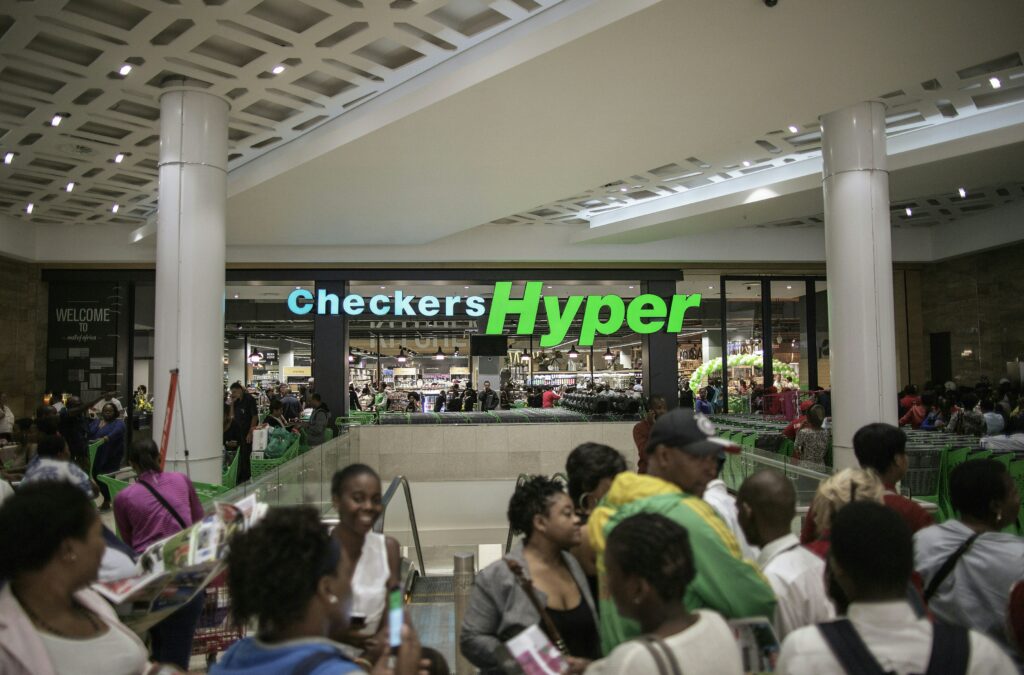
Africa, like most emerging markets, has both a strong formal and informal sector. But the two operate with very different rules and need to be treated with equal strategic intent. In South Africa, Sasko bread (PepsiCo) distributes more than a million loaves a day into large retail chains, informal settlements and rural areas. The multi-channel logistics strategy is highly complex and requires deep understanding of the retail architecture built into the African consumer goods landscape. Coca-Cola’s experience in Morocco illustrates the same imperative at its most literal: distribution in Morocco requires camels and donkeys where conventional vehicles cannot go, turning a route-to-market constraint into a competitive advantage. The lesson is the same in both cases. Mastery of the last mile is not a logistics problem. It is a market intelligence problem.
Slow, steady and strategic
Long-term orientation is the only way to win in Africa. Coca-Cola has been on the continent since 1928, building local bottling partnerships across 54 countries, creating jobs, deepening distribution and earning the kind of institutional trust that takes decades to build. Unilever Nigeria sources cassava locally to produce its Closeup and Pepsodent formulas, creating employment for factory workers, agronomists and farmers while reducing import dependency. These are not market entry tactics. They are market building strategies.
Prime Hydration follows a long list of brands that had short-lived African hype, driven by an over-reliance on tactics over strategy. Success in Africa requires patience. But with a working-age population still in steep ascent and consumer spending crossing $2 trillion, the numbers are too large to ignore.
Market intelligence
Investing in market research to gain robust insight into preferences, behaviours and aspirations of African consumers has been an essential ingredient for successful brands in Africa. The firms that have tailored products and marketing strategies to meet specific needs are seeing rewards. MTN, which operates in 17 diverse markets, spends millions of dollars on understanding the nuances in consumer behaviour between countries. A European wouldn’t dare say that a German and Italian are basically the same, and yet would have no problem grouping Niger with Nigeria or Kenya with Tanzania even though they are very different. The next megabrands will grow on the back of enhanced brand relevance and competitiveness found in true market knowledge and orientation. PepsiCo competes strongly with Pepsi and Mirinda in several African markets, and deploys bespoke go-to-market approaches in partnership with the local bottler for this reason.
Shared value
Corporate social responsibility plays a key strategic role in brand building in Africa. Consumers in resource-constrained communities take the support of local communities seriously, and brands that earn trust at that level earn something competitors cannot buy. The most durable examples go well beyond a foundation. They embed social impact into the commercial model itself.
PepsiCo’s Kgodiso Development Fund supports emerging farmers, SME development and education across its value chain. Coca-Cola’s 5by20 programme empowered more than two million women entrepreneurs across Africa, embedding them into its distribution and retail network. These are not acts of goodwill. They are acts of market building. Brands that invest in the communities they sell into deepen their networks, expand their supplier base and grow the spending power of their own consumers. In Africa, shared value is not a strategy alongside brand building. It is brand building.
Brands ownership challenge
But building a megabrand is one thing. Keeping it is another. As African brands grow and attract global attention, a clear pattern has emerged.
SABMiller, one of South Africa’s premier local brands, became one of the world’s great brewing companies. In 2016, it was acquired by AB InBev for over $100bn, the largest deal in the history of the drinks industry. MultiChoice, Africa’s leading pay-TV operator and home to DStv and SuperSport, was acquired by France’s Canal+ in 2025 for some $3bn. Zimbabwe’s Mazoe, a brand woven into the cultural fabric of a generation, was absorbed into Schweppes’ multinational portfolio. And of course PepsiCo acquired JSE-listed Pioneer Foods in 2020, along with its iconic South African brands Sasko, White Star, Spekko, LiquiFruit, Bokomo, Weet-Bix, Safari, Moirs and more. The brands may survive and hopefully carry the African brand story as they are internationalised.
It is to be expected, as growth attracts capital. But it raises a strategic question that African brand builders cannot afford to ignore. If the endgame of building a megabrand in Africa is eventual acquisition by a European, American, or Asian conglomerate, then Africa is in the business of incubating brands for others. The continent builds. Others buy and scale. Unlike the extractive arrangements of the colonial era, which transferred ownership at a disadvantage, the question is not whether they should have sold. It is whether they sold with a long-term African-first agenda. Admittedly, SABMiller’s shareholders captured significant value at exit. Africa ultimately lost leverage. African brands and their shareholders need to treat the sale as one option in a longer ownership strategy, and delivering sustainable value to the continent, and using the leverage to seed the next African megabrand, fund the next acquisition, or build the manufacturing base that reduces Africa’s dependence on imported goods. The goal is not to never sell. It is to sell in a way that keeps African capital, African ownership, and African leverage compounding on the continent.
The African loyalty paradox sharpens the picture. Brand Africa’s 2026 Brand Africa 100 survey shows that 80% of Africans believe in Africa, yet only 15% of the most admired brands in Africa are African. Nike retains the number one spot for the ninth consecutive year. Not a single African brand appears in the Top 10. The gap between belief in Africa and buying African is not simply a branding problem. As Mama Keita of the UN Economic Commission for Africa put it at the Brand Africa 100 launch in Addis Ababa on Africa Day earlier this year: “It represents lost opportunities for intra-African trade, unrealised industrialisation, forgone jobs, weakened value chains, and constrained competitiveness.”
There are three responses worth considering.
African acquisition of global brands: India wrote this playbook in 2008 when Tata Motors acquired Jaguar Land Rover from Ford for $2.3bn. Two iconic British marques, owned by an Indian conglomerate. Within a decade, JLR was profitable, globally respected, and its Indian ownership barely a footnote in the brand story. Africa has the capital, the ambition, and the entrepreneurial depth to do the same. Long-term discipline builds the foundation, whereas strategic acquisition accelerates scale. The continent does not always have to be a seller. It too can be a buyer.
Intra-African consolidation: MTN expanded methodically from South Africa across 19 markets, and Ethiopian Airlines built a continental aviation network from a single hub in Addis Ababa. Continental scale is achievable. It requires patience, cross-border regulatory intelligence, and the discipline to resist short-term exits. Dangote’s refinery strategy follows this same logic: build at a scale that changes the continent’s dependency structure entirely, not just individual balance sheets.
Designing for Africa first: Samsung’s Built for Africa strategy produced products specifically designed for African conditions: power fluctuations, connectivity constraints, heat and dust. It did not export a global product and hope for the best. The result was years of recognition as the most admired technology brand in the Brand Africa 100 rankings. Tecno, owned by China’s Transsion Holdings, went further still. It built its entire business model around Africa, calibrating cameras for darker skin tones, extending battery life for markets with unreliable electricity, and pricing for consumers that global brands had written off. By the first quarter of 2025, Transsion’s three brands – Tecno, Itel and Infinix – held over 46% of the African smartphone market. Most African consumers have no idea they are buying a Chinese brand. The affinity is African. The ownership is not. The fact that non‑African companies have mastered “designing for Africa” better than many African brands is precisely why ownership and sovereignty matter.
While cultural diversity is becoming less of a barrier, success still requires deep market intelligence. This provides an interesting and mild tension around brands still needing to be built smartly with local nuance and tailored strategy. Designing for Africa and owning the returns from Africa, however, are not the same thing. The lesson for African megabrands runs in the same direction: build with Africa’s conditions as a feature, not a constraint. That depth of local relevance is precisely what global acquirers cannot easily replicate, and the strongest case for why these brands should stay in African hands.

The enabling environment
The three responses above are what companies can do. What governments and institutions must do is create the policy conditions that make those responses viable at scale. The African Continental Free Trade Area is the instrument. Its Protocol on Trade in Goods aims to eliminate tariffs on 90% of goods traded within Africa, creating the home market that makes continental scale possible. Its Protocol on Trade in Services enables African brands to operate across borders without prohibitive regulatory barriers. The IP Protocol, currently under Phase II negotiation, will protect African brand equity continentally — the first time the continent will have a harmonised trademark and brand protection framework. The Digital Trade Protocol will create the platform for African digital brands to scale across 54 markets as a single addressable audience.
Ethiopia’s EV transition created a market that Chinese manufacturers captured because no preferential AfCFTA framework existed for Kiira, the Ugandan automotive manufacturer famous for building Africa’s first electric vehicles and solar buses. That is the policy gap. AfCFTA, fully implemented and actively used to preference African brands in African markets, is the structural response that the private sector alone cannot provide (UNECA, 2023).
“Africa produces what it does not consume and consumes what it does not produce.”
This observation by the late Kenyan professor, Ali Mazrui still holds. The brand economy is no exception. Africa is generating commercial momentum, demographic scale, and creative energy sufficient to produce genuine megabrands. The evidence is real – from Bathu to MTN to Ethiopian Airlines to M-Pesa. The five qualities this article identifies – strategic acquisition, retail intelligence, long-term commitment, market orientation, and community investment – are not just strategies for multinationals. They are the disciplines that African brand builders must master and own.
But building is not enough. SABMiller, MultiChoice and Mazoe all became great brands. The ownership moved. Tecno and Samsung both designed for Africa. The returns flowed elsewhere. Ethiopia built the most progressive EV policy in the world. China filled the market. The pattern is not accidental. It is the default outcome when brand building happens without a sovereignty strategy.
The tools exist to write a different chapter. AfCFTA provides the single market. The IP Protocol provides the continental brand protection framework. African capital and entrepreneurial ambition provide the means to buy as well as build. The discipline to consolidate across borders rather than accept premature exit provides the path to scale. None of this is straightforward. All of it is possible.
Thebe Ikalafeng is the founder and chairman of Brand Africa, chancellor at Sol Plaatje University and a professor of practice at the University of Johannesburg Business School.
James Lappeman is a professor and head of marketing studies at the University of Cape Town (UCT), and head of projects at the UCT Liberty Institute of Strategic Marketing.
Martin Neethling is former vice president and chief marketing officer of PepsiCo Southern Africa and Associate at the UCT Liberty Institute of Strategic Marketing.