
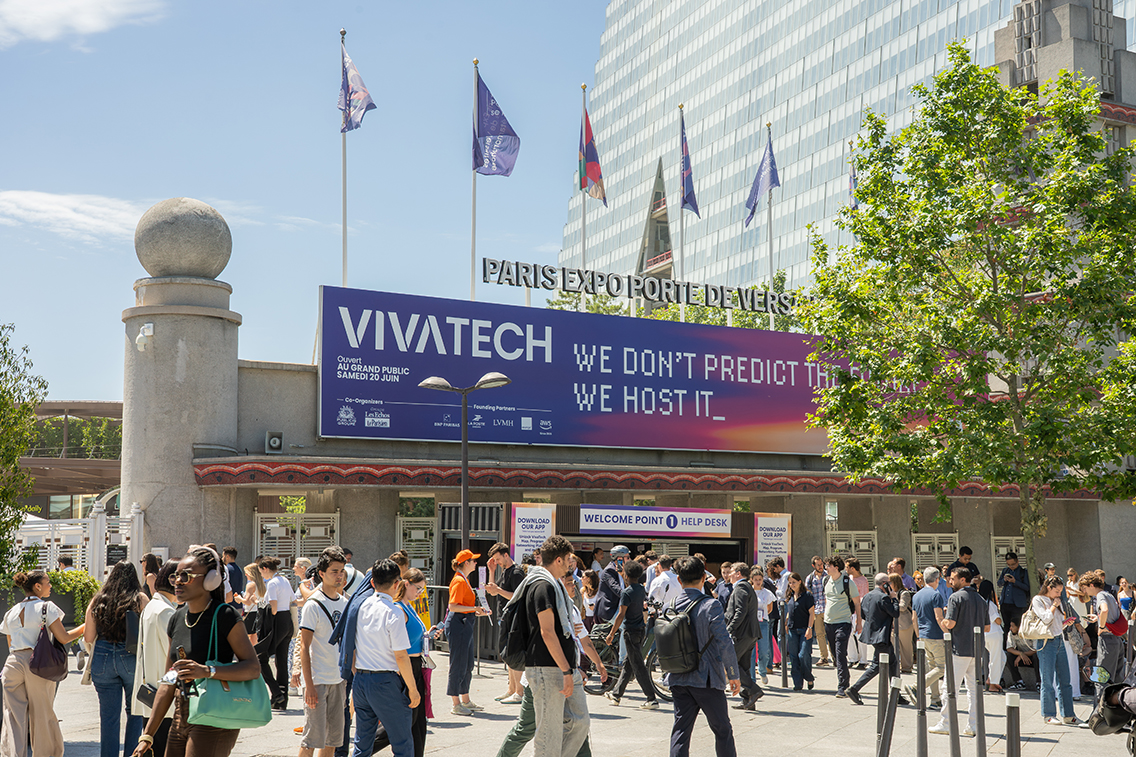
Paris hosted the tenth edition of VivaTech from 17 to 20 June, bringing together the world’s technology leaders, investors, entrepreneurs and policymakers at the Porte de Versailles exhibition centre. Over the past decade, the event has grown from a European technology gathering into one of the industry’s most influential global forums. This year’s edition highlighted not only the transformative impact of artificial intelligence but also Africa’s increasingly prominent role in shaping the future of innovation.
The numbers reflected the event’s growing scale and ambition. More than 180,000 visitors attended VivaTech 2026, alongside 15,000 startups, 4,000 investors and over 450 speakers. The exhibition expanded significantly, with an additional hall increasing floor space by 30%, accommodating more than 1,500 demonstrations and over 4,000 organised business meetings.
The overarching theme, “Impact, Not Illusion”, captured the industry’s focus on practical applications of emerging technologies. Artificial intelligence featured prominently throughout the programme, particularly in discussions around productivity, cybersecurity, energy transition and deep technology. From quantum computing and space technologies to advanced robotics and brain-computer interfaces, the event showcased innovations that are increasingly moving from research laboratories into commercial reality.
A roster of high-profile speakers reinforced VivaTech’s status as a major international platform. Jensen Huang, chief executive of Nvidia, outlined his vision for “AI factories”, the vast computing infrastructure required to support the next phase of artificial intelligence development. Yann LeCun, one of the pioneers of modern AI and a recipient of the Turing Award, discussed the future of the sector and the growing role of Europe in global AI research.
Jeff Bezos appeared alongside Blue Origin chief executive Dave Limp to discuss the future of space exploration and advanced manufacturing, while French president Emmanuel Macron used the event to underline France’s ambitions to become a leading centre for artificial intelligence development and governance. Arthur Mensch, chief executive of Mistral AI, argued for a European approach to foundation models that balances innovation with technological sovereignty.
Several announcements demonstrated how technology policy is increasingly intersecting with geopolitics. France formalised new bilateral AI partnerships with Germany and India, positioning itself as a hub for international cooperation on artificial intelligence. The announcement of a new academic chair dedicated to AI and the future of work, backed by HEC Paris, Google and Accenture, further highlighted the growing effort to understand the technology’s wider economic and social implications.
Germany was recognised as Country of the Year, showcasing companies such as SAP, Celonis, N26, Personio and Trade Republic. Elsewhere, exhibitors unveiled advances in areas ranging from exoskeletons and industrial AI assistants to automated cybersecurity systems and next-generation healthcare technologies.
For African observers, however, one of the most significant developments was the continued rise of the AfricaTech Awards, which marked their fifth edition this year.
Africa’s Growing Presence
While Africa has featured at VivaTech for several years, the 2026 edition suggested that the continent’s presence has entered a new phase of maturity. More than 260 startups from 34 African countries applied for the AfricaTech Awards, the highest number in the programme’s history. Supported by Deloitte, the competition selected a top 30 representing 11 countries and seven sectors.
Fintech remained the strongest category, accounting for 40% of selected startups, followed by health technology at 27% and HR technology at 13%. Nigeria produced the largest number of shortlisted companies, with Kenya and Egypt also strongly represented.
Perhaps most notable was the diversity of the entrepreneurs involved. Half of the selected startups were founded or co-founded by women, reflecting the increasingly broad base of Africa’s technology ecosystem.
Six finalists were invited to present their businesses before an international audience and jury in Paris. They included eShandi, which focuses on employment and HR solutions; Ndovu, an investment platform aimed at broadening wealth creation opportunities; Sahl, a digital healthcare platform; SURGIA, which develops AI-powered medical diagnostics; Ubiquity AI, focused on deploying artificial intelligence solutions tailored to African markets; and Winich Inc, which works on supply chain optimisation.
Together, these companies highlighted the diversity of innovation emerging across the continent. Their solutions addressed challenges in financial inclusion, healthcare access, logistics and workforce development, while demonstrating how African entrepreneurs are increasingly applying advanced technologies to local and global problems alike.
More Than Symbolism
The significance of the AfricaTech Awards extends beyond recognition. Participation offers startups access to thousands of investors, potential corporate partners and international visibility that can accelerate growth and fundraising efforts. For many African entrepreneurs, VivaTech has become a key fixture in the annual technology calendar and an important gateway to global markets.
The broader lessons from VivaTech 2026 are equally significant. First, artificial intelligence is no longer a specialist field confined to technology companies. Its applications are now being explored across healthcare, agriculture, finance, defence and energy. For African startups, this presents both opportunities and challenges as they compete in an increasingly global innovation landscape.
Second, technology is becoming a central component of international diplomacy. New AI partnerships between France, Germany and India illustrate how governments are seeking strategic advantages through technological collaboration. Africa’s innovators and policymakers will need to ensure the continent is actively engaged in shaping these emerging frameworks rather than merely responding to them.
Finally, the scale of African participation at VivaTech reflects a broader shift in perception. Five years of AfricaTech Awards, record application numbers and a growing pipeline of high-quality startups suggest that Africa is no longer viewed solely as an emerging market. Increasingly, it is being recognised as a source of innovation with solutions that address challenges the rest of the world is only beginning to confront.
As VivaTech celebrated its first decade, it also offered a glimpse of the next one. Artificial intelligence dominated discussions, geopolitical competition shaped the policy agenda and Africa’s technology ecosystem demonstrated growing confidence and sophistication. For investors, entrepreneurs and policymakers alike, the message from Paris was clear: Africa is not simply participating in the global innovation conversation. It is helping to define it.