
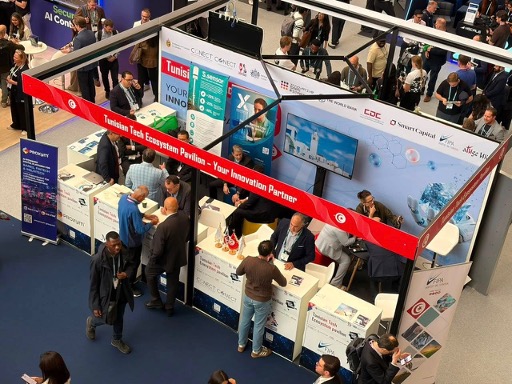
Tunisia used London Tech Week 2026 to reinforce its growing reputation as one of North Africa’s emerging innovation hubs, showcasing a new generation of startups and entrepreneurs while promoting the country’s attractiveness to international investors and technology partners.
For the second consecutive year, Tunisia participated in the global technology gathering through a National Innovation Pavilion, bringing together more than 40 entrepreneurs, startup founders, SME leaders and ecosystem stakeholders. The initiative was supported by the Caisse des Dépôts et Consignations (CDC) as part of the Innovative Startups and SMEs project, funded by the World Bank.
Held annually in London, London Tech Week has become one of the world’s most influential technology events, attracting more than 60,000 participants from over 90 countries. The conference provides a meeting point for investors, policymakers, technology companies, venture capital funds, incubators and entrepreneurs seeking new opportunities in fast-growing markets.
For Tunisia, the event offered far more than visibility. It provided a strategic platform to connect local innovators with international investors, strengthen partnerships and demonstrate the country’s ambition to become a significant player in the global digital economy.
The National Innovation Pavilion was organised in partnership with the Confederation of Citizen Enterprises of Tunisia (CONECT) and the Tunisia British Chamber of Commerce (TBCC), with support from the Embassy of Tunisia in London, the British Embassy in Tunisia, FIPA-Tunisia and ATUGE UK.
As African countries compete to attract technology investment and nurture high-growth startups, Tunisia has sought to differentiate itself through a combination of skilled human capital, geographic proximity to European markets and a growing ecosystem of technology-focused entrepreneurs. Participation in international events such as London Tech Week forms part of a broader strategy to increase the international exposure of Tunisian startups and facilitate access to global markets.
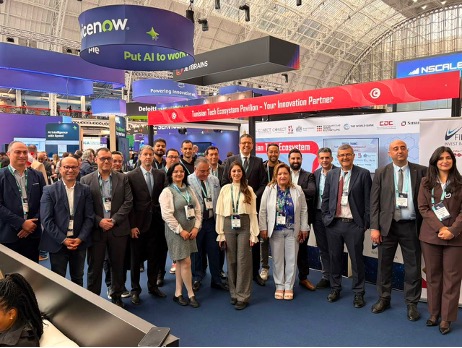
The CDC, which plays a central role in supporting economic development and investment in Tunisia, sees internationalisation as a key factor in helping innovative businesses scale beyond domestic markets. Through initiatives such as the National Innovation Pavilion, the institution is seeking to strengthen the competitiveness of Tunisian startups and SMEs by connecting them with international networks of investors, partners and customers.
Several Tunisian startups attracted particular attention during investor pitching sessions held throughout the week. Among them were Meliorar, founded by Wiem Jedidi, Advocade AI, founded by Ridha Memmi, and cybersecurity specialist Pwn & Patch, founded by Oussama Lessis. Their presentations generated interest from investors and technology stakeholders, highlighting the growing sophistication of solutions emerging from Tunisia’s innovation ecosystem.
The country’s presence at the event also received recognition from British officials. Ben Ainsley, Trade Commissioner for Africa, visited the Tunisian pavilion and expressed support for deeper cooperation with Tunisia’s entrepreneurial ecosystem, including stronger engagement with members of the Tunisian diaspora based in the United Kingdom.
Alongside the exhibition programme, Tunisia used the occasion to promote its wider investment and business environment. Néjia Gharbi, Director General of the CDC, participated in a discussion on female leadership at the House of Lords organised by the International Council of Women Entrepreneurs. The event, chaired by Baroness Fiona Hodgson of Abinger and attended by Hattab Haddaoui, Chargé d’Affaires at the Embassy of Tunisia in the United Kingdom, provided an opportunity to present Tunisia’s strengths in innovation, entrepreneurship and investment.
During the discussions, Gharbi highlighted the CDC’s role in financing development projects and public-private partnerships, while emphasising the importance of innovation, digital transformation and the knowledge economy in driving sustainable growth and creating high-value employment opportunities.
The prominence given to female entrepreneurship also reflected a broader effort to showcase the diversity and talent emerging from Tunisia’s business community. As competition intensifies among African technology hubs, the country is increasingly positioning itself as a gateway linking European, African and Middle Eastern innovation ecosystems.
While attracting investment remains a priority, Tunisia’s participation at London Tech Week was equally about building long-term relationships and demonstrating the maturity of its entrepreneurial landscape. For many of the startups present, the event provided access to networks and opportunities that would be difficult to secure at home.
The country’s growing presence at major international technology events signals a clear ambition. By supporting innovative startups, strengthening links with global investors and promoting its technological capabilities abroad, Tunisia is seeking to establish itself as a recognised centre for innovation and entrepreneurship at the crossroads of three continents.