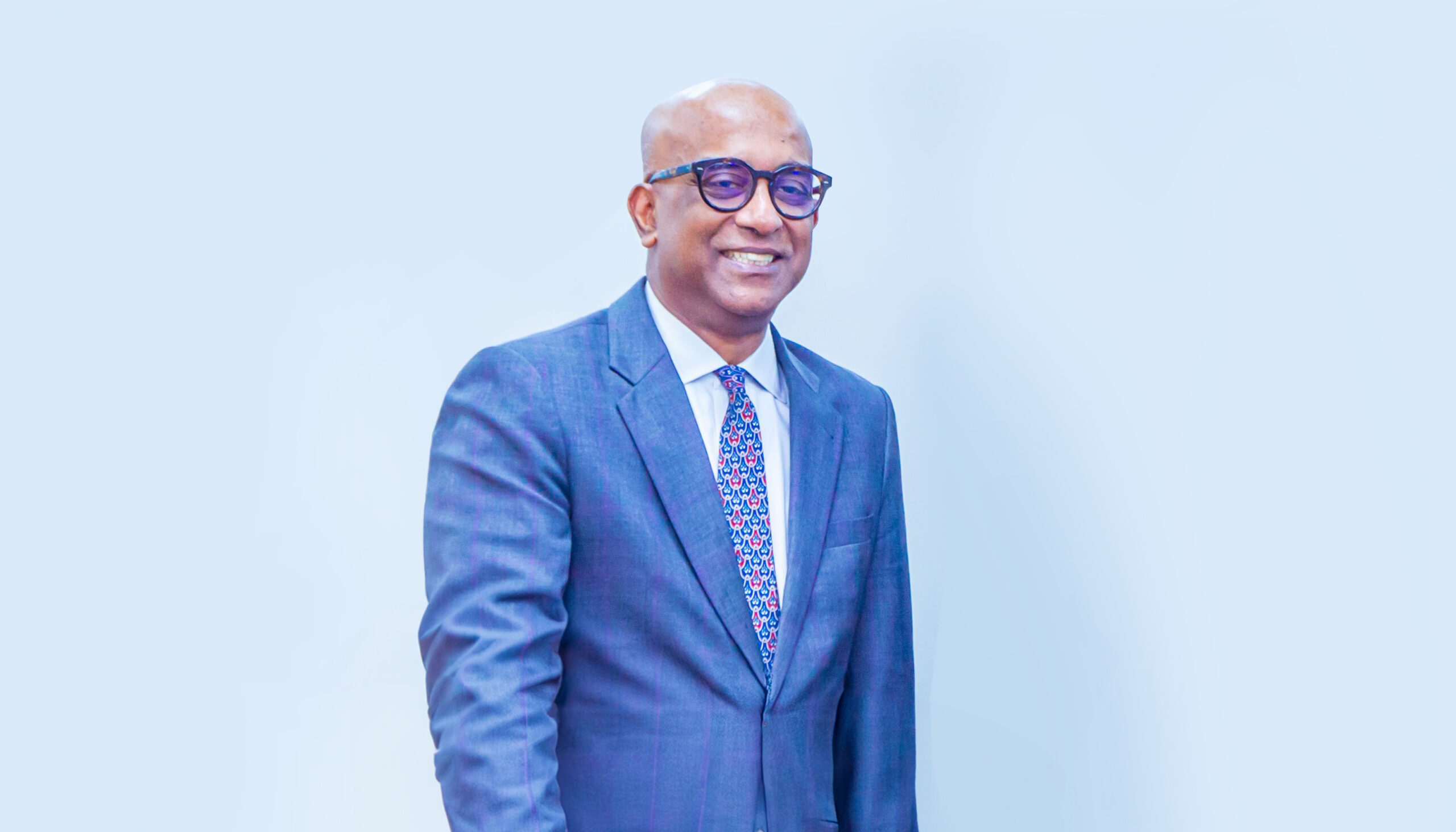
Mathew Verghis was appointed as the new World Bank country director for Nigeria in July 2025.
Verghis is an Indian national with over 20 years of experience in economic policy and development. He joined the World Bank in 1999. He previously worked in senior leadership roles spanning Africa, East Asia, Europe, and Central Asia. His most recent position was Regional Practice Director for Prosperity in the South Asia Region, based in Washington, D.C.
As country director, Verghis oversees the World Bank’s engagement in Nigeria, steering the institution’s support for a range of development initiatives.
In this edited conversation with Michael Nwadike, Verghis, speaks on the possibility of Nigeria achieving its economic growth milestone of becoming a trillion dollar economy by 2031.
Do you think Nigeria is growing optimally given its huge economic potential?
Given the current economic situation, Nigeria remains a growing economy. Some people think the forecast that a 6% growth would be on the high side, others think somewhere in the region of 4% to 4.5%, is expected. The 4.5% GDP growth in the second quarter of was the best performance that Nigeria has had in a decade. And it’s not nearly enough. The ambition should be 7% to 8% growth – there is no reason, why Nigeria can’t achieve that. However, there are very real reasons why that level of growth is not being currently achieved.
So, the question is, how is Nigeria going to get there? The banking sector is going to be a key part of that journey. The Nigerian banking and financial sector should be allowed to play its role in achieving this growth.
That was one of the basic reasons why the banking recapitalization was needed, why hands had to be dipped into pockets once again. The outcome of the previous decade of policy had meant that banks were undercapitalized.
This happened because the capital requirements that had been set in place for an earlier time, had declined because of the exchange rate depreciation. A very high inflation meant that the capital adequacy ratio was too low.
We are certainly of the view that more capital is needed to be raised to adequately finance businesses; the financial sector is central to economic stability, and so the recapitalisation was needed. You had a banking sector that was limited in its financial intermediation role. At present, loans account for 33% of banking sector assets.
So, for the stability of the economy, I think the central bank has taken the right approach by raising the capital base of banks – with 33 banks recapitalizing to the tune of a combined N4.65tr ($3.45bn).
The first set of financial reforms that were launched in 2023, including the exchange rate unification and the removal of the petrol subsidy fell hard on the Nigeria citizens. What’s your take on that?
For me, these measures were critical to stabilising the economy. The Nigerian economy was growing on a fast track, but the hardships already inflicted on the people were set to accelerate. I wasn’t here at the time, but I can read the symptoms, and we’ve seen this play out in many other countries before. Such situations have always led to banking crisis.
In my own country, India, in 1993, we came very close. The Reserve Bank of India, which is the central bank, took its gold from the vaults and physically shipped it to England, to the Bank of England as collateral for a loan. That led to these kind of reforms, and subsequently, 30 years of growth, and that’s where Nigeria is going. Having a stable banking sector that isn’t going to collapse is critical.
Are these reforms helping the tackle the rising poverty rate in the country?
The reality is that poverty is still rising. The World Bank is projecting that even in 2025, poverty is still rising two years after economic reforms were launched, and they will continue to rise next year. About 140m Nigerians live below the poverty line, which is a really low standard of living.
Now, one central part of it is that if your incomes are not growing because growth is fairly low and inflation is eating your purchasing power at 30% a year or 15% a year, it means that every year you’re much poorer than you were before. So, in my view, inflation has to come down much faster. It has to get down to single digits, to reach a point where it’s not hitting people in their pocket.
But the second part of how people start to feel the impact of these reforms is if there’s growth. This is why it’s so critical that growth should not be stuck at 4% which is good, but not good enough. It needs to be reaching towards 7.5% for Nigeria to achieve its ambition of a trillion dollar economy.
That’s an aspirational goal. But that’s the kind of ambition that Nigeria needs.
Are there other reforms that can also support the Nigerian economy to achieve the desired growth?
The new tax law that is helping the government raise more revenues is one osuch reforms. It is central part of managing the deficit by actually raising revenues. (See interview, ABK Q1 2026).
Nigeria, till two years ago, had possibly the lowest rate of government revenue to GDP in the world. It’s now no longer the lowest, but it’s still low, so there’s still work to be done. These are all elements of stabilisation.
The reforms have had a good impact. Growth, as we’ve said, is at its highest rate in a decade, inflation has come down from 30% to around 15% and exchange rate is relatively stable. It’s not so much that exchange rate is stable, but it’s that the gap between the parallel market and the official rate is almost eliminated. That’s the key thing that’s happening. And this is the basic elements of a stabilisation package.
What does it take to make such bold decisions and see them being realised within such a short pace of time?
The willingness to take the actions that would lead to that kind of inclusive growth would require empowering the public sector. You want a public sector that maintains a stable macroeconomic framework and is spending more and better on development. So, I am actually not as worried about the level of the deficit where it is today – what is much more important is how that money is spent.
However, when you look at the number of how many children and mothers survive birth, what children are learning in school, and how many people have access to basic infrastructure – all the services that governments are responsible for, Nigeria is not doing well there.
So, the ambition, along with the growth, is to ensure that Nigerians get access to these kinds of services to achieve a prosperous nation.
But that’s only one part of it. The second part of it, the growth will actually come from a thriving, growing, competitive private sector. So, the environment must be created for that to happen.
What other issues are critical to ensure a thriving private sector within the economy?
The financial sector has to intermediate capital so that it leads growing companies, farmers and households that are prospering.
Again, small balance sheets cannot finance big ambitions, so the trillion dollar GDP target requires a financial sector that’s fit for purpose and a capital market that is fit for purpose. We have heard about the geopolitical tensions, cross border risks, global supervisory expectations. So, the financial sector needs a shift to enable the kind of growth that Nigeria should be aiming for.
Unfortunately, this is not happening. And the easiest way to see this is to look at the ratio of domestic credit to the private sector. Nigeria is doing better than Ghana, which is good, but not good enough.
The ratio is about 21% – the sub Saharan African average is 33% and countries like the Philippines do about 50%. So, there are needs to be increasing credit going to the private sector; and that credit needs to be productive. The people who are extending that credit need to be able to distinguish between good loans and ones that shouldn’t be made.
But that’s not happening, the quantities are not large enough and that’s a critical step for the banking sector. So, how might this happen? What are the kinds of transitions that that will be needed for it to happen?
What is the level of infrastructure investment required for Nigeria to achieve its $1tr economy target by 2031?
For Nigeria to achieve its growth ambitions, it needs much better infrastructure services, and those will not come from either the government or institutions like the World Bank. The amounts are simply too and what external donors can put in much too small to finance infrastructure directly.
So, it will have to come through mechanisms that crowd in the private sector. What we’re talking about here is the mechanism to do exactly that.
The scale of Nigeria’s infrastructure gap shows 30% of Nigeria’s GDP is below the World Bank’s 70% benchmark for developing economies; $100 billion annual investmentis required to close Nigeria’s infrastructure deficit and N2.4 trillion investment is required to reach an infrastructure stock of 70% of GDP by 2043.
So, this is the kind of scale that we’re talking about, even with the private sector coming in. I don’t think we are under any illusion that that’s going to happen, but the direction has to change. It has to be scaled up in a much more ambitious ways.
How can critical infrastructure be financed?
Most of these projects will have to be done through Public Private Partnerships. The 2005 and post 2009 banking recapitalisation was reactive. But the 2024/ 2025 one is different. A larger real economy will always require bigger, larger banks for corporate financing.
This could lead to risk absorption, not just lending growth. Market-based solutions include private credit discipline, deepening capital markets through rights issues, public offers, and fit-for purpose financial system for the next decade.
Post recapitalisation, banks have higher single obligor limits but are cautious of long-tenor infrastructure loans due to project failure risks along the fragmented value chain.
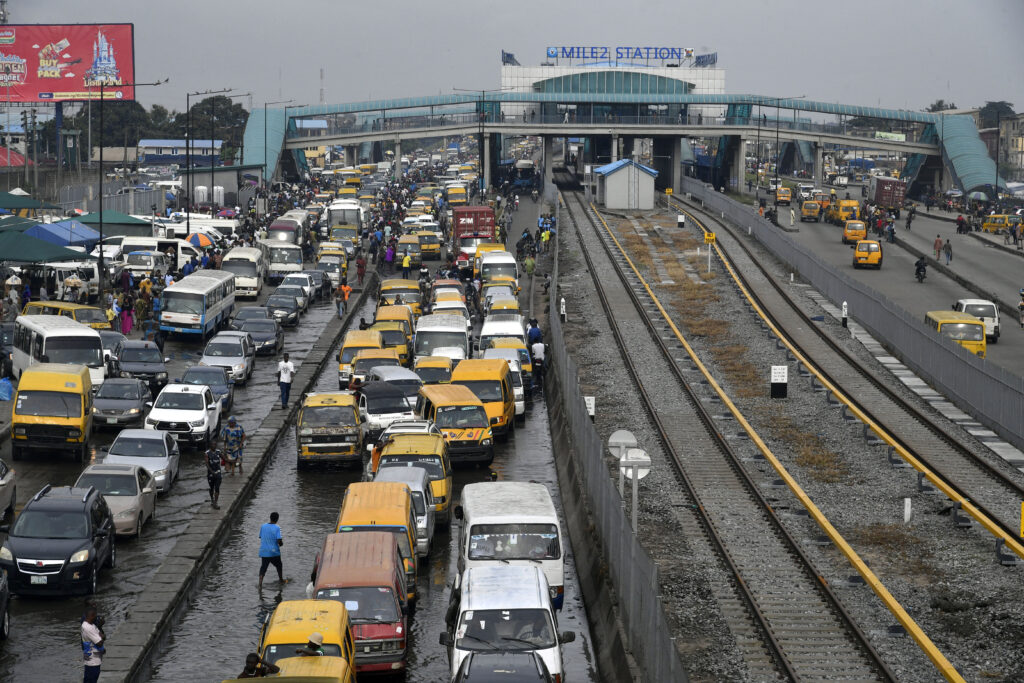
Nigeria has one of the largest populations in Africa (over 220m) and a rapidly urbanising economy, which creates huge demand for infrastructure across roads, ports, rail, power, water and sanitation, among others.
Yet, the supply of quality infrastructure remains far below what is needed. Again, infrastructure gaps are a major drag on productivity and competitiveness.
Many banks are investing in government securities instead of funding the real sector. How can this trend change?
We believe that banks have done well by investing in government securities because of the high yields in the market. However, such high yields are gradually coming down. As yields on such securities continue to dip, such investment options may no longer be possible.
We expect that as the investment dynamics change, funds, previously channeled into government securities can now be ploughed into lending to local economy. We expect banks to henceforth prioritise lending to businesses.
With interest rates moderating over time, banks would be compelled to shift strategy and lend more to the real sector.
The good news is that banks should be incentivised to do this. As interest rates come down, banks can no longer rely as heavily on investing in government securities. That liquidity will need to be put to good use. The incentives are well aligned, and I’m hopeful this will increase.
What contribution is the World Bank making to see a growing and productive Nigeria economy?
I will talk about two sectors that the World Bank is working on with, we hope the financial sector and the banking sector to try and move in this direction. So, MSMEs make up about 90 to 97% of business and 84% of jobs; for the economy to feel the impact of recapitalisation, credit must flow to the approximately 40mn MSMEs.
So, if the banking sector can start reaching this sector in a more significant way, then you will start to see a real impact. And yet, the reality is that risks are high in this sector with collateral dependencies on credit histories and high underwriting costs among others. Yet, banks consider this segment high risk due to collateral dependencies, thin credit histories, and high underwiring costs.
At present, credit penetration is less than 5% for MSMEs compared to 20 % to 50 % in peer emerging markets.
Women-led MSMEs face even higher barriers, 56% report loan rejection, compared to 17% for men, despite having lower default rates.
Despite contributing roughly 20.4% to Nigeria’s GDP, agribusiness receives only 4% to 6% of local bank loans.
This reason that this is not happening now, why MSMEs are not receiving bank credit are many. Some of the challenges faced by MSMEs in Nigeria include the operational constraints, the structural barriers, lack of long term capital. There are other issues as well. One of the big ones is, to put it somewhat rudely, the quality of the MSMEs, the ability to take the loans and convert that into profitable venture. Another is high levels of informality and lack of records, low financial literacy or business structuring.
The good news is that the macroeconomic risk is coming down, as long as the government is able to stay the course, keeping inflation down, keeping the parallel market gap close to zero.
How is the World Bank in Nigeria addressing these challenges?
One is that we have a couple of projects that we think will help build up a pipeline of MSMEs that will be more financially capable. We have, for example, a program called ‘Nigeria for Women’ that works with hundreds of thousands of self-help groups that are gradually building up their capacity. We are also working on a project, Agro for Agribusiness that, if all goes well, will help millions of farmer cooperatives to build up their financial capacity.
We’re working towards building up a pipeline of customers but there’s also other challenges, including unreliable power and transport, credit reporting systems, limited broadband access. All of these are also being worked on, not just by the World Bank, but by the government.
We have committed $500m for lending to MSMEs, often working through some intermediary. We will use that money to incentivise banks and other participating financial institutions to put their own money into the game. But our money makes it possible. It allows it to happen.
Also, by de-risking participating financial institutions through risk sharing financial instruments, coordinated debt and partial credit, we hope will encourage banks to enter using new partnership channels, leveraging fintechs, AgTech supply chain, automated supply chains and finance. Using technology in a much more concentrated way to overcome some of the barriers.
We hope to start seeing MSMEs start to grow and to be able to function, and the banking sector playing its part as a financial intermediary in channeling finance deposits towards productive activities. We expect about 250,000 beneficiary MSMEs to participate.