
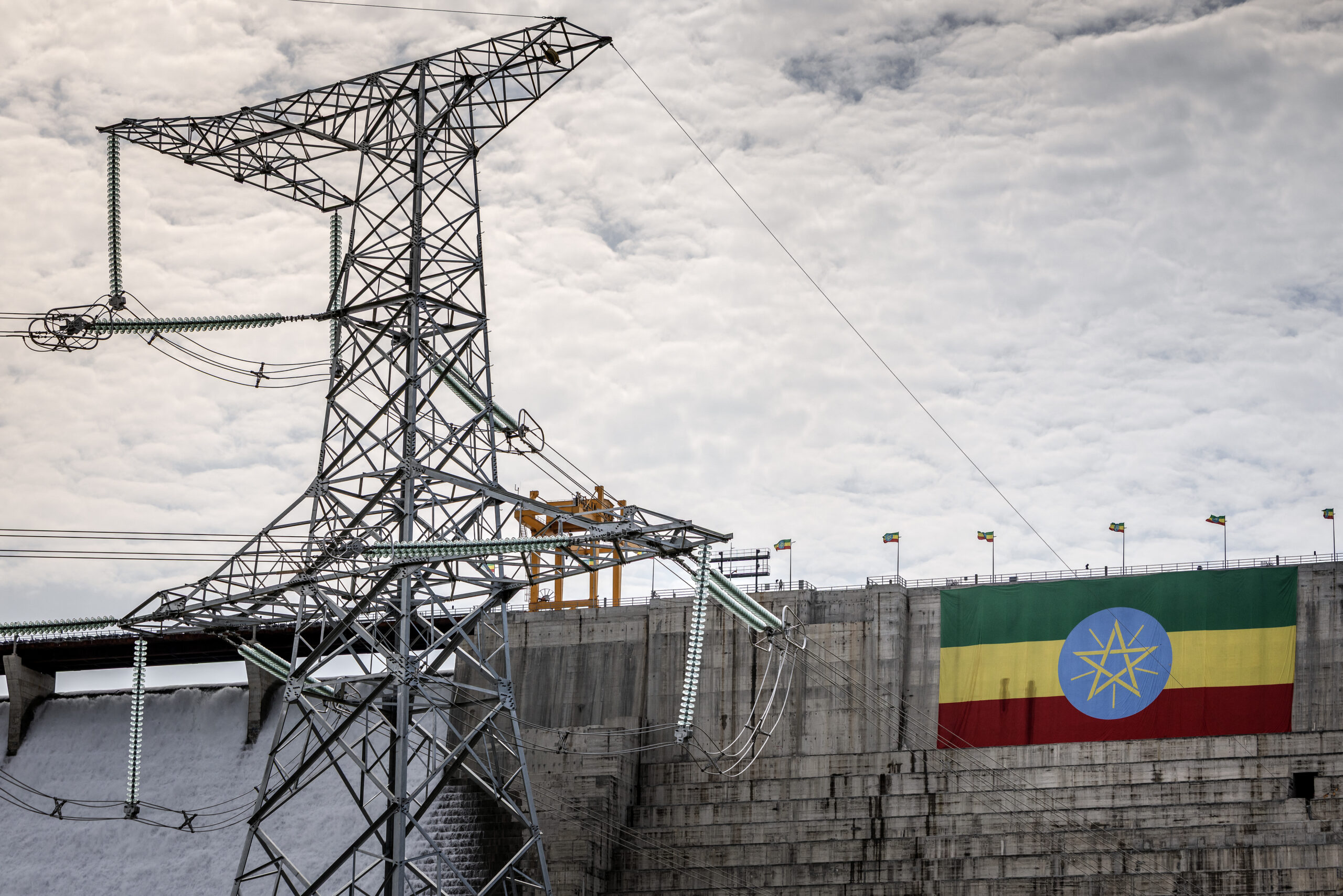
Kenya has significantly increased electricity imports from neighbouring Ethiopia as domestic generation capacity struggles to keep pace with rising demand. Kenya imported a record 1,274.42 gigawatt‑hours (GWh) from Ethiopia in the fiscal year ending June 2025, according to data from the Energy Petroleum and Regulatory Authority (EPRA), which oversees the power sector in Kenya. By contrast, Kenya imported 225.64 GWh from Uganda and 33.79 GWh from Tanzania over the same period, reflecting its deepening reliance on Ethiopian electricity.
Kenya’s electricity imports from Ethiopia are underpinned by a 25‑year power purchase agreement (PPA) signed by both countries’ respective utility companies in 2022 – the same year that the 1045 km high-voltage interconnector linking Wolayita Sodo in Ethiopia to the Suswa substation in Kenya was completed. Built at a cost of $1.26bn and financed primarily by the World Bank and the African Development Bank, the line is designed to transmit up to 2000 MW of power.
Kenya’s electricity demand has been steadily rising over the years, hitting a record 2,411.98 MW in October 2025 against an installed capacity of 3,846.80 MW. That leaves a thin reserve margin of about 434 MW, raising the risk of outages during periods of constrained power supply.
“It is important to draw the distinction between installed capacity and available capacity. The amount of electricity we can actually deploy at any given time fluctuates and is typically lower than our installed capacity,” says Joseph Oketch, acting director general of EPRA.
He highlights Kenya’s heavy reliance on renewable energy sources such as solar and wind, which can be less reliable due to factors such as weather conditions. “This necessitates imports. The crucial question is whether the energy we are importing is clean and affordable. This is the case with Ethiopian power, which is generated from hydro sources,” he tells African Business.
Kenya’s energy mix is driven largely by geothermal (943.7 MW, 25.9%), closely followed by hydro (872.6 MW, 24%). Fossil fuel fired “thermal” power stations contribute 627.1 MW (17.2%), followed by solar (514.1 MW, 14.1%), wind (436.1 MW, 12%) and bioenergy (163.8 MW, 4.5%).
Cheaper and cleaner option
Independent power producers (IPPs) – many operating thermal plants that burn heavy fuel oil – have long served as Kenya’s stopgap for electricity supply. Yet their role has grown increasingly contentious in recent years. They have been criticised both for the environmental toll associated with burning fossil fuels and for the exorbitant cost of the power they supply. Analysts argue that long‑term contracts with IPPs have locked the country into expensive deals, driving up consumer tariffs and squeezing households and businesses alike.
In a bid to rein in costs, Kenya’s government instituted a freeze on signing new PPAs with IPPs in 2018. The government went a step further in March 2021 by formally introducing a wider moratorium on renewing expiring PPAs and concluding new ones. After years of regulatory and parliamentary back‑and‑forth, lawmakers officially lifted this seven‑year freeze in November 2025, paving the way for new privately-led electricity generation projects.
Still, new IPPs may have to focus on affordability and on renewables to secure new business from the state utility, given how much cheaper and cleaner Ethiopian imports are. According to EPRA, Ethiopian power saves Kenya an estimated $10m annually when compared with thermal generation.
Thermal IPPs supply electricity to Kenya at tariffs as high as $0.23 per kWh, making them among the most expensive sources in the region and indeed the world. By contrast, Kenya buys Ethiopian hydropower at roughly $0.066 per kWh. This reflects Ethiopia’s abundant hydro resources, which underpin both its domestic affordability and its export competitiveness.
Ethiopia’s cheaper power has seen it attract more manufacturers than Kenya in recent years. Kenya’s average industrial power tariff is between $0.18 and $0.23 per kWh – whereas Ethiopia offers industrial tariffs of roughly $0.05 per kWh. High electricity costs have hurt Kenya’s industrial competitiveness over the years. Manufacturing’s share of GDP has slipped from 10% a decade ago to 7.6% in 2024, as firms relocate to countries with cheaper power such as Ethiopia, Egypt and Morocco.
Grand Ethiopian Renaissance Dam drives Ethiopian exports
For Ethiopia, electricity sales to Kenya and other neighbouring countries have become an important source of foreign currency. State-owned Ethiopian Electric Power (EEP) reported that the country earned $118.1m from electricity exports to neighbouring markets during the 2024/25 fiscal year. Exports now account for about 20% of EEP’s total revenue.
Sales to Kenya brought in $86.3m, or about 73% of the total, while Djibouti purchased power worth $30.9m and Sudan $900,000. Ethiopia has also begun trial exports to Tanzania, reflecting its ambition to become a regional energy hub.
During the 2024/25 fiscal year Ethiopia generated more than 29,000 GWh of electricity, exceeding its target of 25,000 GWh. Roughly 7% of that output was exported to neighbouring countries.
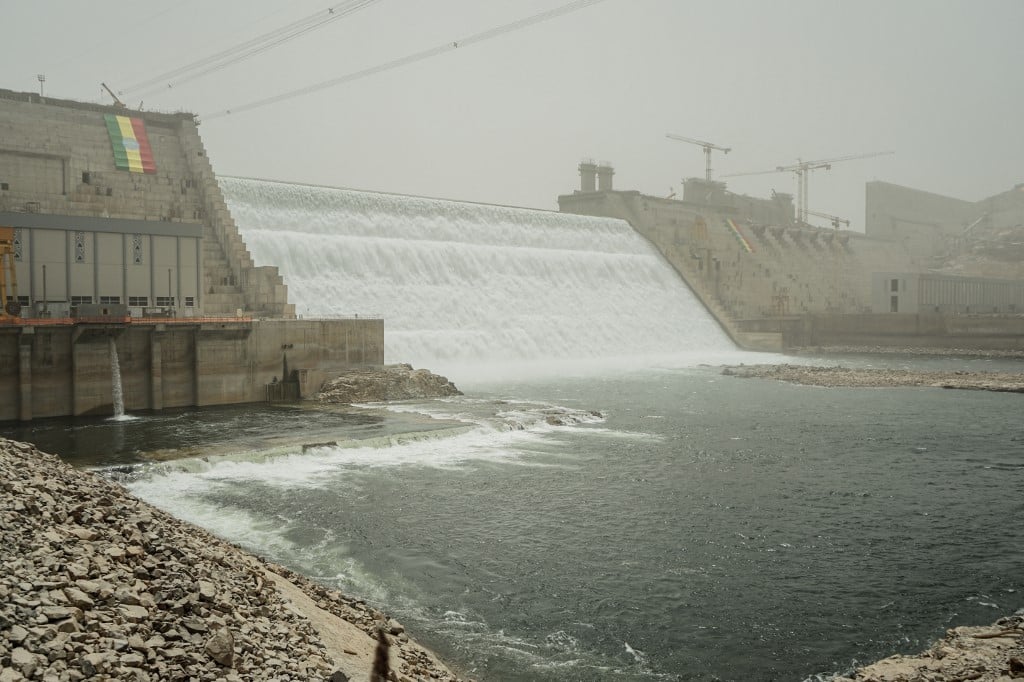
Ethiopia’s installed generation capacity more than doubled to about 9,600 MW after the Grand Ethiopian Renaissance Dam (GERD) came online in late 2025, adding 5,150 MW of new hydropower.
Power has not reached Ethiopian homes
Despite Ethiopia’s vast generation capacity, household electrification remains stubbornly low, lagging behind regional peers such as Kenya, Uganda and Tanzania. According to the Ethiopian Energy Access Survey 2025, conducted with the World Bank, nearly 56% of Ethiopians still lack access to basic electricity services.
Officials argue that exporting surplus power offers a crucial stream of hard currency to finance domestic grid expansion and accelerate last‑mile connections. The government has set an ambitious target to reach 75% electrification by 2030, supported by the World Bank and the African Development Bank’s Mission 300 electrification initiative.
“The government acknowledges that achieving this vision will require sustained and coordinated action, a strong public sector role and significant private sector engagement,” Ethiopia’s government states in its National Energy Compact.
Such compacts are government‑owned commitments that outline how each country will contribute to the Mission 300 goal of connecting 300m Africans to electricity by 2030.
“Ethiopia is implementing wide-ranging macroeconomic reforms, including foreign exchange liberalisation, investment climate improvements and better governance of state-owned enterprises. These reforms are expected to reduce key risks for investors and open up new financing opportunities for energy infrastructure,” the Compact notes.
Electricity as a tradable commodity
With Kenya’s fiscal space under strain, the $86.3m spent on electricity imports from Ethiopia has naturally come under scrutiny. Critics argue the funds would have been better spent if directed towards expanding domestic generation capacity or addressing persistent transmission and distribution bottlenecks.
Carol Koech, vice president at the Global Energy Alliance for People and Planet, counters that imports are not a substitute to domestic generation but a complement. “Countries should continue to develop their own generation assets. But regional markets allow them to bridge demand gaps while those projects are being built,” she tells African Business from Nairobi.
Electricity, she argues, must be seen as a tradeable commodity – just like fuel. Regional energy trade must be particularly encouraged when the economics makes sense, she adds.
“Importing power is often a rational economic choice. Look at the cost of the power we’re getting from Ethiopia. It is cheaper than some of ours. Would you rather depend on cheaper imported power than more expensive local power?”
Koech notes that regional electricity trade is also a key pillar of Mission 300, which she notes is progressing according to plan and has already reached 48m connections.
A single continental market
The goal, she says, is to build a single, continental electricity market by integrating all regional power pools – East, West, Central, Southern and North Africa.
Together, these five pools form the backbone of the African Union (AU) backed African Single Electricity Market initiative, which aims to harmonise regulations, expand cross‑border transmission and enable continent‑wide electricity trade.
“It’s about consolidating the market so you have a larger playground that drives competition and lowers costs. When each country pushes its own technologies in isolation, power generation becomes expensive. But a broader market gives you the advantage of scale and access to more diverse sources of electricity,” she says.
However, for a single continental electricity market to become a reality, greater private investment in transmission infrastructure is essential. “If you look at the larger investments that have come from the private sector to the energy sector, they have heavily been on the generation side in the form of independent power producers,” she notes.
“Transmission lines have predominantly been public sector funded. But increasingly, as governments are having challenges with their fiscal space, they’re looking to the private sector to invest in the transmission lines.”
Koech notes that private sector investment can be unlocked if transmission projects are structured correctly, including being paired with generation projects where feasible. “The way you structure these projects really becomes a very critical component in attracting private investment. What is happening is a lot of the investors that have put capital in generation are realising that they are not able to evacuate that power. So they then have to invest also in the transmission network to be able to evacuate and reach their customers,” she notes.
“There are some good examples of transmission projects that have attracted investment after they were paired with generation projects as one project,” she says, citing South Africa as an example of an African country pursuing this approach.