For two decades and more, the economic case for Africa’s creative and digital industries has been made largely in the language of promise. The projections have been compelling, the talent self-evident, and the cultural output undeniable, yet the financial architecture and institutional machinery to match have consistently lagged behind.
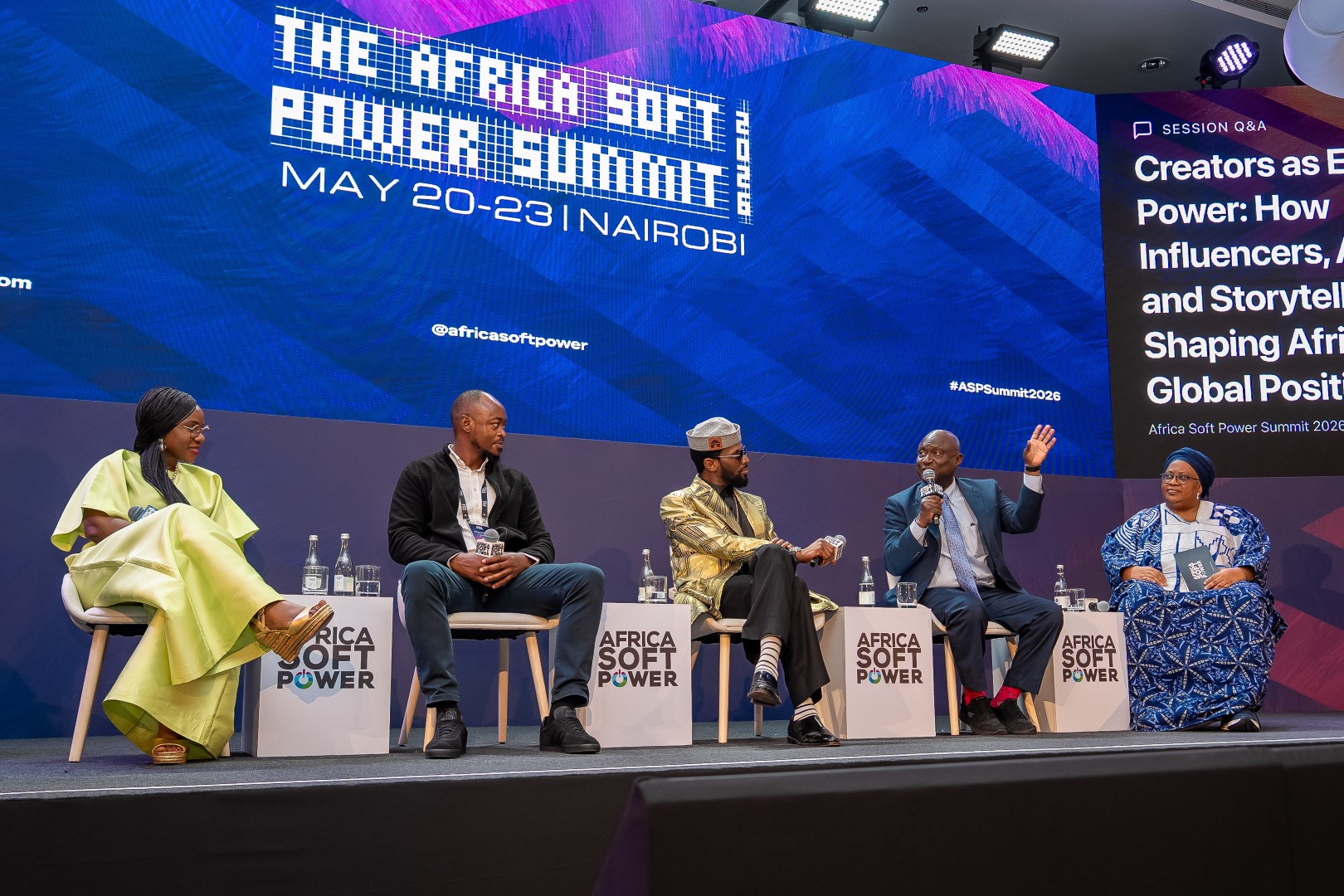
That was the argument running through the second day of the seventh Africa Soft Power Summit, held on May 22, 2026, at the Hyatt Regency Nairobi. Across four sessions spanning artificial intelligence, diaspora finance, investment strategy, and the business of creative production, the message was that the lag is closing, and closing faster than the conventional narrative about African markets has been prepared to acknowledge.
The day’s focus, “Creativity, Innovation, Capital, and Commerce”, was less a celebration of African creativity than a discussion about what it now requires: capital that understands the market, institutions that can carry risk, technology built with African users in mind, and commercial structures that allow value to remain where it is created.
Opening the day’s proceedings, Alhaji Dr. Umaru Kwairanga, Chairman of the Nigerian Exchange Group, set the terms plainly. For too long, he argued, Africa’s creative economy had been treated by financial institutions as something to celebrate, perhaps to sponsor, but not to take seriously as an investment thesis. That framing, he said, must change faster. “The window in which Africa can shape the terms of that transition, rather than inherit them from elsewhere, is open now, and it will not stay open indefinitely.”
Building the digital rails
The morning session on artificial intelligence set the tone. The distinction drawn by the panel was simple but consequential: Africa cannot afford only to consume new technologies. It has to help build the systems on which they run.
“It’s critical that we don’t just consume AI, but instead are part of its architecture too,” said Alex Okosi, Managing Director for Africa at Google. “If it doesn’t recognise our speech and talents, then it won’t work for us.” Whether Africa is represented in the data these models learn from, and whether Africans are among the talent building them, will determine whether AI becomes a tool for the continent or something done to it.
The window to be part of that architecture, several speakers made clear, remains open. The question is whether public and private institutions will move purposefully enough to walk through it.
The infrastructure question was made more concrete through Wasaa, an emerging platform discussed by Snehar Shah of iXAfrica. Built for African creators, it combines content creation, sharing and monetisation in one ecosystem. The proposition is not simply to give creators another place to post content, but to integrate payments and audience-building into the same system. Previous technology cycles have shown that those who build the rails tend to capture the value early. Those who arrive later often find themselves paying rent.
The counterweight came from Birju Sanghrajka of Standard Chartered, whose institution is trained to look not only for opportunity but also for the next failure point. “In this room, you are thinking about the next big thing,” he said. “We’re thinking about the next risk coming.” With the crises of recent years still overlapping, Sanghrajka flagged data misuse as a potential systemic risk that the sector’s enthusiasm has not yet fully reckoned with; a reminder that expanding access and building robust governance need to move in parallel.
From Amini’s Charlette N’Guessan came a different emphasis: agency begins with demand. Rather than asking only what global AI platforms can offer Africa, she pushed the conversation towards what African governments and companies are prepared to commission from their own. It was a useful shift. The supply of technology matters, but so does who gets asked to build, own and adapt it.
Remittances, but not as we know them
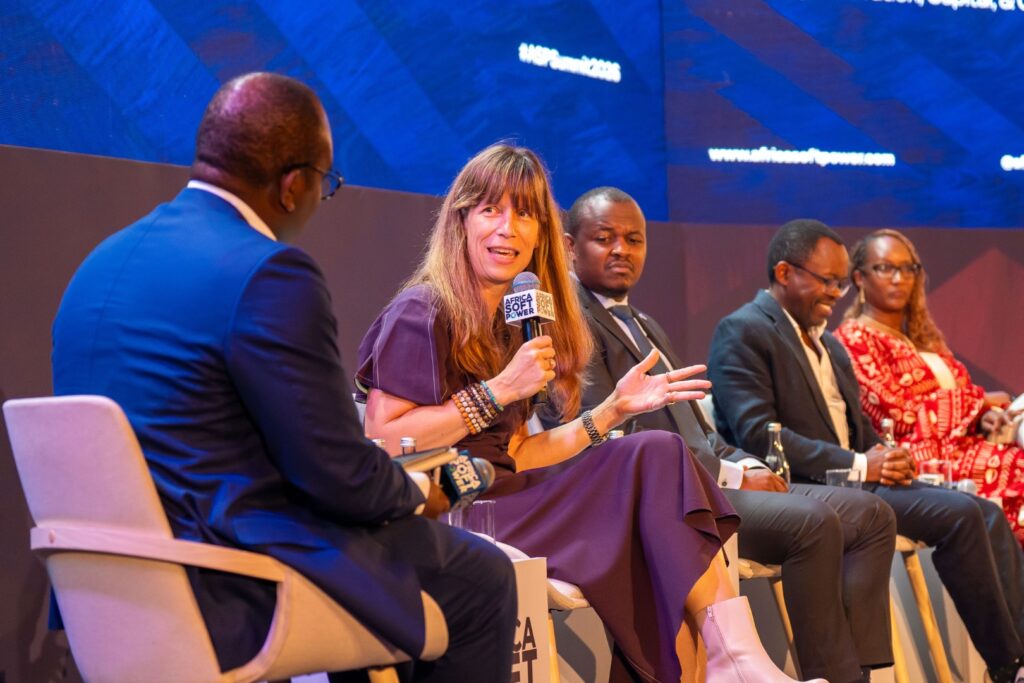
If the AI session was about building infrastructure, the conversation on diaspora capital was about recognising infrastructure that already exists and has been persistently underutilised. Remittances have long been treated as welfare transfers: money sent home, spent quickly, and rarely understood as part of a wider investment system. The panel argued for a different model, one in which diaspora capital becomes a route into savings, investment, ownership and enterprise.
Access alone is no longer enough. “We have to go beyond giving people access,” said Esther Masese Waititu of Safaricom. “We have to start enabling the creation of wealth.” In that context, a platform such as M-Pesa is no longer only a transaction mechanism. It becomes a financial identity that allows people to remain economically present across borders.
From the remittance operator’s side, the friction looked less technological than institutional. LemFi’s Mamadou Mareme Diop pointed to the familiar obstacles: weak title systems, unreliable information, limited investment vehicles and the difficulty of making financial histories travel across borders. Many Africans in the diaspora want to invest at home. What stops them is often the risk of losing money, entering long disputes or lacking the basic information needed to act with confidence.
Regulation, in this account, becomes part of the product. Michael Eganza, Director of Banking and Payment Services at the Central Bank of Kenya, argues that the next phase of remittance infrastructure must make it easier for diaspora investors to participate in local markets as economic actors, not merely as senders of funds. The point was not sentimental. For diaspora capital to become investment capital, trust has to be made practical: through credible platforms, clear rules, portable financial histories and investable products.
Who decides what is bankable?
The summit’s midday session on soft power and capital addressed a question that sounds abstract until it is brought into the world of deals: who decides what counts as a worthwhile investment in Africa, and whose assumptions shape that judgement?
The answer is changing. The retreat of traditional official development assistance – a structural shift accelerated by geopolitical realignments in the United States and Europe – is creating space for African-led capital to move into positions of influence that were previously occupied by external actors. This is not uniformly a comfortable process. The terms on which DFI capital has operated have shaped the definitions of “bankable” opportunities, credible founders, and strategic sectors in ways that African institutions are only now beginning to revise. But the revision is happening.
What made the session distinctive was that the shift was being affirmed from both sides of the capital table. “Capital is like football,” said Heike Harmgart, Managing Director for Sub-Saharan Africa at the European Bank for Reconstruction and Development. “It’s not one-size-fits-all. You need the strikers, the short-term capital and trade finance, but you also need long passes from the back, like the 20 to 25-year patient capital that development banks provide.” The implication was that structuring capital effectively for African markets requires understanding the full range of instruments and their sequencing, not simply deploying what is easiest to mobilise. And that, she argued, requires local knowledge as a structural prerequisite, not an optional refinement.
“Africa is not risk,” said Abraham Ongenge of Stanbic Bank Kenya. “Africa is return.” It was the session’s most economical challenge to a familiar investment narrative. Behind the line was a serious commercial proposition: if demand sits in Africa, and if African consumers, creators and entrepreneurs are already generating value, capital has to stop treating the continent mainly as a problem to be mitigated.
Narrative, too, was part of the financing system. Neneh Diallo, who runs NDG Agency and whose career spans public diplomacy and development finance, drew a direct line between soft power and capital allocation. The stories investors build their theses on are created somewhere, by someone. African institutions have both the standing and the incentive to shape them. James Mwangi of Africa Climate Ventures added another layer: Africa’s natural endowments, the global energy transition, and the direction of climate finance are beginning to align in ways that give the continent genuine comparative advantage, if capital can be structured to meet the moment.
Creative industries: from export to ownership
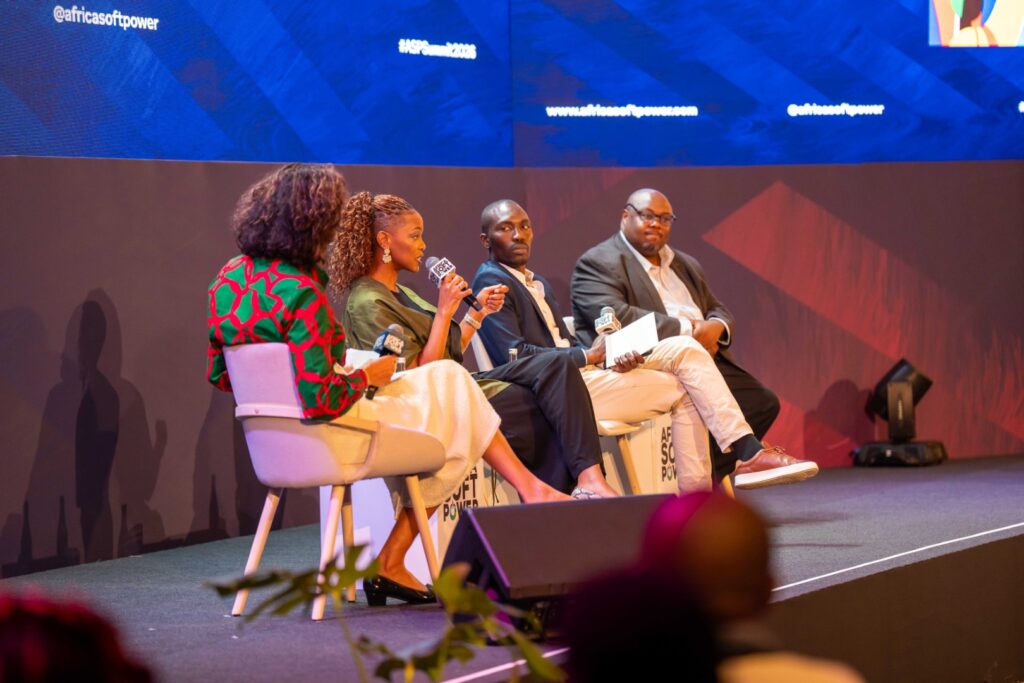
The closing session on African creative production was the most animated of the day, in part because the gap between value generation and value capture is most visible in the creative economy. African music, film, fashion and digital content have become global cultural forces. The question is whether the people and institutions producing that value can own more of the economics around it.
The case for aggregation came through the language of agriculture. Ken Osei of the International Finance Corporation drew on cooperative models that helped Kenyan producers pool output, attract institutional capital and reach global markets. The same logic, he argued, could apply to music catalogues, film libraries, fashion businesses and other creative assets. The barrier is not a lack of output. It is the absence of structures that allow scattered value to become investable.
For Bolanle Austen-Peters, founder of Terra Kulture and BAP Productions, part of the problem lies in the uneasy relationship between creatives and capital. Financial institutions cite the sector’s growth, but too often do not adapt their tools to support it. The creative industries cannot always be financed in the same way as traditional sectors, but that does not make them unserious. It means the financing models need to catch up.
From the film industry, Mildred Okwo, co-founder of The Audrey Silva Company, made a related point. Nollywood’s scale is widely acknowledged, yet its structure remains too fragmented to command the leverage its output should give it. “The creative industry is entertainment, but it is business,” she said. “And we have to think about it and structure it the way we would any other business.”
Brian Mogeni of Wowzi brought the session’s most forward-looking dimension: the technical infrastructure now exists to convert creative influence into trackable, investable commercial activity.
D’banj, speaking from 25 years of navigating both sides of that equation, put it directly: “Our biggest collateral is our IP”. The line drew laughter because it carried a familiar frustration. Artists can walk into banks as celebrities and leave as rejected borrowers. Yet their intellectual property is precisely the asset financial institutions need to learn how to value.
That point became the bridge between the day’s sessions. Whether the subject was AI, remittances, climate finance or creative production, the underlying question was the same: who owns the systems through which value is created, measured, financed and captured?
The answer is still being negotiated. But the register has changed. The question is no longer whether Africa’s creative and digital economies have promise. It is whether the continent can build the legal, financial and institutional machinery to own more of the value they already generate.