
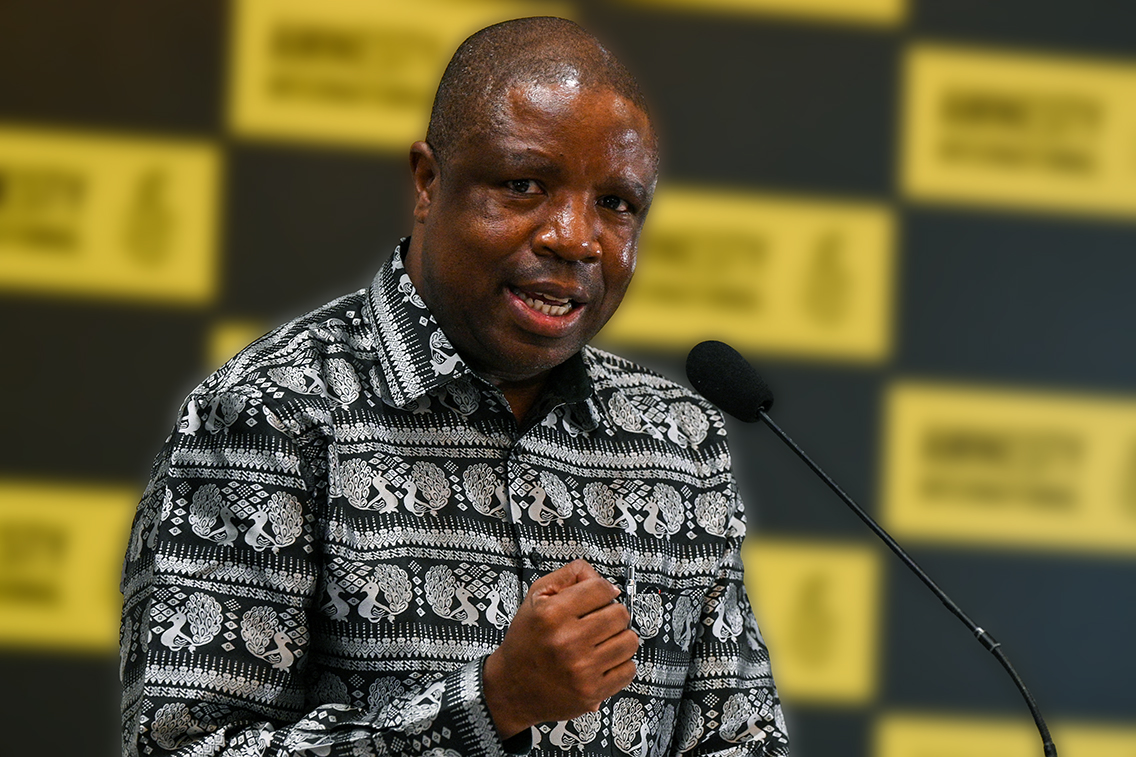
For Deprose Muchena, director of the Resources Futures in Africa programme at the Open Society Foundations, the race for Africa’s critical minerals feels like a historical echo all the way from 1885 and the “Scramble for Africa”.
The world’s major powers are once again converging on Africa, only this time, the competition is sharper, the players more diverse and the stakes are tied directly to the global energy transition.
“Africa holds a commanding share of the world’s critical minerals,” Muchena notes; “48% of global cobalt and manganese reserves, 22% of graphite and around 6% of nickel and lithium”.
With the continent now central to the future of clean energy, electric mobility and technological innovation, Muchena emphasises the scale of the challenge.
“With the World Bank projecting a nearly 500% increase in minerals such as graphite, lithium and cobalt by 2050, control over these resources is becoming increasingly strategic.”
Yet beneath this abundance lies a structural contradiction.
“Africa hosts 20% of new mineral discoveries but attracts only 10% of global exploration spending,” Muchena says.
The result echoes a familiar pattern: “Ghana exported $9.58bn in gold in 2024, yet it only retained 14% of the value… DRC produces over 70% of the world’s cobalt, yet only 1% is refined in the country… Zimbabwe was ranked as the third-largest producer of chromium in 2023, yet most was exported in raw form.”
All these reflect risk perceptions, policy uncertainty and fragmented markets.
Disrupting the colonial model
For him, the lesson is clear: Africa cannot afford to repeat the mistakes of past mineral booms.
“Africa must take a range of radically different legislative, policy and political measures,” he argues.
That means “disrupting the colonial model of extractivism,” linking mineral value chains to the wider economy and reversing the reality that “less than 5% value is added to minerals on the continent.”
It also requires negotiating collectively, not as fragmented states, and ensuring the continent becomes “a rule maker not just a rule taker”.
Above all, Muchena cautions that as Africa emerges as a world supplier of clean energy and critical minerals it must balance global demand with domestic needs because “600m Africans are still without electricity.”
The tension between extraction and exploitation has long defined Africa’s relationship with its mineral wealth. Muchena agrees that a very thin line separates extraction from exploitation.
He explains that while the world may just be waking up to Africa’s minerals, African communities have lived with the consequences for generations. Whether this boom becomes transformative or destructive depends entirely on governance.
“Africa must safeguard its resources from ruthless exploitation,” he cautions, outlining three essential pillars: linking mineral value chains to the broader economy, upholding environmental and human rights stewardship and “building and safeguarding community agency, voices and roles in the local supply chain and local content policy shared beneficiation regimes”.
Even the best policies can be undone by weak institutions: parliamentary oversight, eliminating illicit flows, closing tax loopholes and strengthening civic watchdogs are indispensable.
Geopolitical rivals circle critical minerals
From France pivoting from its traditional francophone sphere into anglophone Africa, to competition between China, the US, the Gulf nations and Europe for rare earths and critical minerals, Muchena explains that “we have entered a period of fierce geopolitical and geoeconomic competition among the great powers.”
If Africa is not careful, he warns, it risks becoming “a theatre of battle with countries pushing to maximise energy and supply chain security,” while remaining trapped in its historical role as a supplier of unprocessed ore.
Whether the partner is “France, China, the UK or Russia,” the imperative is the same: Africa must “qualitatively shift its game plan,” insist on exporting value-added products and negotiate collectively.
Muchena insists that this is important because minerals already contribute significantly to African economies – 8.8% of GDP on average in mineral-rich African countries and over half of export revenues.
But not much attention is being paid to the main goal, which, he says, is to “retain maximum value… increase export earnings and ensure economic transformation, because minerals are finite”.
Without strong regulation, he says mining will continue to take “place at the expense of environmental sustainability and the human rights of communities”.
To underline this, he points to a long history of “pollution, forced evictions, lack of transparency… corruption and tax evasion,” enabled by “weak laws, fragile enforcement regimes and limited oversight.”
To avoid mistakes of the past, he says governments in Africa must “build a strong human rights and environmental stewardship, with better regulation, and enforce and uphold standards. Governments must work with local human rights watchdogs and make civil society function better.”
Aside from environmental issues, the scramble for resources also risks fuelling conflict.
“From Sudan to DRC, Mozambique to Mali…resource-based conflicts are a commonplace,” Muchena says.
“Where the sought-after resources are present… they tend to exacerbate conflict, lengthen the period of the conflict and resources often become fuel for the conflict.”
Security guarantees alone, Muchena says, are not sufficient because “security guarantees without reforms of governance and equitable sharing of the wealth of the country tend to be fragile. Countries in conflict will need fresh thinking.”
Strengthening continental frameworks
Muchena argues that the solution to many of these issues lies in strengthening continental frameworks.
“Africa can place workers’ rights at the centre of industrialisation by using regional value chains as enforcement tools, where companies must meet shared labour and human rights standards across all stages of production or lose access to the entire continental market under AfCFTA [the African Continental Free Trade Area]. This approach reduces the ‘race to the bottom’ by preventing firms from exploiting weaker national regulations and enables traceability across supply chains.”
Across all these issues, Muchena returns to a single theme: Africa must seize this moment with clarity, unity and strategic intent. The world is changing, and Africa’s minerals sit at the heart of that transformation. Whether the continent emerges empowered or exploited will depend on the choices it makes now and the courage of its leaders to insist on a future defined not by extraction, but by value, agency, and shared prosperity.