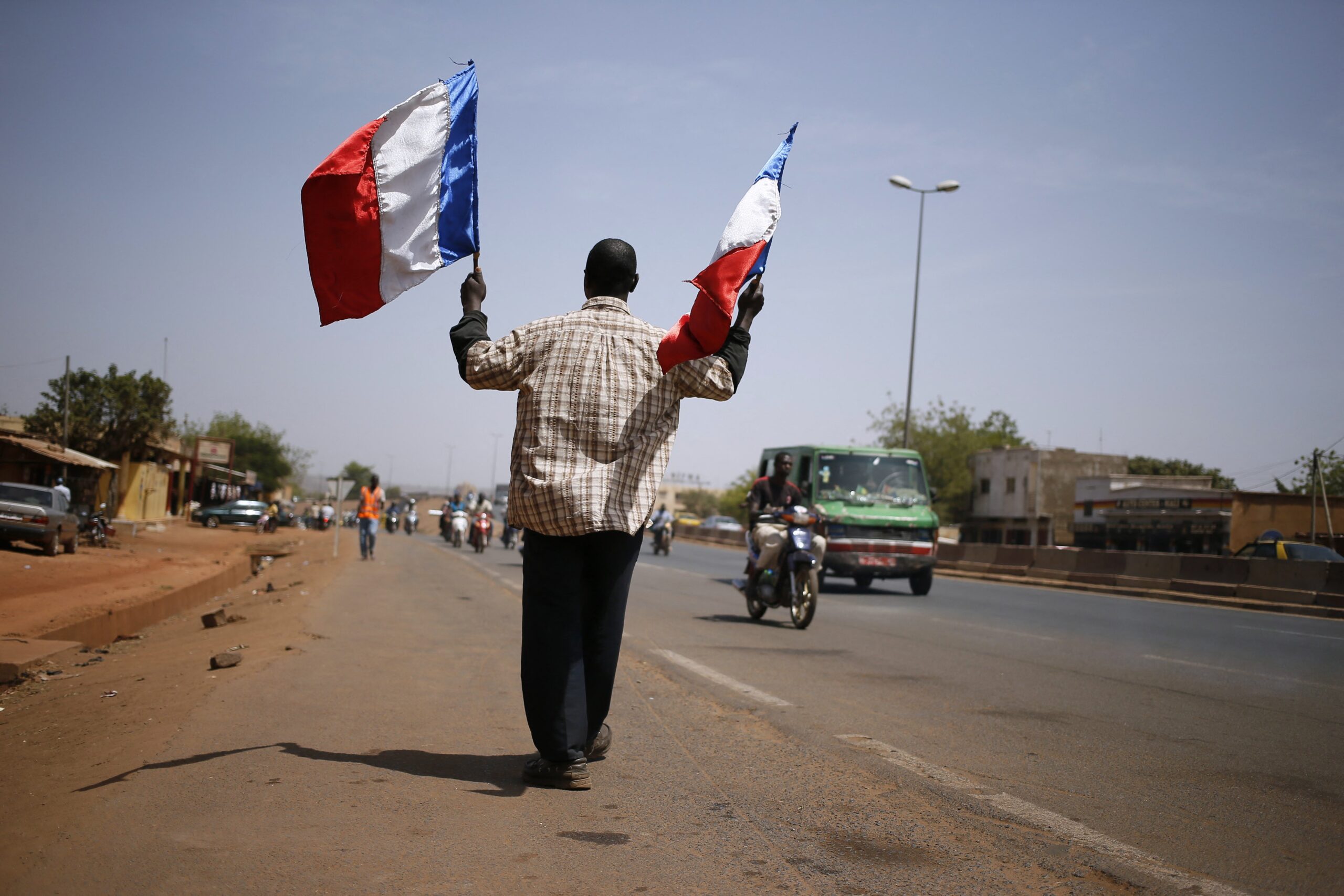
Amid rising anti French sentiment in French-speaking countries in West and Central Africa, Paris is recalibrating to English speaking Africa, where it is seeking to build trust and relevance through soft power rather than military or political pressure.
Leveraging its cultural network abroad – mainly the Instituts français, Alliances françaises and embassies – Paris has in recent years intensified soft power efforts to promote French culture and language in non-French speaking countries across Africa.
“In France, culture has been used for centuries as a tool for dialogue and influence. In the past, it was a matter of asserting cultural superiority. Today, we favour partnership and exchange between equals,” said Eva Nguyen Binh, president of the Institut français and ambassador for France’s external cultural action.
“At the Institut français, we work closely with a unique network of over 1,000 establishments across more than 140 countries. The French cultural network abroad is made up of the Instituts français and the Alliances françaises,” she noted in Paris in October last year during a roundtable organised by France’s Ministry of Europe and Foreign Affairs.
“The Alliances, the oldest of which date back to the 1880s, are associations governed by local law, while the Instituts français are attached to embassies. All share the same mission: to promote French culture and language,” she added.
Deploying soft power
Across major commercial and political hubs in anglophone Africa – like Nairobi, Lagos or Johannesburg – only a handful of the population can read, speak or understand French. Fewer still are familiar with France’s culture, its history, literature, music, art or cuisine.
Paris is determined to change this and has been streamlining its cultural network in these countries in a bid to appeal to more Africans, especially the youth. Alliance française Nairobi, located in the heart of the capital’s central business district, offers a glimpse of how this soft power strategy is taking shape.
“In 2025, the former French Cultural Centre merged with the Alliance française de Nairobi. Since then, it has strengthened its role as a key hub for artistic and intellectual life in the Kenyan capital,” Harsita Waters, the organisation’s head of cultural affairs based in Nairobi, tells African Business.
“This transition positioned Alliance française Nairobi as the privileged partner of the Embassy of France in the implementation of French Kenyan cultural cooperation, supporting cross cultural dialogue, creativity and collaboration,” she says.
She notes that Alliance française Nairobi plays a central role in advancing France’s cultural diplomacy in Kenya through education, artistic collaboration, and dialogue. Working closely with the French embassy, the organisation promotes French and francophone cultures, supports French language learning and higher education opportunities in France, and builds the capacity of French teachers across the country.
Yet for all of its emphasis on all things French, the organisation also actively promotes local artists and creators. Through various initiatives backed by the French government, it supports the growth of Kenya’s cultural and creative industries, serving as a hub for intercultural exchange between Kenyan and French artists and institutions. This emphasis on linguistic and cultural diversity is deliberate and central to the organisation’s mission, Waters explains.
“The Alliance française prides itself in serving as a bridge between the francophone and anglophone worlds, bringing together artists and cultures to inspire one another in a cultural conversation where no voice is isolated, and every expression has the chance to be heard and understood.”
Even where language is an obstacle, she notes that the organisation seeks innovative ways to bridge this gap and foster meaningful exchange between cultures and peoples.
“We see language as a bridge rather than a barrier. We are exposing Kenyan audiences to masterpieces by French artists through adaptations, translations of literary works, bilingual captions for visual and digital arts exhibitions, and as much as possible using subtitles and translations,” she notes: “The Alliance française de Nairobi aligns with the broader francophone idea of cultural and linguistic diversity rather than linguistic dominance.”
Renewed focus on Africa’s creative economy
Paris’s backing for Africa’s cultural and creative industries is not just about consolidating soft power – it is also about creating jobs and stimulating economic growth. The creative economy is emerging as a growth engine in many African countries, not least Nigeria where the local film and music industries have produced global stars by the dozens, generated billions of dollars in revenues and attracted investment from heavyweights like Netflix, Amazon Prime and Universal Music.
Given the success that countries such as Nigeria are enjoying in the creative economy, France’s promise of increased support for the sector strongly resonates with African leaders who are grappling with high youth unemployment and surging population growth.
“Since 2017 we have been supporting fresh impetus in the relationship between France, Europe and Africa. We have renewed our approach and the nature of our partnerships, and are keenly focused on the young people of our two continents, who are active participants in shaping their futures,” President Emmanuel Macron said in a message in October last year ahead of the second edition of Forum Création Africa, which took place in Lagos a year after the debut edition in Paris.
“Cultural and creative industries are the bedrock of the new partnerships we are building with our African partners. In various sectors – from film and series production, to publishing, to immersive universes – projects led by creators, artists and entrepreneurs enable us to change the representations of Africa in France and France in Africa,” he added.
Waters notes that, in support of this mission, Alliance française Nairobi is implementing the French government’s flagship programme for Africa’s creative economy in Kenya.
“Since 2024, the Alliance française, in partnership with the French Embassy, has been implementing the French government’s Creation Africa programme in Kenya, designed to support the emergence of sustainable, inclusive and economically viable creative industries across the African continent,” she says.
She says that through the programme France has availed funding to animators and video game developers to prepare pilot projects for pitching. This has enabled them to secure additional funding to commercialise their work.
The programme has also provided training and mentorship to strengthen the technical capacities of Kenyan creatives, supported national tours by performing artists and facilitated the participation of Kenyan creatives in leading industry events in France and Europe.
She points out that the programme has been able to shape the trajectories of several animation studios in Kenya, setting them up for co-production opportunities with French studios, as well as distribution and marketing deals. Some beneficiaries, she says, include Pungulu Pa studio, Naota studio, Inspace Bureau, Mianane Studios, Panafri Animation Studios, Avandu Studio and Boi Boi Productions.
Beyond nurturing artistic talent, the programme also helps creatives grasp the business side of their craft – a gap that often forces many gifted creatives to leave the industry prematurely without breaking even or getting a decent return on investment.
“We continue to offer masterclasses by industry professionals exposing artists to first-hand knowledge of the business side of creativity,” Waters says.
“Emphasis continues to be on encouraging transition from a mindset of purely creative production to one of IP ownership to protect the artists’ work, build lasting, loyal audiences and establish multiple income streams, thus ensuring a sustainable career.”