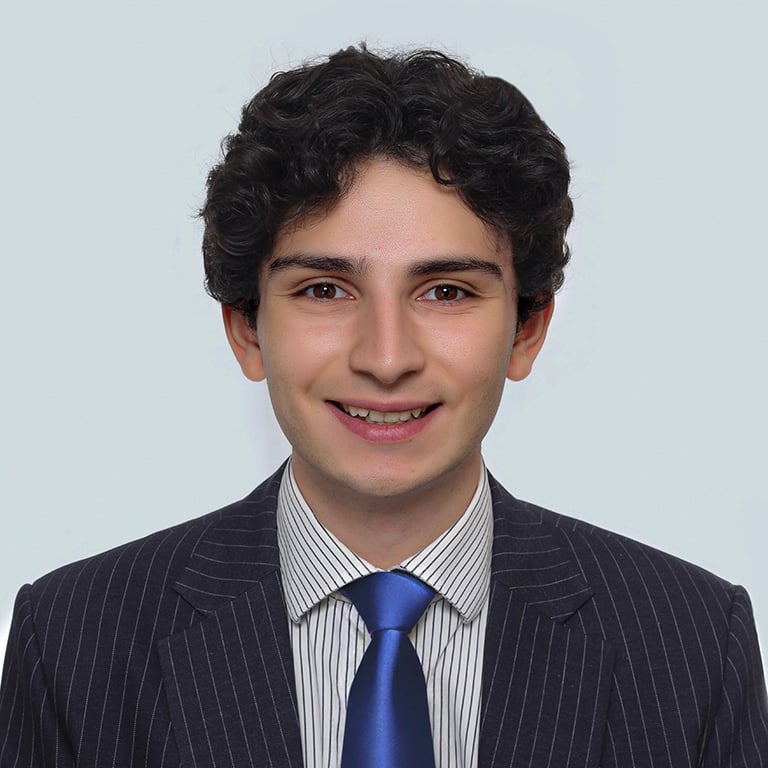

Malagasy transitional President Colonel Michaël Randrianirina – who seized power in an October 2025 military coup following weeks of youth-led protests – was hosted in Moscow on 19 February by Russian President Vladimir Putin, arriving on an Ilyushin IL-96 jet chartered by the Kremlin.
“We are delighted to announce our determination to work with Russia,” Randrianirina told the press alongside Putin at the Kremlin. “We are ready to begin a new era of cooperation, and we believe that Russia will be of great assistance to us during this somewhat difficult period, both politically and economically.”
The Russian Agriculture Ministry later announced discussions to sign a memorandum of understanding with its Malagasy counterpart. The agreement aims to “further consolidate cooperation in the agro-industrial sector in areas of mutual interest,” the ministry stated.
Just five days later, on 24 February, the Malagasy leader shifted his focus to the West, receiving a decidedly more subdued reception from French President Emmanuel Macron at the Élysée Palace in Paris.
The French president “welcomed the initial progress of the rebuilding process and the Malagasy authorities’ stated commitment to restoring trust in institutions, putting the state back at the service of the common good, and responding to the legitimate aspirations of the population, particularly the youth,” according to a joint press release. The two nations outlined three priority areas to guide bilateral relations until the end of Madagascar’s political transition, slated for October 2027. These include the consolidation of political ties, French support for Madagascar’s economic development and continued defence and security cooperation.
A delicate balancing act
While it is not clear whether the Malagasy president deliberately chose to visit Russia before France, he explained that he intended to “maintain relations with nations that bring concrete benefits to the Malagasy people,” shortly before his departure for Paris.
“This is an interesting sequence because it reactivates old diplomatic mechanisms,” argues Stéphane Sanchez, an associate professor of history at Paris 1 Panthéon-Sorbonne University and author of Madagascar, une approche de l’histoire par les documents. “Even during the era of the first Malagasy president, Philibert Tsiranana, there was an attempt to diversify diplomatic and economic relations.”
Until 1960 Madagascar was a French colony, with more than 80% of its trade directed toward Paris. Consequently, immediately following independence “there was a policy of opening up to Japan and the US. There was even an American military base in Madagascar in the 1960s,” Sanchez explains. “In the 1970s, there was a genuine decoupling from France – at least politically – which culminated in the arrival of President Didier Ratsiraka, who practised what he termed diplomatie tous azimuts [omnidirectional diplomacy],” Sanchez notes.
“That was the moment Madagascar exited the franc zone and withdrew from several cooperation agreements. Everything that had maintained the country’s strong political ties with France was essentially upended. Today, we are seeing a revival of those concepts.”
While Madagascar is again leveraging its strategic position, Juvence Ramasy, an associate professor of political science at the University of Toamasina in Madagascar, says it has “yet to see concrete development results in the country”.
These high-profile diplomatic visits must “translate into something concrete, which, thus far, across successive regimes, has failed to bear fruit,” Ramasy adds.
Mineral riches
Madagascar is rich in minerals and rare earths, boasting reserves of gold, nickel, cobalt, chrome, sapphires and rubies.
For Sanchez, the economic subtext is clear: “The Malagasy government is also trying to foment a bidding war among different competitors, undoubtedly hoping to secure a strategic advantage.”
However, this balancing act is not lacking in domestic sceptics – particularly among younger Malagasy, the demographic largely responsible for the overthrow of former President Andy Rajoelina last year. “There is an underlying anxiety,” Sanchez observes. “Do these ties with strong, militarised powers like Russia aim to consolidate the current regime’s grip on power, or are they genuinely meant to forge a diplomacy that diversifies partnerships and, consequently, benefits society as a whole?”
The domestic political situation remains unstable. On 9 March President Randrianirina dismissed his prime minister and, a week later, appointed Mamitiana Rajaonarison, a trusted ally of his who was largely unknown to the public, to form a new government.
“Show the Malagasy people that this country needs a person of integrity, someone who cannot be influenced or bought,” he told his Prime Minister on 15 March, during the ceremony announcing his appointment, adding that the nation “needs major decisions” and is “at a turning point”.
Russia challenges France
Still, since Michaël Randrianirina took office, France has continued its cooperation projects in the country. Worth $80m and mostly structured as loans, these initiatives focus on improving sanitation in the capital, Antananarivo, addressing food insecurity in the south and supporting judicial reforms. “France remains the leading bilateral donor and intends to act as a bridge and facilitator with Madagascar’s other international donors,” the Élysée Palace said.
Following the bilateral meeting, France and Madagascar signed an agreement to initiate the modernisation of the Port of Antsiranana. This official backing is expected to act as a catalyst, enabling Madagascar to secure additional institutional partners to overhaul the port’s infrastructure.
Paris is striving to forge a partnership that its representatives repeatedly frame as a relationship of “equals” – a clear bid to shed its colonial image. Simultaneously, however, it must contend with the rise of competing global powers.
Ramasy says the arrival of Russia has shaken things up. “What is new is Russia, which has been far more present since the 2018 election,” even though, he argues, “from a trade and economic perspective, Russia is really not that significant.” Madagascar’s exports to Russia were worth only $7m in 2024, far below France’s $450m. “It is really in the military and hard power sectors that this is playing out, by delivering weapons, for example. After the crisis and the series of cyclones in eastern Madagascar earlier this year, Russia sent two military helicopters.”
The Kremlin holds a significant asset: security assistance and, equally important according to Ramasy, “no colonial legacy”. In December Russian instructors and over 40 crates of military hardware – including sniper rifles and kamikaze drones – were reportedly dispatched to Madagascar. Armed personnel were also deployed to provide close protection for the new Malagasy president.
Putin has expressed his readiness to cooperate with Antananarivo across multiple sectors, including agriculture, healthcare, education, and, crucially, geological exploration.
The Russian president has also signalled his interest in the city and port of Antsiranana, reportedly considering massive investments to upgrade the port facilities and a derelict military base.
France is also seeking to protect its longstanding military cooperation with Madagascar, and a Russian foothold would represent a direct threat to its interests in the Indian Ocean. France provides support through its Southern Indian Ocean forces (FAZSOI) stationed in nearby Réunion and Mayotte, while cooperating on maritime security. “For the Russians, there is a desire to counter the presence of NATO forces in the Indian Ocean,” Sanchez explains. “It is a classic strategic game: occupying underutilised spaces and acting as a thorn in the side of the West wherever possible.”
The Indian Ocean, a crossroads for global trade routes and rich in gas reserves, has become a strategic chessboard. “We focus on Russia’s presence, but China – with its Belt and Road Initiative -and India are also highly active there, conducting major military exercises,” Sanchez concludes.
Absent isles
Conspicuously absent from the France-Madagascar official statements was any mention of the long-standing dispute over the Scattered Islands (Îles Éparses). Claimed by Madagascar since its independence, this French-administered archipelago commands a vast and highly valuable exclusive economic zone, granting important maritime leverage in the Mozambique Channel.