
Africa does not suffer from a lack of opportunity. It suffers from a shortage of institutional capital platforms capable of mobilising long-term, patient, and disciplined capital at scale.
The numbers are well known, yet still sobering. African SMEs face an estimated financing gap exceeding $350bn; annual infrastructure needs are assessed at $130–170bn while actual investment consistently falls tens of billions short each year.
At the same time, Africa’s population has surpassed 1.5bn billion, GDP exceeds $3 trillion, and demand for energy, digital infrastructure, logistics and financial services continues to accelerate.
The real question, therefore, is no longer whether capital should flow to Africa. It is how fast, how intelligently, and through which institutional structures.
Having worked across academia in Washington D.C., investment banking and global asset management in London, government in Tunisia, and sovereign capital in Djibouti, I have observed this structural gap from every side of the capital ecosystem.
Stock versus flow: a silent but decisive shift
Europe remains Africa’s largest partner in terms of accumulated foreign direct investment stock — a reflection of decades of engagement and deep economic ties. But what increasingly matters is not yesterday’s stock of capital, but today’s and tomorrow’s flows.
Capital has become more mobile, more competitive and more selective. In recent years, investors from the Gulf have moved faster into African infrastructure, energy, logistics and digital platforms, often filling financing gaps left by slower decision cycles elsewhere. This is not ideological. It is competitive capital allocation.
Africa has options – and capital flows increasingly favour speed, clarity, governance and execution.
Blended finance options
Development finance institutions (DFIs) rightly emphasise blended finance, crowding-in private capital and catalytic impact. These principles are sound. In practice, however, capital too often flows to the same familiar structures, managers and low-career-risk allocations.
If blended finance is to work at scale, sequencing matters. Private capital — particularly patient, long-term capital — is sometimes willing to move first when governance, alignment and risk frameworks are credible. In those cases, DFIs can play a powerful catalytic role by following private capital, rather than insisting on leading every transaction from day one.
Risk in Africa, like anywhere else, is not eliminated. It is understood, managed and mitigated — through diversification, governance, local knowledge and long-term horizons.
Africa does not lack projects. It lacks institutional-grade platforms capable of operating across cycles, asset classes and geographies.
Many Africa-focused funds remain narrowly defined — by asset class, time horizon or geography. Equity-only strategies miss resilient private credit and downside protection. Credit-only strategies forgo long-term growth upside. Infrastructure-only approaches often miss Africa’s rapidly expanding consumer and enterprise economy.
What Africa needs are platforms that can integrate capital across public and private markets, equity and credit, growth and income — and do so with institutional discipline.
Alternative path partners
This gap is precisely what led to the creation of Alternative Path Partners (APP). APP is a pan-African, multi-asset investment platform designed to mobilise patient, long-term capital across private equity, private credit, and selective public-market opportunities, with a flexible mandate adapted to African cycles. Its ambition is to serve as a one-stop institutional gateway for family offices, endowments, sovereign investors and DFIs seeking durable exposure to Africa.
Crucially, APP is anchored by top-tier African private capital. This is not a concept or an aspiration. That anchor matters because African capital brings local conviction, patience and alignment — and because it makes it easier for international institutional capital to follow.
It also challenges the persistent misconception that capital only flows out of Africa, rather than being built from within.
APP is built by a senior group of founding partners who bring together integrity, complementarity, and over 150 years of relevant investment and leadership experience across sovereign wealth funds, global asset management, structuring, fundraising and frontier-market investing, with deep roots, networks and execution capacity across Africa.
Through disciplined investing, rigorous governance and deep local and international expertise, APP aims to support Africa’s structural growth by translating partnership into execution and sustainable impact.
Governance as a precondition, not a constraint
In emerging and frontier markets, governance is not a constraint on returns — it is a precondition for them.
At APP, governance is treated as a core investment input. Independent decision-making, clear separation of investment and oversight, institutional-grade compliance and strict alignment of interests are embedded into the platform’s design. The objective is simple: to build institutions that outlast cycles, political shifts and individual transactions.
Looking ahead
Africa’s growth will not be linear. But over a multi-decade horizon, its fundamentals remain compelling. Over the next decade, Africa is expected to account for around half of global population growth — a demographic shift that implies a powerful expansion of the continent’s middle class and consumer base. Digital adoption, financial deepening and the energy transition are accelerating. Capital will flow.
The real question is whether it will flow through short-term, fragmented vehicles — or through institutional platforms capable of compounding capital and impact over time.
Africa does not need sympathy.It needs capital that moves at the speed of its growth — and partnerships built to last.
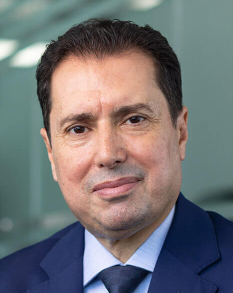
Slim Feriani is a global investor and Partner & CEO of Alternative Path Partners (APP). He has served as CEO of a sovereign wealth fund, as a government minister, and in senior leadership roles across international finance, including in London and Washington, D.C.