
Conversations around geopolitics, debt, and global growth predominated at the World Economic Forum’s Annual Meeting 2026 in Davos. Yet at the Africa House event, the most consequential discussion about the continent was not about how much capital Africa needs, but why so much capital continues to miss its mark.
The reality was stark for all to assimilate. Africa does not suffer from a shortage of capital. It suffers from a shortage of appropriate financial architecture.
The financing models Africa has inherited were not designed for its development realities. Short tenors, high costs of capital, and rigid risk frameworks are poorly suited to long-term investments in housing, transport, agriculture, and trade. The result is constrained growth and a persistent gap between ambition and execution.
As World Economic Forum President Børge Brende observed in Davos, “Dialogue is not a luxury in times of uncertainty; it is a necessity.”
That dialogue must now extend to how global finance engages Africa, not as an exception to the rule, but as a co-author of new rules.
No need for sympathy capital
My intervention at the Africa House panel focused on an often-avoided truth: Africa does not need sympathy capital. It needs smart capital, capital designed with African timelines, risks, and returns in mind. Sustainable development requires patient, adaptive financing that recognises African institutions and entrepreneurs as co-creators, not passive recipients.
Despite years of discussion, blended finance remains more theoretical than practical. Domestic capital pools, pension funds, insurance assets, sovereign funds, and family offices, remain significantly underutilised.
Risk-sharing mechanisms exist but are rarely structured from within African contexts.
This misalignment is most visible at the sectoral level. In housing, long-term capital unlocks not just shelter, but jobs, urban stability, and productivity. In transport and trade, infrastructure finance underpins competitiveness and regional integration. In agriculture, access to flexible and well-structured capital determines whether Africa remains a food importer or achieves food sovereignty.
This is why the mission for 2026 is no longer food security alone but food sovereignty, ownership of the financing, processing, and distribution of what Africa consumes. This shift is not merely ideological; it is economic.
Africa must also change how it presents itself to capital. The continent must move from showcasing isolated bankable projects to building bankable systems, aligned policy frameworks, predictable regulation, deep capital markets, and credible institutions. Too often, what is labelled “African risk” is simply misunderstood risk, amplified by unfamiliarity rather than fundamentals.
Governments must enable markets
Governments have a critical role to play, but not as dominant actors. Their responsibility is to enable markets: provide regulatory clarity, absorb first-loss risk where appropriate, deploy guarantees strategically, and crowd in private capital rather than replace it.
So, what needs to change? First is risk. Risk-perception frameworks must evolve while tenor mismatches between capital and projects must be corrected. This means that project preparation must be prioritised. Finally, collaboration among African financial institutions must move from aspiration to execution.
This is because the future of African finance must be built locally and scaled globally. Resilience flows from ownership, not dependency.
The question before global capital is no longer whether Africa is investable, but whether Africa will be trusted to define how it is financed.
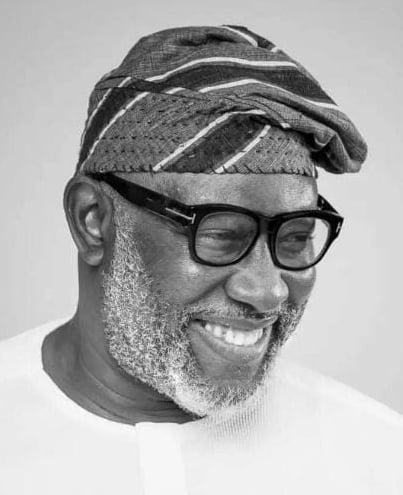
Ade Adefeko is a policy analyst specialising in agricultural value chains and fiscal policy in emerging markets. His work focuses on the intersection of public policy, private sector development, and agrarian transformation in Sub-Saharan Africa.