

Africa’s greatest asset is its children – the continent’s demographic advantage. By 2050, one in three young people globally will be African. The future of education is African, and the reality is, the future of the global workforce is African as well. Today’s choices will determine whether these demographic inevitabilities become a dividend of prosperity or lost potential.
However, to unlock Africa’s full talent, we must face a hard truth: foundational learning outcomes across the continent remain alarmingly low. Too many children leave school unable to read a simple sentence or solve a basic math problem. This is not merely a learning crisis – it is a crisis of opportunity, productivity, and dignity.
Improving learning outcomes at scale with domestic resources is possible. Unlike in many areas of education, we clearly know what works to strengthen foundational learning and improve learning outcomes. Structured pedagogy – combining teacher training, high-quality instructional materials, and regular skills-based coaching – consistently delivers measurable results.
Africa’s policymakers, finance institutions, and the private sector have a direct stake in improving foundational skills and weighing today’s investments with their expected returns. Let’s link today’s 7-year-old to the 20-year-old in the workforce and recognize that the 7-year-olds’ ability to read and do basic math affects whether that 20-year-old is growing the globe’s economy and contributing to the continent’s future. Africa is predicted to have higher economic growth rates in the next 5 years than the rich world, surpassing both the US and Europe which is a notable progression. Africa’s higher growth rate is of course from “a lower base”.
The bigger question, however, is economic growth rates in 10 to 15 years: those are harder to predict because they depend on both the structure of the economies and the skills of today’s 7-year-old.
Here’s what you need to know: you are only 7 once, and we know what it costs to make sure that 7-year olds can read now, but also can be productive in 15 years. On average, implementing the most evidence-based foundational learning programs at scale costs about $5, maybe $6, per student per year (on average, this is equivalent to 9000 Nigerian naira, 700 Ghanaian cedis, 110 South African rands, or 3500 West African CFA francs). While actual costs can vary across countries depending on baseline conditions and system readiness, this investment typically represents just 1% to 2% of annual education spending. We’re talking about 1–2% of yearly spending, even after accounting for the fact that most African governments are estimated to have invested less in education than before the pandemic, as of 2022. Our call is for a groundswell of demand to invest this 2% in learning so that we can get the 10% to 15% larger economic outcomes for these young people. That is both possible and paramount.
New education funding models needed
This moment and new post-ODA world calls for a reimagined architecture of locally led funding and better spend of domestic budgets – guided by those closest to the outcomes we seek. Countries must invest decisively in education to unlock its immense returns, as tomorrow’s worker will be African. At the same time, domestic budgets are tightly squeezed and many African countries are paying more in debt service than they do in education or health, and in some contexts, education and health combined.
This squeezes domestic budgets to nothing more than salaries, as 90% of national education expenditure for many African countries is spent on teacher salaries. Many governments also have inadequate reporting mechanisms and distorted spending patterns that tend to benefit students from richer families and urban areas – resulting in inequitable learning outcomes. It’s in this context that there is increased urgency to the task of improving learning outcomes. Shifts are needed on better spending from domestic budgets and ensuring budget visibility and accountability that reaches even the most rural classrooms. Solutions like outcome-based budgeting could establish a link between allocated funds and core learning outcomes, leading to improved equity and transparency in spending.
We think that external funding should support African leadership and focus; on high return evidence-based interventions that tackle the learning and skills deficit at its root – foundational skills.
The key takeaway: the solution is not to ignore foundational learning because of challenging fiscal contexts, but to make smarter use of every dollar. Why? Because this high leverage part of the sector yields an estimated 30:1 return, with consistent impacts at scale. Recent evidence also shows that early literacy and numeracy generate long-term economic and employment gains that surpass every other education investment.
Without solid reading and math skills by age 10, children’s pathways diverge. Children who cannot read early are more likely to repeat grades, less likely to complete secondary school, enroll in vocational training, or participate in a modern economy. The result is predictable: lost productivity, rising inequality, unemployment, and disillusioned youth. But those that achieved these skills early have multiplying levels of opportunity, and with the potential of AI, more chances to learn, grow and be productive. What we are convinced of is that we can dramatically increase the number of children with the latter outcome, even with constrained budgets and declining aid.
Budget for learning: we know what works – and it’s affordable
We are compelled by the new cost evidence showing that impactful structured pedagogy programs can cost governments as little as $5 to 6 per student per year. While acknowledging that exact costs may differ slightly by country and context, it’s not only that these interventions are affordable, they typically produce immense learning gains of 0.3 or 0.4 standard deviations – equivalent to an additional six months to a full year of school. This type of increased learning consistently results in more than 10% higher wages. Scaled nationally, the economic payoff is transformational – Africa’s problem is skills, and at least this skill (better teaching) is possible at large scale. There is a payoff to foundational learning. We can do more with what we have. But we must choose to budget for learning.
The real risk: doing nothing
The challenge is not doing more with less – it’s doing better with what we have. Yet some argue that now is not the time – that economies must first stabilize, reduce debts, and ODA will return. This is simply wrong. The cost of inaction far outweighs the cost of reform. Each year we elay, millions of children pass through schools, yet fail to learn. Each lost cohort represents billions of dollars in unrealised productivity and potential. We must also confront an uncomfortable truth: when donor-funded projects end, results often wane. We have too many pilots and too few sustained reforms. Governments must lead – scaling and financing what works, embedding reforms into systems that endure beyond projects and political cycles. The new world we now live in makes working behind and with governments even more important than ever. The African Union’s commitment to end learning poverty by 2035 signals strong political intent. Now, that political will must be matched with financial resolve and technical know-how grounded in the science of reading and maths.
A paradigm shift
Foundational learning must be viewed as a core economic growth and jobs strategy – as essential to structural transformation as roads, ports, and power grids. You cannot industrialize without a literate, numerate workforce. You cannot innovate without problem solvers. You cannot grow without skilled learners. Smarter spending can stretch every dollar further. It can involve in-service professional development; high-quality, well-aligned teaching and learning materials; frequent instructional coaching tailored to foundational learning and delivered with quality; competitive book procurements; and skills-based training. These are practical strategies already showing results. What we need is scale, ambition, and alignment across Ministries of education and finance, and between basic education, technical training, and labor market needs.
The bottom line
You are only seven once. Learning is not a luxury. The more countries improve early-grade reading and math to all children, the stronger their pathways to technical training, STEM, and the knowledge economies of the future. Put simply, foundational learning unlocks potential – equipping young people with the skills needed for jobs and to build stronger economies. And in some settings, political commitment to foundational learning is a powerful source of political credit – enough to shape election outcomes. Africa’s future will not be determined by the size of its youth population, but by what its young people can do, build, and imagine. The question is not whether we can afford to invest in foundational learning.
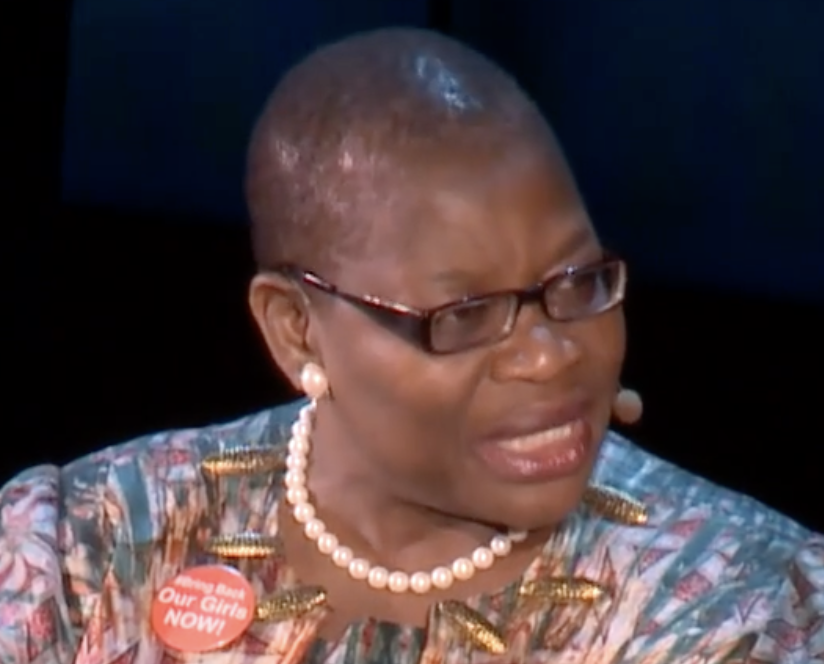
Obiageli Ezekwesili is founder/CEO of Human Capital Africa and former World Bank vice president for Africa.
Ben Piper is director of global education at the Bill & Melinda Gates Foundation.