There is no denying that unfortunately, certain risks to investment in Africa have recently re-emerged or are increasing. Debt distress, political volatility – especially around electoral processes – lingering insecurity linked to terrorism, persisting gaps in governance and many more, constrain both investor appetite for our continent as well as access to affordable finance for African economies.
In 2000, a mere $17bn was the total amount of foreign direct investment all sovereign African nations were able to draw from all global sources of capital. Though that figure has increased to $48bn in 2023,1 risk perception remains one of the main factors contributing to the continent’s estimated $200bn trade and investment financing gap.
Those are gloomy yet true observations. But let’s put them into perspective.
First, despite lingering dysfunctionalities, there is no denying that African governments are fast reforming to offer increasingly attractive business environment to potential and actual investors. Doing business in Africa is becoming more and more predictable, affordable, convenient and connected. In a word, more attractive.
Then, there is Africa’s largely unscathed potential, ranging from its young population, to sectors such as infrastructure, agricultural supply chains, ICT, transport, hospitality, health and so many more, to create jobs, generate revenue and contribute to sustainable and human-centric growth and development.
There are also the prospects unleashed by the advent of the African Continental Free Trade Area (AfCFTA), the world’s largest free market grouping in terms of the number of its member states and a potential continental market of 1.5bn citizens and consumers.
Finally, Africa has proven to be a profitable investment destination. Indeed, in 2019, for example, the continent offered a 6.5% rate of return on inward FDI – higher than the 6.2% and 6% of Latin America and the Caribbean, and developed nations, respectively.2
Beyond those considerations, there may be a harsh truth we can no longer shy away from: ‘business unusual’ may be the new norm, and ‘uncertainty’ is a perceived or actual risk we will simply have to live and do business with.
Globalisation, lingering global economic headwinds, the fallout from the Covid-19 pandemic, the conflict between Russia and Ukraine, multi-polarity, multi-crises, to name only a few major issues are shaking up traditional economic and planning cycles. Africa is no exception in this new and complex business environment.
In short, it requires no leap of faith for those who are investing in Africa to do so – the region offers appealing investment opportunities and perspectives. However, going beyond aspirations and looking at the practical aspects of investment, Africa has a valuable asset in the form of the African Trade & Investment Development Insurance (ATIDI).
Protecting investments
ATIDI was created in 2001 to provide an extra layer of security to foreign investors who perceived the continent as too risky to engage with. It has since grown into the continent’s premier provider of trade and investment insurance.
ATIDI now counts 24 Member States and 13 institutional partners (including the AfDB, Italy’s SACE SpA, Japan’s NEXI and Spain’s CESCE). Our footprint spans all of Africa and we are geared to continue growing it in the coming years so that one day, we can see each of Africa’s countries in our membership.
ATIDI has a stellar investment-grade rating: ‘A Stable’ and ‘A3/Positive’ by S&P Global and Moody’s, respectively, which allows us to cover a wide range of projects and help close transactions.
We provide tailored insurance products allowing investors to confidently engage in business as they know that their projects and the resources they mobilise for them are protected. To be specific, ATIDI insures the investment and trade risks to safeguard investors from incidents such as non-payment, delayed payment, currency inconvertibility, expropriation or contract cancellations.
Our Preferred Creditor Status in all our Members States and our strong partnerships with governments across the continent allow us to find constructive agreements that ensure terms are safeguarded and to preserve working relationships for future collaboration.
We also engage our collaboration and partnerships with key players in our industry – including multilateral financial institutions, export credit agencies, insurers, re-insurers and development partners – to ensure our solutions are aligned with national and continental development priorities and are ESG compliant.
Strategic partnerships
As a case in point, in December 2023, ATIDI became a strategic partner of the AfDB-led Lusophone Development Compact (LDC). This brings together the government of Portugal and six Portuguese-speaking African countries – Angola, Cabo Verde, Equatorial Guinea, Guinea-Bissau, Mozambique and São Tomé and Príncipe.
The LDC offers a platform that provides risk mitigation, financing products and technical assistance to accelerate private sector development and investment in the compact’s member states. ATIDI will deploy its risk-mitigating solutions to the LDC’s member states, fast-tracking private investment that can turn the LDC into a powerful regional economic hub.
Our LDC presence is a token of our exemplary partnership with the AfDB, which became a shareholder in ATIDI in 2013. Since then, AfDB has financed the membership of several countries in our organisation (most recently Mali, in December 2023, thanks to an $10.9m financing facility).
The bank has also employed our solutions – for example, ATIDI backed a $159m loan from the AfDB to fund Ethiopian Airlines’ fleet expansion with the purchase of an Airbus A350-900 jet.
ATIDI also supported the completion of a $500m credit insurance deal structured to cover a portion of the Bank’s portfolio of non-sovereign operations in Africa. Overall, support from AfDB to ATIDI’s membership drive stands at nearly $60m.
Our dynamic relationship with the AfDB is mirrored in the solid partnerships that we have with multilaterals and regional bodies including the African Union, COMESA, the European Investment Bank (EIB), KfW Development Bank, the Norwegian Agency for Development Cooperation (NORAD), to mention a few.
Some say truth is in the numbers. Since its inception, ATIDI has become Africa’s premium trade and investment risk guarantor, facilitating over $85bn in transformational transactions to and across the continent and fulfilling its mandate as a catalyst of development. With the continent as our playing field, we are striving to apply our unique solutions to materialise the vision of the AfCFTA.
So, if you are considering investing in Africa, look at the opportunities it offers despite all the uncertainties. And if you are still pondering the risks of investing in our continent, talk to ATIDI.
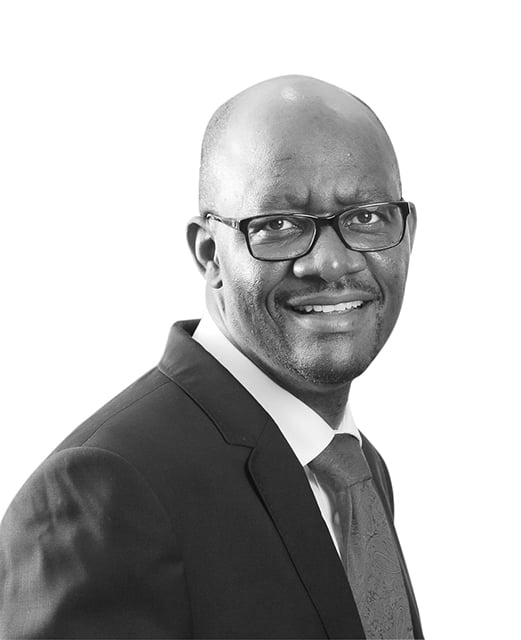
Manuel Moses became ATIDI’s CEO in December 2020. He has over 25 years’ experience in finance, banking, insurance and investment at the international level. Previously, he worked at the International Finance Corporation, the Eastern and Southern African Trade and Development Bank (TDB), the Commercial Bank of Zimbabwe and the Zimbabwe Development Bank.
Sources:
1. UNCTAD, Global Investment Trends Monitor, No. 46
2. Overseas Development Institute – ODI